



You put time, money, and care into your flock, so the last thing you want is to find your chickens gone in the morning. Predators are persistent, patient, and surprisingly smart. Raccoons can work latches. Foxes dig under walls. Weasels squeeze through gaps you’d never notice at first glance. The truth is, not every chicken coop is built to stand up to this kind of pressure. Understanding which features matter actually is the difference between a safe flock and a devastating loss.
Why Most Chicken Coops Fail Against Predators
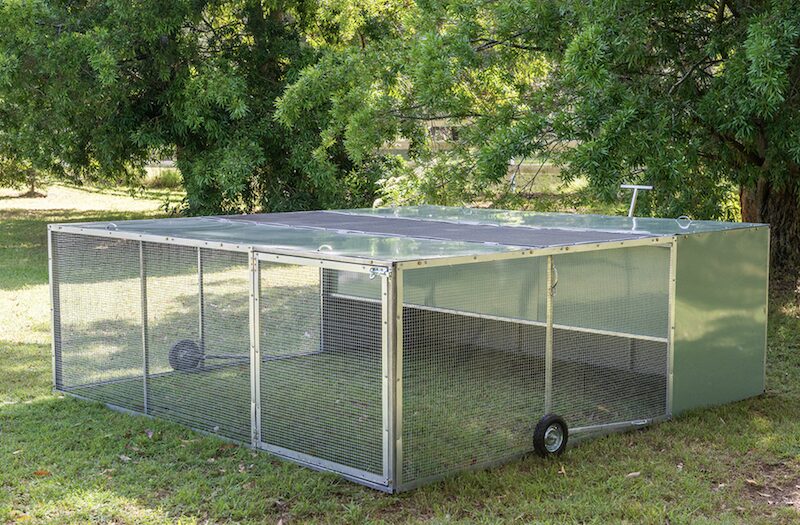
Most chicken coops look secure at first glance. Four walls, a roof, a door, and a latch, and it seems like the job is done. In reality, many coops fail because they were designed for convenience rather than protection. Manufacturers cut costs, builders skip steps, and the result is a structure that gives predators more opportunities than it denies them.
The Gap Problem: Small Openings That Invite Big Trouble
A gap doesn’t need to be large to be dangerous. A weasel can slip through a hole roughly the size of a quarter, and once inside, the damage is severe. Many standard coops have poorly sealed joints, loose boards, and ventilation openings without proper mesh coverage. If you can fit two fingers into a gap anywhere in your coop, a determined predator can likely exploit it. Walk around your coop and treat every opening with suspicion.
Weak Material Choices That Predators Can Tear Through
Some coops rely on thin plywood, lightweight plastic, or flimsy staple-fastened mesh. These materials might hold up in mild conditions, but they don’t stand up to a raccoon pulling with both hands or a dog charging through repeatedly. Metal chicken coops by contrast, offer a structurally stronger shell that resists both brute force and weather-related degradation over time. Material quality is one of the first places where coop security breaks down.
Poorly Designed Access Points That Predators Learn to Use
Every door, hatch, egg box, and vent is a potential access point. Many budget coops include multiple entry points with minimal security on each one. Predators, especially raccoons and opossums, are capable of testing every panel and door until they find the weakest link. A well-designed coop limits unnecessary access points and secures every one that does exist with hardware designed for the task, not just whatever was cheapest to install.
Hardware Cloth vs. Chicken Wire: Choosing the Right Barrier
This is one of the most debated topics in backyard poultry, and for good reason. The barrier material you choose determines how well your coop holds up against the most common predator threats. Many beginners default to chicken wire because it’s affordable and widely available, but that choice comes with real consequences.
Why Chicken Wire Falls Short in Real-World Predator Attacks
Chicken wire was designed to keep chickens in, not predators out. The hexagonal weave is relatively weak and can be torn or bent by a determined raccoon. More importantly, the openings in standard chicken wire are large enough for a mink or weasel to squeeze through. It also corrodes faster than alternatives, which means the structural integrity decreases over time. Relying on chicken wire alone is a risk that frequently ends in loss.
The Case for Hardware Cloth and Proper Gauge Selection
Hardware cloth is a welded wire mesh with a much tighter grid pattern, typically available in half-inch or quarter-inch openings. The welded construction means it holds its shape under pressure rather than stretching or tearing. For most backyard flock owners, half-inch hardware cloth in a 19-gauge or heavier wire is the right starting point. Quarter-inch is worth the extra cost for areas near the ground where smaller predators are most likely to probe.
How to Fasten Mesh So It Stays Secure Over Time
Even the best mesh fails if it’s attached poorly. Staple guns leave fasteners that pull out over time, especially in wood that weathers and softens. Instead, use galvanized hardware cloth with washers and screws, or purpose-built fence clips that grip the wire frame tightly. Overlap edges by at least two inches and check fasteners twice a year. A mesh panel that pulls away from its frame is just as dangerous as one made from weak material.
Door and Latch Security That Keeps Clever Predators Out
Doors are the most frequently targeted entry point in any chicken coop. They’re designed to open, and predators know it. A raccoon’s dexterity is remarkable. Studies and firsthand accounts from poultry keepers confirm that raccoons can manipulate simple hook-and-eye latches, slide bolts, and even some spring-loaded latches without much difficulty.
The Types of Latches Predators Can and Cannot Open
Simple hook latches and twist knobs are not adequate. Raccoons operate these with ease in minutes. Carabiner clips, double-locking mechanisms, and padlocks are far more effective barriers. A latch that requires two separate actions to open, such as lifting and then sliding, is much harder for an animal to operate. Adding a padlock to your main coop door is one of the single most effective changes you can make.
Automatic Coop Door Openers as a Security Upgrade
Automatic doors, either timer-based or light-sensor-activated, have become popular for good reason. They eliminate human error, which is one of the most common causes of overnight predator access. A well-built automatic door drops shut at dusk and lifts at dawn with no action required on your part. Look for doors that seal tightly against the frame and include a motor strong enough to resist being held open by an animal pressing against it.
Door Frame Integrity: The Part Most People Ignore
Even a strong latch fails if the door frame is weak. A predator doesn’t always try to open the door through the latch. Instead, it may pry at the frame, pull at the corner gap, or push the door inward. Use solid lumber for door frames rather than thin trim boards. Reinforce corners with metal brackets, and check that the door sits flush in its frame with no gaps large enough for a paw to hook through.
Flooring and Foundation: Stopping Diggers and Burrowers
A predator-proof coop isn’t just about what’s on the walls. Below-ground threats are just as serious. Foxes, dogs, minks, and even rats will dig under a coop if they detect food or birds inside. Some predators have been documented digging several feet underground to gain access, so a shallow perimeter is not enough.
Hardware Cloth Aprons: The Underground Extension That Works
An apron is a length of hardware cloth that extends outward from the base of the coop along the ground. Rather than digging straight down, a predator hits the mesh and gives up, because most animals don’t think to back up and dig farther out. A 12-to-18-inch apron laid flat on the ground, secured with stakes or covered with soil, is one of the most effective anti-dig solutions available. It requires no concrete and is easy to install.
Solid Floors vs. Wire Floors: Weighing the Trade-Offs
A solid wood or concrete floor inside the coop stops diggers completely. But solid floors require more frequent cleaning and can hold moisture. A wire floor allows droppings to fall through, but can be uncomfortable for chickens standing on it for long periods. A middle-ground solution is a solid perimeter base with a cleanable interior floor, which addresses both hygiene and security without compromise.
Concrete Foundations for Permanent Coop Setups
For a permanent coop that won’t move, a concrete foundation is the most secure option against burrowing. Pour a four-inch slab that extends to the full footprint of the coop, and predators have no entry path from below. Concrete also resists wood rot at the base of the structure, which means your coop stays structurally sound for longer. It’s a bigger upfront investment, but it removes an entire category of vulnerability permanently.
Ventilation That Doesn’t Create a Vulnerability
Good airflow is non-negotiable in a chicken coop. Without it, ammonia from droppings builds up, humidity rises, and respiratory illness spreads through your flock. The challenge is that ventilation openings are, by definition, holes in your coop, and holes are exactly what predators look for.
Where to Place Vents to Minimize Predator Access
Vents placed high on the coop wall, near the roofline, are harder for predators to reach and less likely to let drafts hit roosting birds at night. Position vents on opposite walls to encourage cross-ventilation. Avoid placing vents low to the ground, especially near corners, where predators are most likely to probe. Height and placement matter as much as the mesh covering the vent itself.
Covering Vents With the Right Mesh and Fasteners
Every vent must be covered with half-inch hardware cloth, not decorative screening or loose mesh stapled in place. Use screws and washers to hold the mesh securely against the vent frame, and inspect the attachment points at least twice a year. Rust, wood shrinkage, and physical pressure from animals can loosen fasteners over time. A vent that was secure in spring may not be secure by autumn without a quick inspection.
Balancing Airflow Needs With Seasonal Changes
In summer, your chickens need maximum airflow to avoid heat stress. In winter, you want to limit cold drafts while still preventing moisture buildup. Adjustable vent covers let you close vents partially in cold months without blocking airflow completely. Whatever system you use, the mesh backing should remain in place year-round. Removing it in summer for better airflow, even temporarily, removes the protection it provides.
Conclusion
A truly predator-proof chicken coop comes down to layered security at every point of entry, from the mesh on your walls to the latch on your door and the ground beneath your floor. No single feature handles every threat on its own. Instead, each element works together to make access difficult, time-consuming, and eventually not worth the effort for most predators. Build with intention, inspect regularly, and your flock will have the protection it deserves.