




www.ghaliaboustani.com
There is a particular kind of retail that does not ask you to buy. It asks you to stay. To look. To feel something before you even reach for your wallet. Walking through one of Le Bon Marché’s themed spaces in Paris, I was reminded of exactly why physical retail, when done well, is still one of the most powerful brand tools in existence.
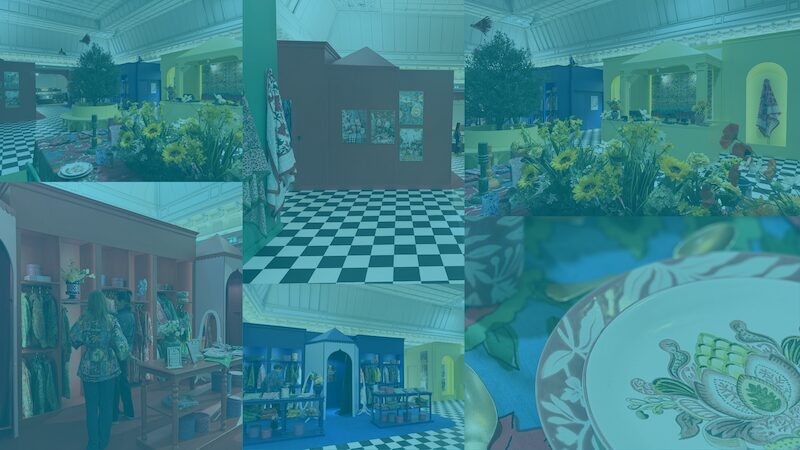
The space I visited was a study in intentional overwhelm: deep crimson shelving stacked with jewellery on velvet necks, printed robes hanging against lacquered red walls, ceramics placed as still-life compositions, parrots suspended from the ceiling of a black-and-white checkered hall. It was not a shop floor. It was a world.
“The product was not displayed for sale. It was displayed as part of a story. And that changes everything.”
The Science Behind the Atmosphere
This is not just aesthetics for aesthetics’ sake. Research consistently shows that the physical environment of a store shapes consumer behavior at a level that goes well beyond conscious decision-making. Sensory marketing has garnered significant attention from researchers precisely because of its ability to influence consumer behaviour at a subconscious level, and a four-decade review published in the International Journal of Consumer Studies (2025) confirms this influence spans everything from time spent in-store to purchase intent.
Retailers who design store environments to trigger emotional and sensory reactions consistently see consumers staying longer and spending more. Colour, lighting, spatial flow, even the weight of objects on display: all of it contributes to a layered atmosphere that either invites or repels.
Store atmosphere has been recognised for its ability to evoke cognitive and emotional responses in consumers, making it a crucial aspect of any retail environment. Sensory engagement through lighting, scent, and tactile interactions significantly impacts consumer perception and purchase behaviour, with retail spaces functioning as cultural hubs for deeper engagement.
Key Statistics
| Stat | Finding | Source |
| 84% | of beauty brands have increased their experiential marketing budgets in the past three years | BeautyMatter, 2025 |
| 71% | of beauty consumers now expect personalised in-store experiences as standard | McKinsey / BeautyMatter, 2025 |
| 41% | of Gen Z’s in-store beauty spending jumped in a single year, proving physical retail still converts | NielsenIQ, 2024 |
What Le Bon Marché Gets Right
Beauty as a Design Principle
What struck me most in the space was not any single object. It was the coherence. Every surface, every hanger, every small mirror contributed to a unified visual argument. The jewellery was not merchandise; it was architecture. The printed robes were not product; they were texture in a composition.
This is the first and perhaps most underestimated principle of great retail: beauty is a strategy. Not decoration. Not an afterthought applied once the merchandising plan is set. Beauty is the plan.
Findings in environmental psychology highlight the importance of atmosphere in creating a positive social environment through enhanced sensory and emotional consumer interactions. The implication for retailers is direct: the environment itself communicates before the product does. Customers form emotional impressions of a brand in the first moments of entering a space, and those impressions are almost impossible to reverse.
Desirability Is Constructed, Not Assumed
A product placed on a generic shelf is just inventory. The same product staged within a richly layered visual environment becomes an object of desire. Le Bon Marché understands this at an architectural level. The themed pavilions do not merely display brands. They construct a world in which the brand’s objects feel inevitable, essential, worth having.
This is what desirability actually means in a physical retail context. It is not about the product’s intrinsic value. It is about the emotional context in which the product is encountered. The role of the store has become one of discovery, connection and narrative building, with scenario-based in-store experiences where the store’s function is to provide a memorable experience that connects with the consumer on an emotional level to build brand loyalty.
Multi-sensory congruency , the alignment of sensory elements such as visual and auditory cues , can enhance users’ emotional responses and cognitive processing. At Le Bon Marché, this congruency is achieved through colour: each pavilion is drenched in a single dominant hue, red, yellow, blue, green, creating an unmistakable visual signature that orients the visitor and amplifies the products within.
The Product as Part of the Decor
One of the most intelligent decisions in the spaces I visited was the treatment of product as set dressing. Stacked textiles became a pattern on a shelf. Hanging robes formed a chromatic gradient. A table set with printed cloths and hand-painted ceramics looked less like a display and more like a scene from a life worth living.
This is distinct from typical visual merchandising. It is not about organising product by category or highlighting bestsellers. It is about creating a vision of a life, an aesthetic world, and then placing the product within it so naturally that the customer begins to imagine themselves there too.
“When the product belongs to the decor, the customer does not just want to buy it. They want to inhabit it.”
Customers crave more than just shopping. They want immersive, unforgettable encounters that leave them eager to come back for more. Retailers who embrace this paradigm and curate experiences will win the hearts and loyalty of today’s experience-centric consumer.
Where to Go Further
The Missing Layer: Reasons to Return
The Le Bon Marché spaces are visually extraordinary. The curation is confident. The colour work is brave. And yet, as I moved through them, I found myself wondering what would bring me back next month, rather than simply leaving with a memory.
This is the next frontier for sensory retail: interactive moments that create reasons to return. Not just spectacle, but participation. The space invites the eye but rarely asks the hand to join in. There are no stations where a customer can try, touch, customise or create something. The experience, for all its richness, is largely passive.
Recommendations for the next iteration:
- Tactile stations or live craft demonstrations that let visitors engage beyond looking, turning observers into participants.
- Seasonal or rotating installations that give returning customers a reason to discover something new each visit.
- Personalisation moments , whether monogramming, scent blending, or styling consultations , that make the experience feel tailored and memorable.
- Post-visit digital touchpoints that extend the world of the experience beyond the store walls, keeping the emotional connection alive.
The Strategic Takeaway
Sensory retail is not a luxury reserved for Parisian department stores. It is a strategy available to any brand willing to think of its physical space as a piece of storytelling. The question is not whether to invest in beauty and atmosphere, but how deeply. Because in a world where anything can be purchased online in three clicks, the only true advantage of physical retail is the feeling it creates. And feelings, as Le Bon Marché proves, are worth designing for.