



Walk into almost any retail environment and lighting is likely to be one of the last things shoppers consciously notice. Yet from the brightness and colour temperature of a space to the way individual products are illuminated, light can have a significant influence on how customers perceive a store, where they look and how they move through it. Far from simply providing visibility, effective lighting can help shape the entire shopping experience.
For retailers, this makes lighting a key tool for influencing behaviour. Carefully positioned light can draw attention to products, highlight promotions, create a sense of quality or exclusivity, and even encourage shoppers to spend more time in certain areas. Meanwhile, poorly considered lighting can have the opposite effect, making products appear less appealing or creating an environment that customers are keen to leave.
As retailers continue to look for ways to differentiate their physical stores and create more engaging experiences, lighting should be considered as part of the wider customer journey rather than simply an element of interior design. Understanding how shoppers respond to different lighting conditions can help retailers create spaces that not only look better, but work harder.
Design Conversation
Offering advice on the subject is Shaun Robertson, head of product quality at Lumily LED, a specialist within the LED lighting space. Robertson said that lighting has moved from the electrical spec sheet into the design conversation for businesses across many industries, including retail.
He sets out how retailers are layering their lighting, with a general layer for the space, then targeted lighting on shelves and displays to pull the eye to specific products, rather than just lighting the whole store evenly.
“A lot of shelving and display have been supplied by strip lately for retailers refitting product bays and cabinets, often CCT strip, so they can shift the colour temperature with the season, cooler and brighter in summer, warmer for Christmas, without changing the hardware,” he said. “Optix S+ with Flow has been another popular choice for that kind of display work.
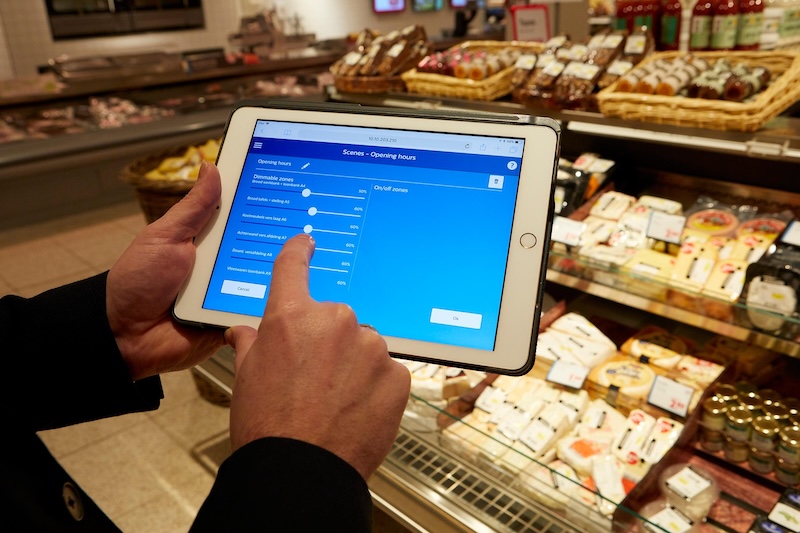
“Control systems like DALI and Casambi’s wireless mesh let retailers zone and schedule lighting so feature areas stay bright while quieter zones scale back automatically.”
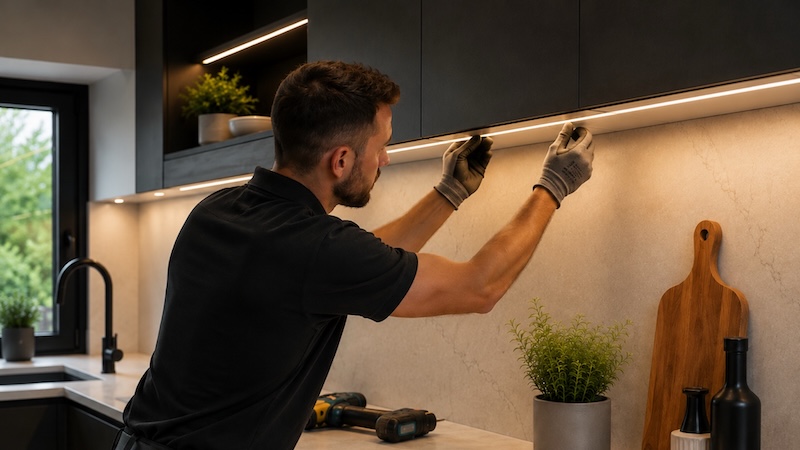
Looking more closely at trends or innovations in this area, Robertson said the environment will continue to play a major role in lighting. On this, he said swapping an old fluorescent fitting for an LED panel can more than halve the energy use.
“For a retailer running hundreds of fittings 12 hours a day across a store estate, that is a serious saving,” he said. “LED fittings also last a lot longer, 50,000 hours or more, against 10,000 to 15,000 for fluorescent tubes, so there’s far less maintenance too.”
Aside from the environment, Robertson said that the stand-out trend is tunable white and colour-changing lighting. He set out how retailers want to change the mood of a space at the touch of a button, making the environment crisper and cooler in the day and warmer for the evening, without re-lighting the store.
“That’s driving a lot of demand for CCT and RGBCCT strips that can be controlled wirelessly,” he said. “Our response has been to keep growing the CCT and RGBCCT side of our range alongside compatible controls, so retailers can get adaptable lighting without the install headache that used to come with it.”
Connectivity is Key
Also weighing in is Simon den Uijl, segment manager for retail at Signify. He said lighting is evolving from a utility into something that drives customer experience and into a strategic platform for retail performance.
“Today, lighting influences how shoppers perceive products, navigate a space, connect with a brand, and even how efficiently a store operates,” he said. “It has become an important tool for creating environments that encourage customers to spend more time in-store and engage more deeply with the shopping experience.
“At Signify, we support this shift by ensuring our solutions go beyond just illumination. We combine high-quality lighting with connected systems, intelligent controls and circular services that help retailers improve customer experience while reducing energy use and simplifying operations. Whether it’s creating the right atmosphere in a fashion store, enhancing the appearance of fresh food, or using connected lighting to optimise store operations, our focus is on helping retailers create environments that perform better for shoppers, employees and the business.”
Signify’s den Uijl went on to say that the most effective retail lighting is tailored to the specific application. He said while different retail environments have different objectives, the common principle is that lighting should enhance the merchandise rather than compete with it, while simultaneously leveraging occupancy sensors, HVAC connectivity, and other connected experiences to enhance intelligence and promote energy savings.
“Today, retailers are increasingly moving away from a one-size-fits-all approach and towards application-specific lighting,” he said. “We often talk about using the right ‘lighting recipe’—carefully engineered light spectra, colour temperatures and optics designed to complement products, materials, and store concepts.
“Increasingly, retailers are combining these lighting recipes with connected controls. This enables them to adjust lighting scenes throughout the day, highlight seasonal campaigns or featured collections, and optimise energy use without compromising the customer experience. The result is a lighting strategy that delivers on multiple fronts; creating immersive brand experiences, improving operational efficiency, and supporting measurable business outcomes.”
This connectivity, den Uijl said, is one of the most significant trends in retail, with lighting no longer an isolated system, but becoming part of a broader digital ecosystem that helps retailers understand how their stores operate and identify opportunities to improve efficiency and customer experience, becoming the backbone of a building’s operations.
Leading on from this, den Uijl said artificial intelligence is “rapidly” becoming a key enabler of connected retail experiences, while he also highlighted a growing focus on circularity and the importance of location-based services as factors to consider with lighting.
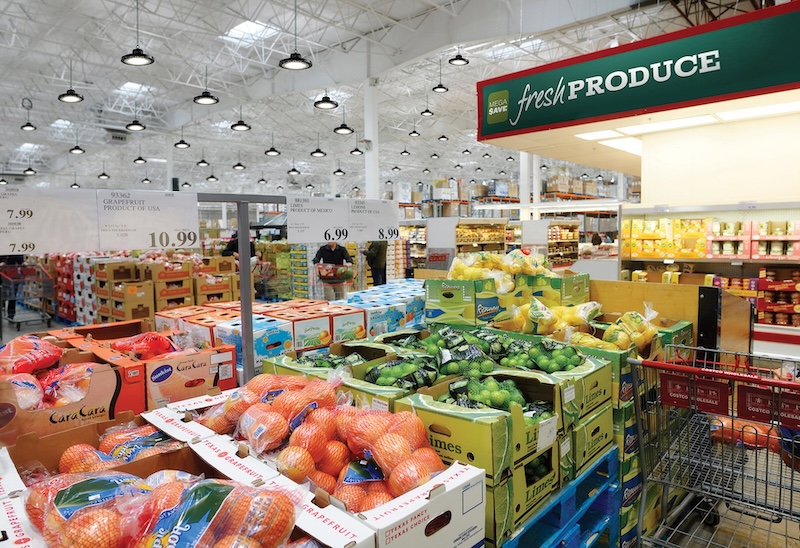
“The retailers that will be most successful are those that recognise lighting as more than infrastructure,” he said. “It is becoming a seamlessly connected platform that brings together customer experience, operational intelligence and sustainability.”
Contrast, not Brightness
Up next is Grey Hoole, managing director of The Sign Group, who said that while lighting has always influenced how people behave in a shop, what has changed is that retailers can now specify it deliberately rather than hope for it.
“For a long time, lighting in retail was split in two,” Hoole said. “There was the lighting that let you see the product, and there was a sign above the door. They were bought separately, by different people, often from different suppliers.
“What we see now, from where we sit as a trade manufacturer, is those two jobs collapsing into one. The sign is not just telling you whose shop it is. It is setting the tone before anyone has picked anything up.”
As for the technologies or design approaches that are most effective at improving customer engagement and drawing attention to products, Hoole said this is down to contrast, rather than brightness.
“There’s a persistent belief within our trade that brighter is better, and it leads to schemes where everything is lit hard and nothing stands out,” he said. “If the whole wall is bright, the eye has nowhere to go. The schemes that work are usually the ones with restraint in them, where one thing is picked out and the rest is allowed to sit back.
“The main technical point underneath is that brightness and power draw are not the same conversation, and wattage on its own tells you nothing useful. Lumens per watt is the comparison that matters, because it tells you what you are getting for what you are paying to run. Our current LED strip runs at 186 lumens per watt; 10 years ago, you were getting roughly half that light for twice the power. That is the change that made considered retail lighting affordable, and it gets far less attention than it deserves because it is a boring number rather than a product launch.”
Looking ahead, Hoole said the biggest change will not be in technology, but more so in fit-out cycles, with these having gotten shorter but budgets have remained the same. He said retailers are refreshing spaces more often than they used to, and that changes what a good lighting or signage scheme even is.
“Something built beautifully for one campaign and skipped after eight weeks is a bad piece of design now, however good it looked,” he said. “So, the shift I would actually put money on is towards schemes that can be reconfigured, reused, and moved rather than replaced.
The practical version of that is separating the part of a scheme that changes from the part that does not.”
On this, he highlights Neon Flex from the Sign Group. This is run in 6mm and 8mm across 10 colours, plus RGB and pixel-addressable. He said the reason it suits the way retail works now is that the install stays put and the scheme does not.
“With RGB or pixel addressable runs, the colour and the effect change with the season, the campaign or the time of day, and nothing comes off the wall to make that happen,” Hoole added. “You are changing the content rather than remaking the sign.”
Experience-Led Lighting
Rounding off the discussion is Paul Shoosmith, director of Light Forms. He said that as retail lighting shifts more towards experience-led, the company is working closely with retailers to create unique or bespoke designs within their stores.
“This can range from bespoke colours like gold, bronze, or even bold RAL colours to made-to-measure feature fittings that fit the space and design, through to digital (pixel) LED products that elevate the entire lighting design within a store,” he said.
“Our recent collaboration with ‘Peaches & Cream’ demonstrates how the considered use of colour can enhance a brand’s identity, raise the profile of a retail space and bring the retailer’s vision to life.
“Another great example is our collaboration with “Rough Trade” across its London, Liverpool and Berlin locations, where we created bespoke, made-to-measure colour-changing tubes of light. Designed specifically for each space, these striking installations create a distinctive feature that complements the surroundings while reinforcing the unique character of the brand.”
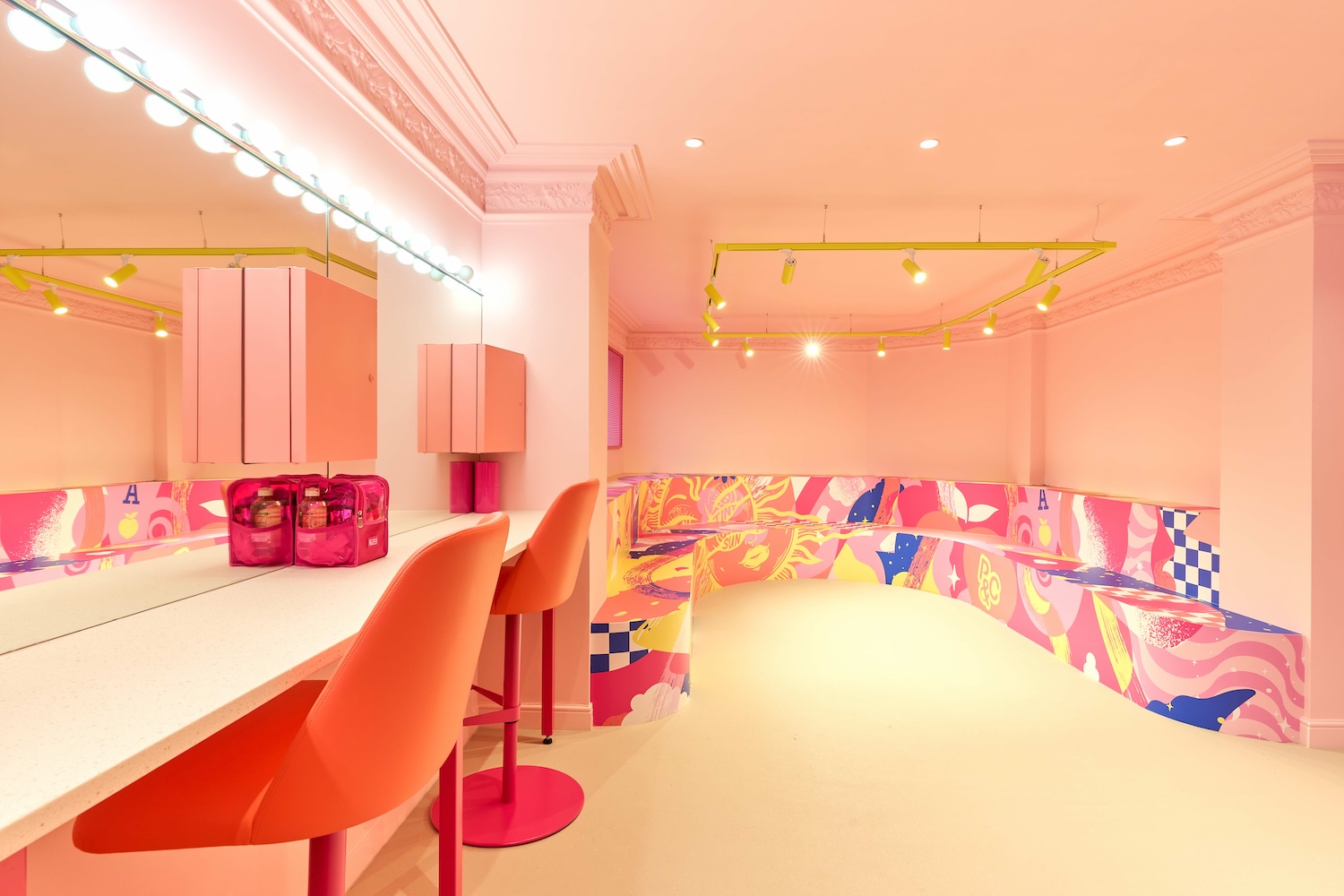
By working closely with the retailer on both the design and layout of the space, Shoosmith said this enables Light Forms to ensure the lighting levels and quantities of fittings are carefully considered to meet the requirements of the environment without over-lighting the store.
This approach, he added, allows the company to specify the right amount of lighting for each space, while its product team researches and develops its range to improve efficiency. As a result, Shoosmith says Light Forms can offer clients access to the latest energy-efficient LED technology and drivers, helping to deliver effective lighting solutions while keeping energy consumption in check.
On the subject of new developments, Shoosmith said that Bluetooth technology integrated within lighting still has plenty of potential. He said it not only provides sophisticated control over lighting, but can also turn luminaires into smart beacons that help retailers engage with customers through their apps.
“For example, lighting can be used to provide wayfinding, directing customers to specific areas of a store, while also enabling personalised offers based on their shopping habits,” he said. “With lighting already present throughout every retail environment, using it to deliver additional functionality beyond simply illuminating a space feels like a very natural next step, and one with huge potential for retailers.”
The message is clear: lighting should no longer be treated as an afterthought or a functional part of a retail fit-out. From creating contrast and highlighting products to shaping brand identity, improving efficiency and even providing connected services, the right lighting strategy can influence both the shopper experience and the wider performance of a store.