



Every mechanical engineer knows the golden rule of hardware design: use standard, off-the-shelf components whenever possible. Relying on standard bolts, screws, and pins keeps bill of materials (BOM) costs low and simplifies supply chain logistics.
However, advanced product development inevitably hits a wall where a standard catalogue part compromises the entire assembly. When designing bionic robot joints, lightweight aerospace enclosures, or highly regulated medical devices, a generic fastener often introduces unnecessary weight, structural weakness, or fitment issues. Deciding exactly when to abandon standard hardware and invest in custom fasteners is a critical turning point for any engineering team.
We examined the mechanical and financial thresholds that dictate this decision, as well as how modern custom manufacturing providers are making bespoke hardware accessible for low-volume production runs.
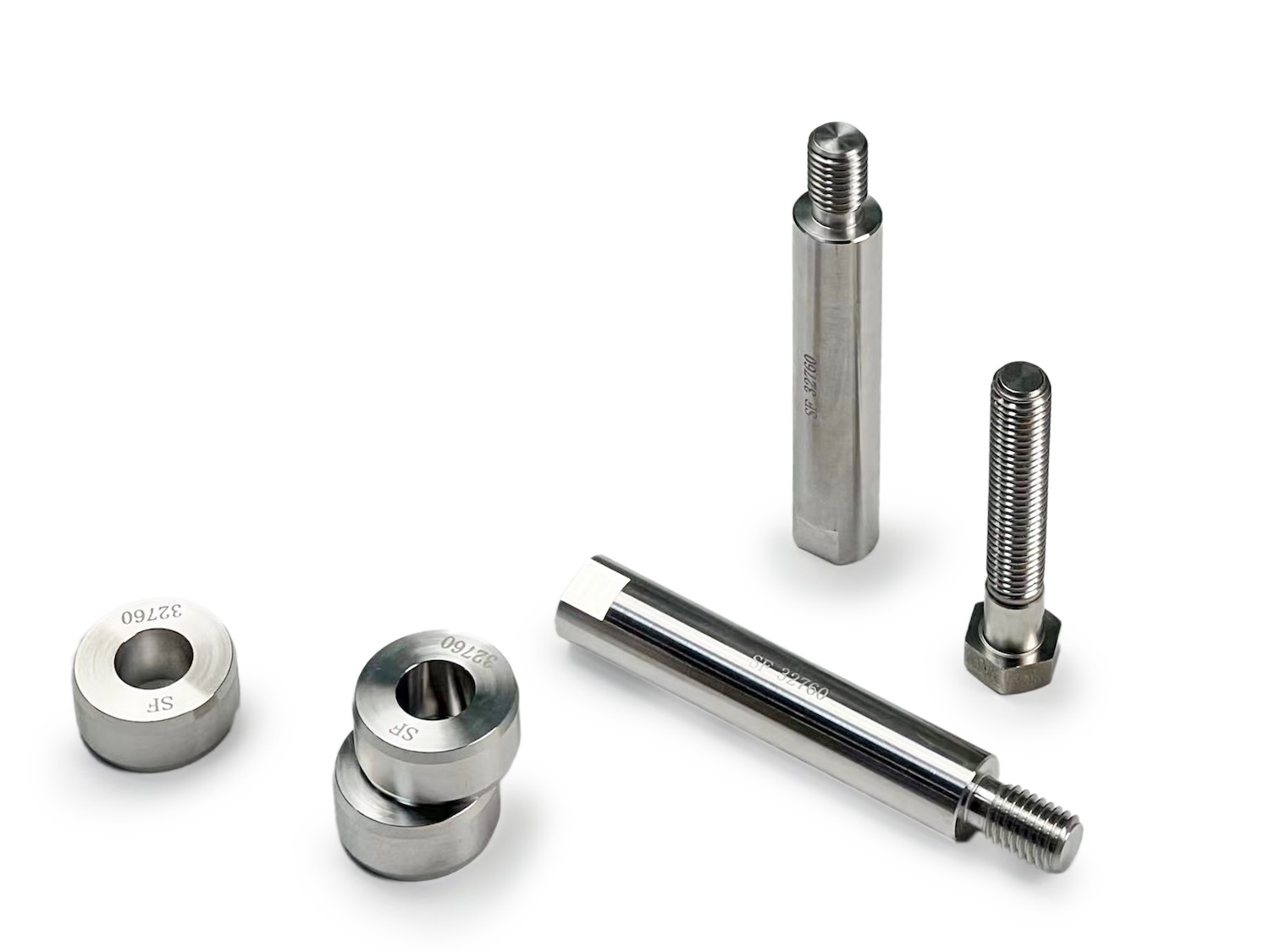
The Hardware Sourcing Formula
- Rely on standard catalogue hardware for non-critical assemblies, early-stage visual prototypes, and projects where weight and unique spatial constraints are irrelevant.
- Design custom fasteners when your product requires proprietary security features, extreme weight reduction, specialised material certifications, or consolidated multi-part assemblies.
- Partner with a direct manufacturer that offers “no minimum order” policies, allowing you to test a handful of custom fasteners before committing to mass production.
Evaluating Procurement Strategies
We broke down how the supply chain handles both standard and highly specialised hardware components.
| Fastener Strategy | Initial Cost | Engineering Flexibility | Minimum Order Quantities | Ideal Sourcing Route |
| Standard Hardware | Very Low | Zero | Low | Massive Online Catalogues |
| Custom (Automated Portal) | High | Moderate | Varies heavily | Simple modified standards |
| Custom (Specialised Partner) | Competitive | Infinite | None (1 to 100,000+) | Complex OEM product scaling |
The Tipping Point for Custom Geometries
Engineers typically transition to custom fasteners to solve severe spatial or weight constraints. In aerospace and automotive sectors, shaving fractions of a gram off a component improves overall fuel efficiency. Standard catalogue bolts are heavily over-engineered for general use, making them significantly bulkier than necessary for a highly specific application.
Furthermore, standard hardware rarely comes with the rigorous traceability required for regulated industries. If you are building a surgical tool, you need absolute certainty regarding the metal alloy. Designing a custom fastener allows sourcing teams to secure the exact material certifications and inspection reports required to pass strict regulatory audits. A single custom-machined pin can also frequently replace a messy sub-assembly of three standard parts, reducing the overall mechanical failure rate of the product.
The Volume Bottleneck in Specialised Sourcing
Historically, the biggest obstacle to using custom fasteners hasn’t been the design difficulty—it has been the minimum order quantity (MOQ).
Traditional fastener factories are built for massive scale. They prefer to run stamping presses or Swiss lathes for hundreds of thousands of units at a time. If a product designer only needs 50 specialised titanium screws for a low-volume medical device prototype, traditional suppliers will either outright reject the job or charge an astronomical tooling and setup fee, making the custom route financially unviable.
Because of this volume barrier, engineers are often forced to compromise their designs just to fit the limitations of what they can buy out of a catalogue.
Overcoming the MOQ Barrier
This is where specialised custom manufacturing services like Yijin Solution completely change the procurement math. They have engineered their production model to eliminate the MOQ barrier entirely, specifically for precision machined components and custom fasteners.
Instead of penalising engineers for low-volume testing, Yijin Solution operates with a strict “no minimum order” policy. If an R&D team needs exactly 12 custom screws with a proprietary thread pitch to validate a robotics assembly, they can order exactly 12. When that product passes testing, the sourcing team can scale that exact same custom part up to a 50,000-unit production run without having to switch vendors or negotiate new tooling setups.
The Lead Time Trade-off
Choosing to design your own custom hardware does introduce a minor change to the standard procurement workflow. Catalogue parts offer the luxury of instant checkout and overnight shipping.
Custom hardware requires engineering rigor. Because providers like Yijin Solution prioritise precision, they do not utilise automated instant-buy buttons. Sourcing teams cannot drop a custom CAD file into an online cart and check out in five seconds. Instead, teams submit their files for a thorough Design for Manufacturability (DFM) review to ensure the custom thread geometries and tolerances are actually viable before quoting.
For professionals building complex products, waiting a few hours to ensure flawless manufacturability is a highly worthwhile investment to avoid the risk of forcing a standard, ill-fitting bolt into a precision assembly.