



Korean skincare has become a routine purchase. Many stores still display it like a novelty.
Walk into a beauty retailer or a pharmacy in most UK towns and you will find Korean skincare somewhere. Usually in the same spot: a basket of sheet masks by the till, a few snail serums on an end cap, maybe a cluster of pastel tubes on the promotional table. The message is “try something fun”. Few stores go further than that and give the shopper somewhere to build a routine.
Five years ago that layout made sense. The customers have moved on since then, and a lot of shop floors haven’t.
A category that keeps growing
South Korea exported a record US$11.4 billion of cosmetics in 2025, according to the country’s Ministry of Food and Drug Safety. It is now the world’s second-largest cosmetics exporter, behind France and, for the first time, ahead of the United States. Skincare accounts for roughly three quarters of that.
The pace has held up in 2026. Exports in the first half were up by more than a quarter on the same period last year, and Europe is taking a growing share. Shipments to Poland, which many Korean companies use as a way into the EU, more than doubled in 2025. Europe has also overtaken Asia as the biggest air cargo market for Korean beauty products. Britain is growing quickly as well: Korean cosmetics exports to the UK rose by more than half in 2025, to around US$230 million.
On the shop floor, those figures show up as a change in what people come in for. Someone who picked up a sheet mask on a whim in 2022 is now after a cleanser, a toner, an essence and a sunscreen that work together. That shopper needs a different kind of space.
From till basket to destination bay
The till basket still earns its keep. Sheet masks are cheap, easy to gift and low risk, so they are a good way to bring a new customer into the category. Ariul, whose range leans on masks, cleansers and serums, is well suited to that first purchase.
Trouble starts when the basket is the only plan. A customer who liked the mask comes back wanting something more serious and finds the rest of the range scattered across general skincare, or not stocked at all.
The retailers doing this well give K-beauty a small area of its own and lay it out as a route from first purchase to full routine. Most end up with three zones.
The first is for trial. Masks and minis sit near the entrance or the till, priced so the decision takes seconds.
The second is a hero wall for the products that made the category’s name. Snail mucin is the obvious one. It is the ingredient behind Mizon’s reputation in Europe, and plenty of shoppers walk in asking for it by name.
The third is organised by skin concern rather than by brand. Here a customer can put together a whole regime, and staff can help without a training day. Coxir already sorts its ranges by need (hydration, cleansing, texture), which makes concern-led signage straightforward. The Skin House covers the longer-running skincare lines and gift sets, the products that turn one serum into a routine and a routine into a Christmas present.
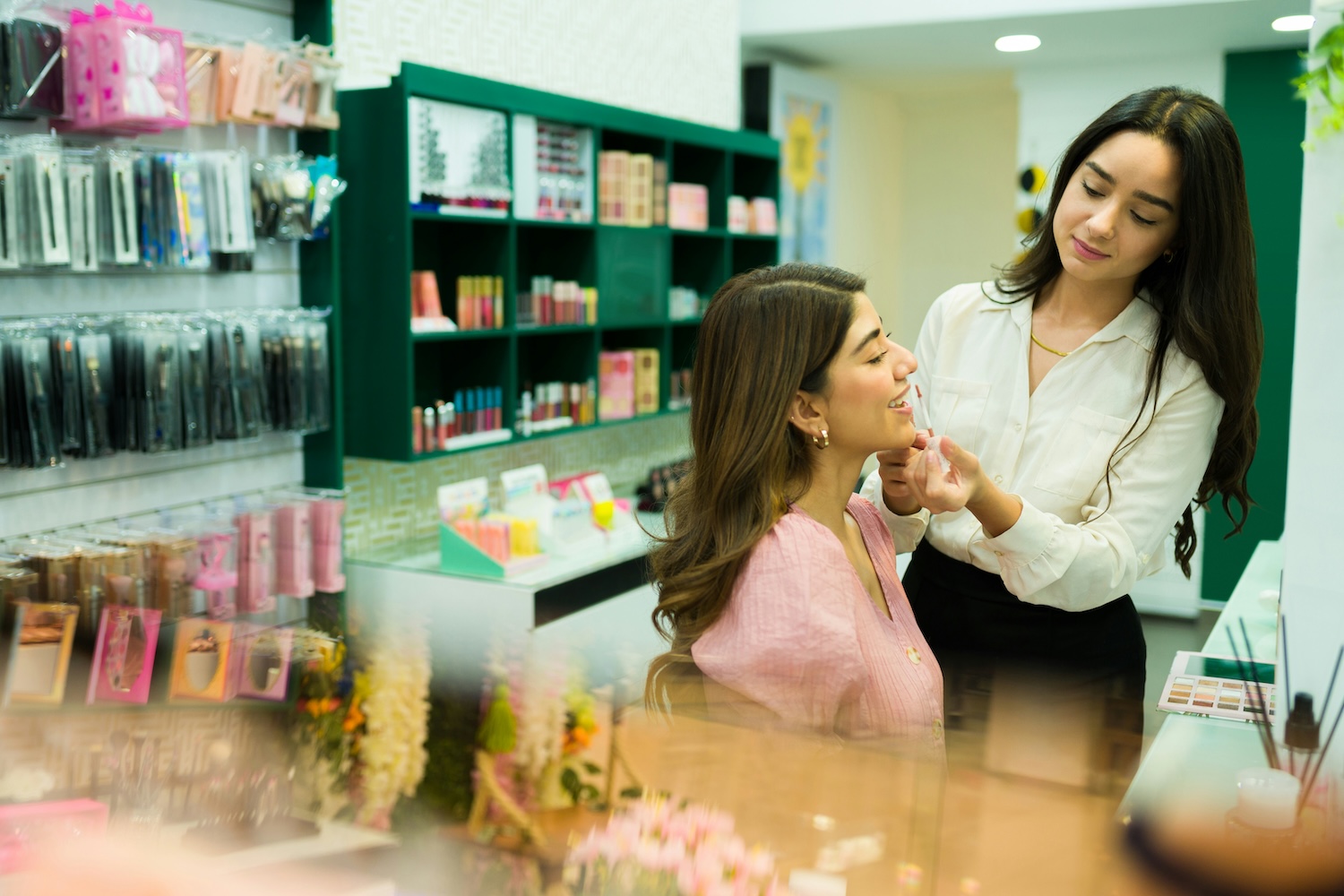
Signs that answer questions
K-beauty packaging is so striking that it is tempting to let it carry the display. A wall of pastel tubes with Korean lettering can put people off, though, especially someone who just wants to know which bottle goes on first.
Simple signs usually do more for sales than another prop. Order-of-use labels (“cleanse, tone, treat, protect”), a line on what each key ingredient does and a couple of “start here” cards will cover the questions staff field all day. Sorting by concern helps with restocking too: when one moisturiser sells out, the hydration shelf still looks full.
Testers deserve some planning. The textures (gel creams, watery essences, jelly masks) are a big part of the appeal and customers want to try them. Sealed testers, dated clearly and cleaned on a routine, protect the shopper and the stock.
Empty facings cost more than you think
Design only goes so far. A carefully planned bay with three empty facings looks worse than a plain shelf that is full. Gaps tell customers the category is unreliable, which hurts more in skincare than in most areas. If her toner is out, she may go elsewhere for the whole routine next time.
So supply has become part of merchandising. A large chain can buy direct from Korea. An independent shop or a small group usually can’t, because direct buying brings big minimum orders, long freight times, customs paperwork and regulatory duties that a small team struggles with. More retailers now buy through European distributors who keep stock locally, which turns a reorder from weeks into days.
Lenzer Trade is one of them. Founded in 2015 in Tartu, Estonia, it supplies retailers through KoreanCosmetics.eu, with four brands that fit the zones above fairly closely: Ariul for trial, Mizon for the hero wall, Coxir for concern-led shelves and The Skin House for full routines and gifting.
“Retailers used to ask us for whatever was trending that week,” said a spokesperson for Lenzer Trade. “Now the first questions are whether they can reorder it and whether the documents are in order. A bay only works if the shelf behind it can be refilled.”
Compliance on the shop floor
Fast growth has brought closer checks. Korea’s regulator recorded more than three times as many cosmetics recalls and disposals in 2025 as in 2024, and the country plans to bring in a new safety assessment system in stages from 2028.
In Great Britain, the rules sit in the UK Cosmetics Regulation. Every product needs a UK-based Responsible Person and has to be notified through the government’s Submit Cosmetic Product Notification (SCPN) service. In the EU the equivalent is an EU-based Responsible Person and the Cosmetic Products Notification Portal (CPNP). A retailer selling in both markets needs both, and one doesn’t cover the other.
None of this is new. It just matters more now that K-beauty is being sold as serious skincare. Lenzer Trade, for instance, is the EU Responsible Person for Coxir and The Skin House. When a retailer knows who answers for each product, a question from a customer, a marketplace or trading standards becomes a quick reply instead of a scramble. A Responsible Person address on the pack, an English ingredient list, a batch code and a use-by date also reassure shoppers who have read about fakes online.
It is worth briefing staff. “Where does this come from?” is now a regular question at the beauty counter, and customers notice when the answer comes easily.
Six questions for the next reset
- Can a shopper move from a cheap trial product to a full routine without leaving the bay?
- Can she find the hero product without asking?
- Do the signs explain order of use and skin concerns in plain English?
- Can every facing be refilled in days rather than weeks?
- Can staff say where the products come from and who is responsible for them?
- Does the bay still look complete when one line sells out?
If the honest answer to most of these is no, the till basket is doing all the work. K-beauty is a permanent part of the beauty floor now, and it deserves the same planning as any other skincare category.