



A football shirt is no longer simply performance clothing. It can represent club identity, design history, a favourite player and a sporting era at the same time. That combination gives the product a unique position in the retail market. Few items move so easily between stadium culture, fashion, collecting and mainstream sportswear while retaining a clear link to the team that created them.
For retailers, that gives the shirt a value beyond the normal seasonal cycle of apparel. New kits can generate immediate demand, while older designs can return years later as retro products with a different audience.
A product that carries more than one identity
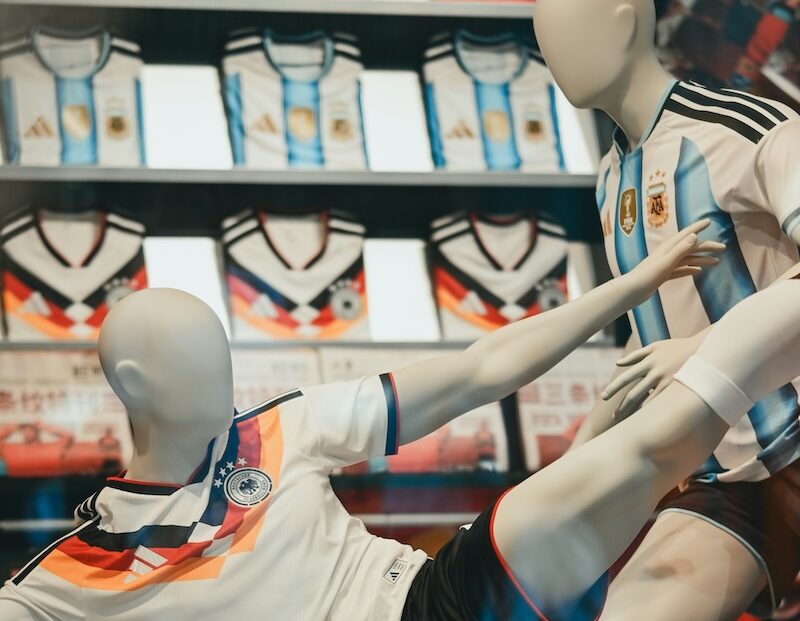
The basic function of a football shirt remains straightforward. It identifies a team on the pitch. The replica version, however, has developed into something broader. Supporters wear shirts to express allegiance, collectors search for designs linked to memorable seasons, and fashion buyers may respond to colour, pattern or scarcity even when they are less interested in current results.
This gives retailers several ways to position the same product category. A current home shirt may be treated as core sports merchandise. A retro design can be sold through heritage and memory. A limited collaboration can sit closer to fashion. Personalisation adds another layer because a player’s name can connect the product to a specific moment in a club’s story.
The commercial system around football is equally broad, bringing together broadcasting, sponsorship, ticketing, retail and services such as online betting. Within that wider system, the shirt remains one of the most visible physical products because it carries club colours, commercial partnerships and supporter identity.
Player signings can change demand very quickly
Recent events at Atlético de Madrid provide a useful example of how rapidly a player can affect merchandise demand. Kang In Lee joined Atlético de Madrid from Paris Saint-Germain in July 2026, returning to Spanish football after three seasons in Paris.
The retail impact became visible almost immediately in South Korea. Reporting by AS on 7 August said Atlético had taken 10,000 shirts to Korea for its visit to Seoul and sold the entire allocation. The same report identified Kang In Lee’s arrival as a major factor behind the demand for shirts.
The figure is useful because it shows what shirt retail can look like when player identity, international reach and a club visit converge. It does not mean every major transfer will produce the same result. It does show that demand can shift quickly, creating an inventory challenge when a player has a strong following in a market far from the club’s home stadium.
For retailers and clubs, the lesson is practical. Stock allocation, personalisation capacity and local demand forecasting can become as important as the launch campaign.
Major events create concentrated retail moments
Tournament football creates another version of the same effect. Interest can rise sharply because national identity, television exposure and a fixed competition calendar concentrate attention within a short period.
Recent data on World Cup merchandise spending showed England shirt and merchandise sales rising 765 per cent against average daily spending levels in the week ending 3 June 2026. Spanish shirt and merchandise sales in the UK were reported at 864 per cent above average over the same period.
Those figures underline why football shirts can become powerful traffic drivers. Retailers know when major fixtures will happen, when new kits will launch and when attention is likely to intensify. That makes it possible to coordinate store presentation, stock, personalisation and digital merchandising around known sporting moments.
Why the shirt remains difficult to replace
The strongest feature of the football shirt is its ability to hold several kinds of value at once. It is sportswear, a badge of affiliation, a design object and, in some cases, a collectable. Its meaning can also change over time. A shirt bought because of a new signing can later become associated with a particular season or match.
That flexibility gives retailers more than one route to relevance without changing the underlying product. Current kits can benefit from immediacy. Retro shirts benefit from history. Player shirts can respond to individual popularity. Special editions can reach audiences interested in design and scarcity.
The examples from tournament spending and Kang In Lee’s arrival in Madrid illustrate the same broader point. Football shirts are unusually responsive to events, personalities and identity. Their retail strength comes from the fact that one familiar garment can absorb all three and turn them into demand that is both emotional and measurable.