



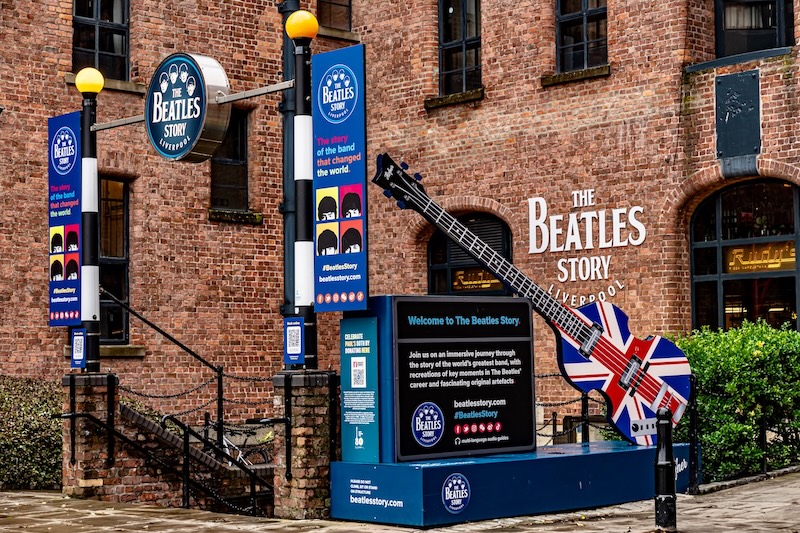
THE Beatles Story has turned to technology normally associated with the retail sector to help keep its teams connected across the Liverpool attraction which attracts more than 300,000 visitors every year.
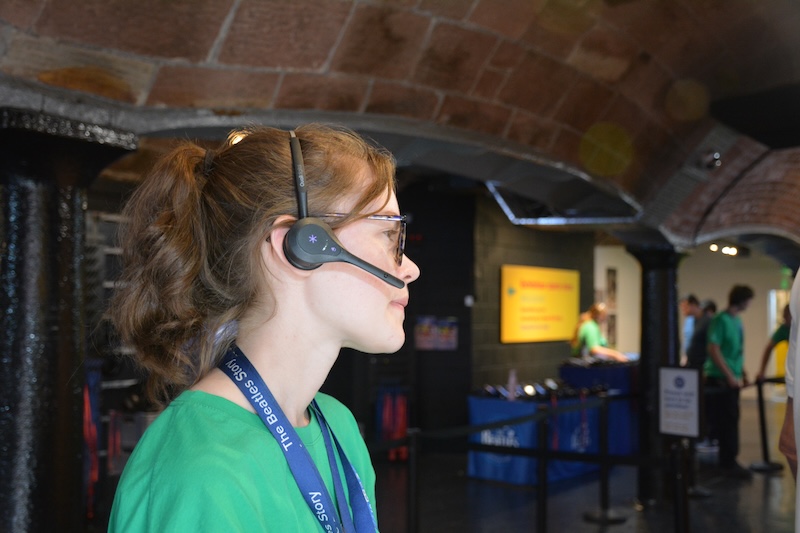
The visitor experience at Liverpool’s Royal Albert Dock has introduced a wireless headset system, enabling around 30 employees working across admissions, exhibitions, the Fab4 Store, cafés and guest services to communicate with each other hands-free.
The move is designed to help staff respond more quickly to visitor requests and coordinate activity across the attraction without having to leave their work areas or interrupt their interactions with guests.
For a venue where the visitor journey stretches across multiple exhibition spaces, retail and hospitality areas, communication between teams is ‘critical’ to keeping the experience running smoothly according to Andy Kelly, guest experience manager at The Beatles Story.
Kelly said the headsets by Quail Digital, a UK-based technology company, had changed the way teams which previously used an outdated radio system, communicate across the attraction. “Introducing the Quail Digital headset system was an important step forward in how we support our teams and serve our guests,” he said.
“Clear, fast communication is essential in a dynamic attraction like ours. We have colleagues working across a number of different areas, and the ability to communicate immediately means we can respond to guest needs more quickly and coordinate support without colleagues having to leave their positions.
“Just as importantly, it supports our colleagues by making their roles more efficient and connected. We’re constantly looking at ways to improve how we work behind the scenes so that the visitor experience remains seamless. The investment in communication technology is part of that.”
The Beatles Story’s adoption of the system reflects the increasingly blurred line between technology used in retail and other customer-facing environments.
Although the attraction is primarily a visitor experience, its operation shares many of the characteristics of a large retail site – multiple frontline teams, high visitor volumes, customer enquiries, retail and hospitality operations and employees working across a large physical space.
Tom Downes, CEO of Quail Digital, said the attraction demonstrated that the communication challenges faced by retailers are not unique to shops.
“What’s interesting about The Beatles Story is that, while it’s a visitor attraction, many of the operational challenges are very similar to those faced by retailers,” he said.
“You have people working in different areas who need to communicate quickly, customers who need assistance and teams that have to coordinate while continuing to focus on the people in front of them. The technology is about making that communication easier without getting in the way of the customer experience.
“Good communication is one of those things you tend to notice only when it isn’t there,” he said. “When teams can communicate quickly and discreetly, problems can be dealt with before they become visible to the customer. Whether that’s in a shop, a hotel or a visitor attraction, that can make a real difference to how an operation performs.”
The Pro12 system provides wireless communication between employees, with speech recognition allowing users to join team calls, respond to messages and communicate with groups hands-free. It can also integrate with other connected technologies, while its safety alert function provides an additional method of notifying colleagues when assistance is required.
The Beatles Story attraction was established at Liverpool’s Royal Albert Dock in 1990 and takes visitors through the history of The Beatles using immersive recreations of locations including Hamburg, The Cavern Club and Abbey Road Studios, alongside original memorabilia.
Behind the exhibition, however, is a complex operation involving admissions, visitor services, retail and hospitality teams. Kelly said keeping those teams connected was ultimately about ensuring visitors experienced the attraction without seeing the operational effort required to deliver it.
“Our guests come to The Beatles Story to immerse themselves in the world of The Beatles,” he said. “The last thing we want is for the operational side of running the attraction to interfere with that experience. Anything that helps our teams communicate more effectively and respond quickly contributes to making the visitor journey as smooth as possible.”