



Coffee has become one of the most effective tools retailers have for encouraging customers to stay longer and engage more deeply with a space. Whether it’s a garden centre, furniture showroom, farm shop, dealership, retail park or department store, a high-quality coffee offering changes how customers experience the environment. So, rather than viewing coffee purely as a revenue stream, retailers should see it as part of the overall customer experience.
The Role of Coffee in Modern Retail
The role of coffee in modern retail has transformed from a simple convenience into a strategic tool used to drive footfall, encourage longer in-store dwell times and boost the customer experience. A well-designed coffee space signals to customers that the environment is a space that is worth spending time in rather than just passing through.
This shift is especially important within the modern retail space, since the high street is competing against online retail on price and convenience. However, physical stores are increasingly winning on experience. Coffee is one of the most accessible and affordable ways to boost the customer experience in a retail environment, and it is a method that appeals to almost every customer demographic. Retailers use all coffee spaces to engage all five senses, turning stores into social community hubs rather than purely transactional zones.
Why Customers Increasingly Expect Quality Coffee
Since the boom of coffee shops appearing on every high street corner, customer expectations have also increased. Customers know what a flat white should look and taste like, and they’ll notice if the drink doesn’t meet their standards and expectations.
The quality of the coffee that is provided in retail spaces contributes enormously to the in-store experience. If consumers are disappointed by the coffee, then they are unlikely to return or extend their dwell time. The demand for coffee in retail spaces can fluctuate, so it is important that every cup is identical, regardless of whether it is poured during the weekend rush or a quiet Tuesday morning. Queues can destroy dwell time, so the speed of service is also critical.
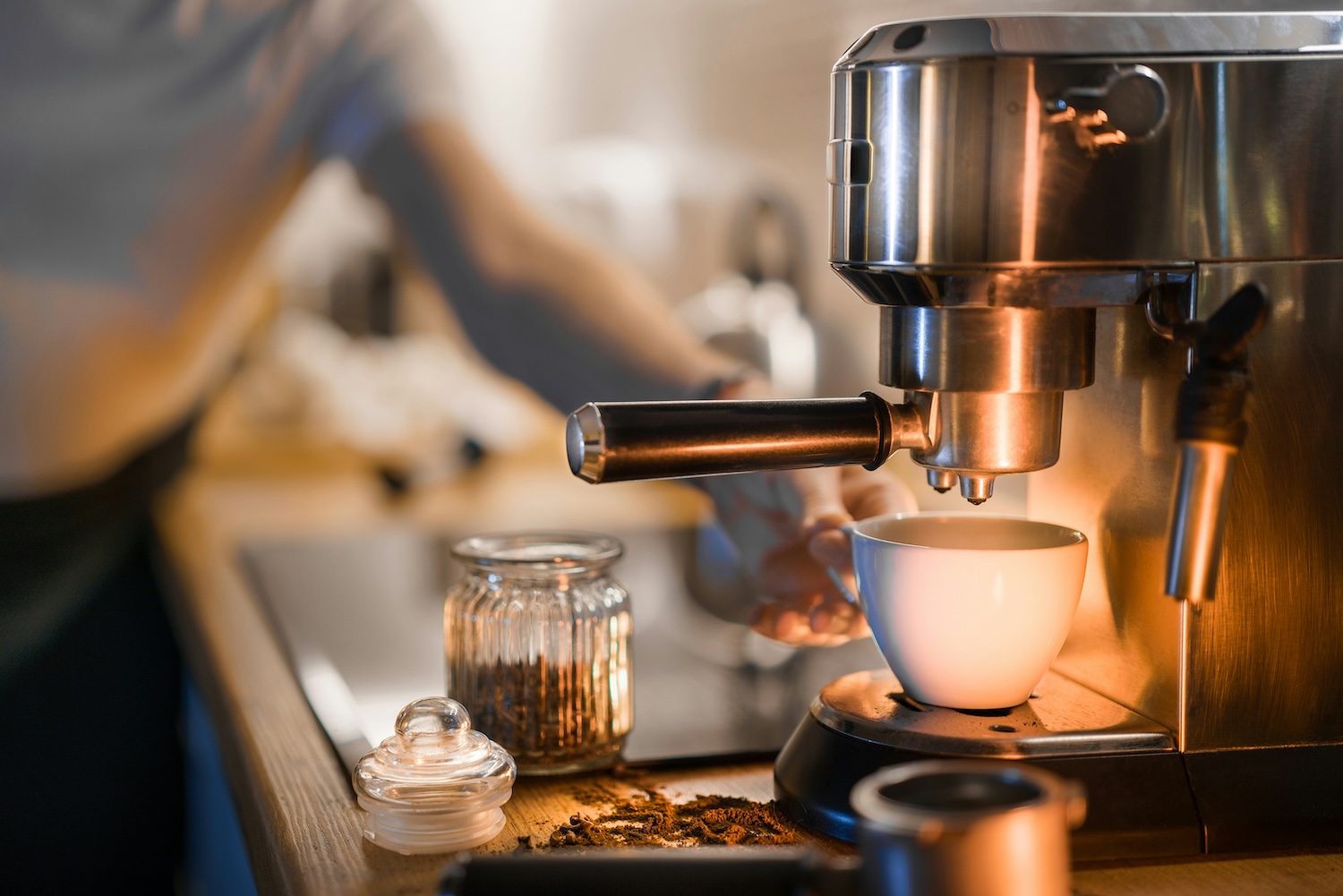
This is where modern bean to cup coffee machines have changed the equation, grinding fresh beans for every serve and delivering café-standard drinks at the touch of a button, and where specialist expertise earns its place. Reliability matters just as much as drink quality: a machine that fails during peak trading undermines the very experience it was installed to create, so ease of maintenance and dependable service support should sit alongside taste in any purchasing decision. Choosing the right commercial coffee machine and the right coffee solution matched to volume, space, staffing and peak trading periods, is fundamental to delivering the experience retail customers now expect.
Coffee as Part of the Retail Experience
The most forward-thinking retailers no longer treat coffee as an adjacent catering operation. They design it into the in-store experience itself: positioned where it draws customers deeper into the space, styled to reflect the brand, and timed to the rhythms of the visit. Done well, the coffee offer creates a reason to visit in the first place, anchors the trip once customers arrive, and gives them a reason to come back.
The Shift from Transactional Retail to Destination Retail
Physical retail stores are no longer competing to be the quickest or most convenient store; they’re competing to become a destination that people want to visit. A destination retailer gives customers a reason to linger: to browse without pressure, to bring family or friends along, to make an afternoon of the visit. A well-positioned coffee space turns a fifteen-minute errand into an hour-long experience, and it creates a reason to visit the store in the first place and differentiates it from online retailers. For many garden centres and farm shops, the café is no longer an add-on to the retail offer; it is the anchor around which the whole visit is planned.
Why People Stay Longer When Good Coffee is Available
A customer holding a warm drink slows down, browses more of the store and absorbs more of the surrounding environment. Dwell time increases almost automatically, and time spent in store is the single strongest predictor of spend in most retail environments. Retail spaces are tiring, particularly larger-format stores where customers may be on their feet for an hour or more. A coffee break allows people to rest and reset, and crucially, they reset inside the store rather than cut the visit short and head home when the shopping fatigue hits.
For retailers selling considered purchases, the effect is even more pronounced. Buying a sofa, a car or a kitchen benefits enormously from time and a calm mindset. A customer who sits down with a coffee to talk through the decision is far more likely to reach a confident conclusion than one who feels hurried and walks away to “think about it”. And because coffee is inherently social, it turns solo shopping trips into shared visits. Couples, families and groups of friends stay longer together than any individual customer would alone.
The Hidden Commercial Benefits
The commercial case for coffee extends well beyond the margin on each cup. Longer visits translate directly into larger baskets: customers who stay for a drink walk more of the floor, encounter more of the range and buy more as a result. A café or coffee point positioned deep in the store also creates natural cross-selling opportunities, drawing customers past categories they would never have sought out on a quick errand.
The effects compound over time. A quality coffee offer gives customers a reason to return between major purchases, turning occasional shoppers into regulars and building the kind of loyalty that discounting alone rarely achieves. It also shapes brand perception: a retailer that serves genuinely good coffee signals care and quality across everything else it does, whilst a poor cup quietly suggests the opposite. Few investments in the physical store influence spend, repeat visits and reputation at once in the way a well-run coffee space does.
Where Retailers Are Seeing Success
What makes this trend compelling is its breadth. Garden centres led the way, with cafés that now generate the visit itself. Farm shops pair quality coffee with a premium, local-first identity customers will travel for. Furniture retailers use coffee to support long, considered decisions, while car dealerships have found it transforms the experience of waiting and negotiating. Retail parks and shopping centres use it to extend total time on site, visitor attractions turn hours into full days out and convenience stores are capturing commuter trade with self-serve coffee machines for retail settings that deliver speed without sacrificing quality.