


Walk into any retail store and every rail, every display, every backroom, every distribution centre is quietly full of plastic. It is not packaging, not something the customer walks away with but the infrastructure of retail itself that is at the centre of the customer experience:
- Hangers
- Size markers
- POS displays
- Signage
Millions of units moving constantly, breaking, being replaced, disappearing and almost all of it is made from fossil plastic.
The Challenge No One Has Solved (Yet)
Retailers have made real progress on:
- Packaging
- Carrier bags
- Consumer-facing plastics
But behind the scenes and front of house, a harder problem remains:
How do you remove fossil plastic from operations — without breaking the system that depends on it, because today’s alternatives come with trade-offs:
- Recycled plastics → still fossil-based, still microplastics
- Bio-PP → still persistent
- New materials → require new suppliers, tooling, cost
So the system stays the same.
A Different Way Forward
This is where the partnership between Candee.bio and Chestnut Biopolymers changes the equation.
Not by asking retailers to redesign their operations but by enabling them to change the material inside the system they already run.
What This Partnership Does
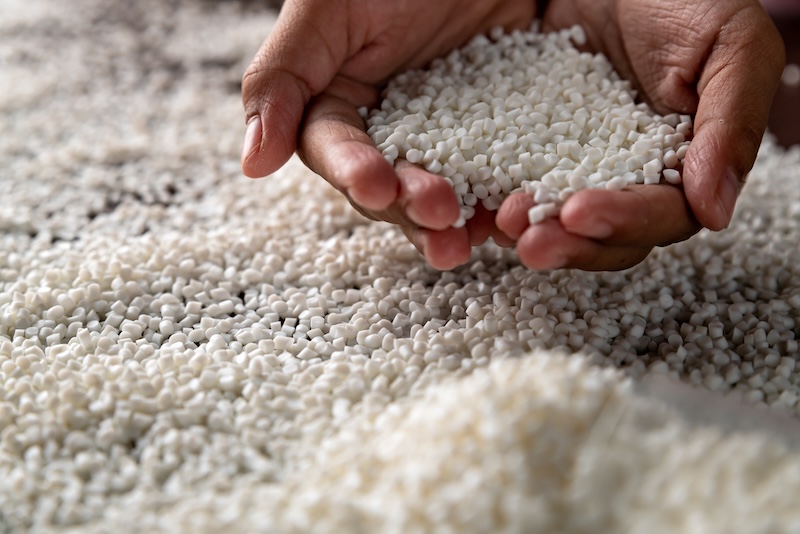
- Chestnut Biopolymers has developed a plant-based material platform designed to replace polypropylene (PP), Polyethylene (PE) and Polystyrene (PS).
- Candee.bio integrates that material into retail supply chains.
Together, they enable a simple shift:
Keep your suppliers. Keep your tooling. Change the material.
Why This Matters Now
Because the pressure is no longer theoretical.
Sustainability, procurement and finance teams are now all looking at the same thing:
- Scope 3 emissions (often >90% of total footprint)
- EPR costs increasing year-on-year
- Plastic taxes expanding in scope
- Microplastic regulation emerging globally
And asking:
“Where is the next meaningful reduction going to come from?”
What Changes When You Change the Material
1. You Remove Fossil Carbon at Source
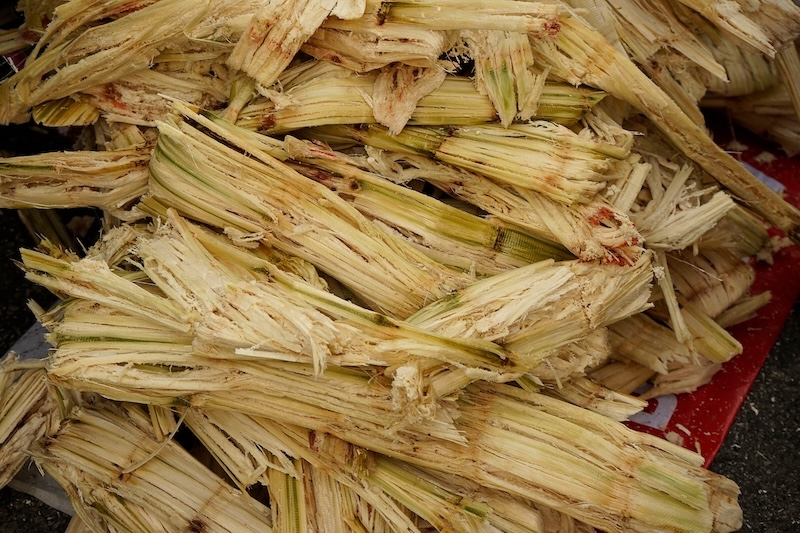
Instead of extracting carbon from the ground, the material uses renewable plant-based feedstocks.
This directly reduces:
- Scope 3 emissions
- Exposure to fossil-linked pricing
- Long-term carbon liability
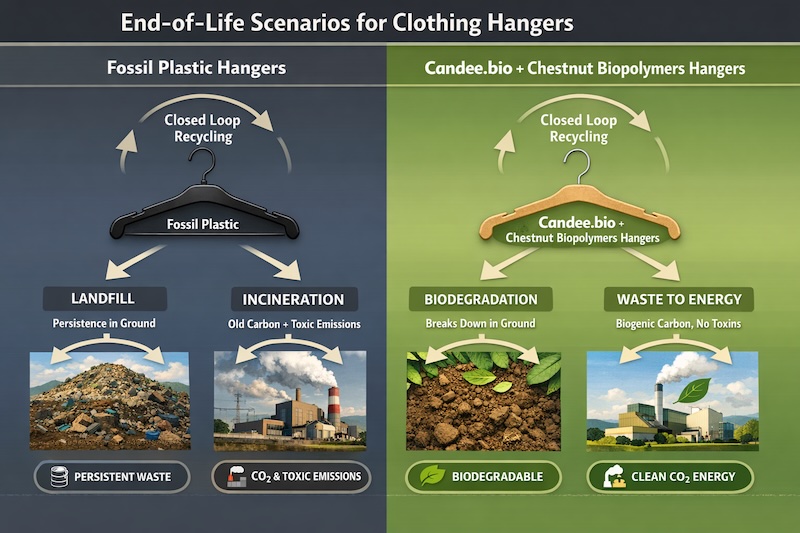
2. You Remove the Concept of Permanent Waste
Conventional plastics:
- Persist for decades or centuries
- Fragment into microplastics
This material:
- Biodegrades in natural environments
- Does not leave persistent microplastics
So the question shifts from:
“Can we recover 100%?”
to:
“What happens when we don’t?”
3. You Don’t Break the System to Fix It
This is not a redesign.
- Existing moulds → work
- Existing suppliers → stay
- Existing logistics → unchanged
That is what makes scale possible.
Beyond Materials: Rethinking the System Itself
Once the material changes, something else becomes possible.
Reuse Becomes More Valuable
Retail already reuses assets — but inefficiently.
With this material:
- Safe handling
- Durable performance
- No toxicity concerns
Reuse cycles can increase, reducing both:
- cost per use
- total material demand
Closed-Loop Becomes Achievable
Retail has something most industries don’t:
Controlled environments and reverse logistics
Stores → DCs → suppliers.
This creates the foundation for:
- collection
- consolidation
- reprocessing
Without needing new infrastructure.
Circularity Becomes Economic (Not Just Environmental)
At scale, this becomes:
- lower material input
- lower waste cost
- lower EPR exposure
- reduced reliance on volatile polymer markets
And When the System Isn’t Perfect…
Some loss always happens.
The difference is:
- PP → becomes permanent pollution
- This material → returns safely to the environment
A More Realistic Circular Model
Not perfection.
But resilience.
- Reduce
- Reuse
- Recover
- Biodegrade
Where This Applies Today
- Coat hangers
- Size markers
- POS displays
- Signage
- Visual merchandising
How It Works in Practice
- You continue with your existing suppliers
- Candee.bio supports integration
- Chestnut supplies the material platform
The Partnership Roles
- Material developed and supplied by Chestnut Biopolymers
- Market integration led by Candee.bio
Clear ownership.
Clear accountability.
Long-term stability.
What This Enables
Not a pilot.
Not a concept.
But a practical shift:
From fossil plastic → to plant-based materials
Without changing how retail operates
The Question for Retailers Now
Not:
“Is this possible?”
But:
“How quickly can we start?”
To discuss how you can become more sustainable please go to www.candee.bio or email sales@candee.bio