




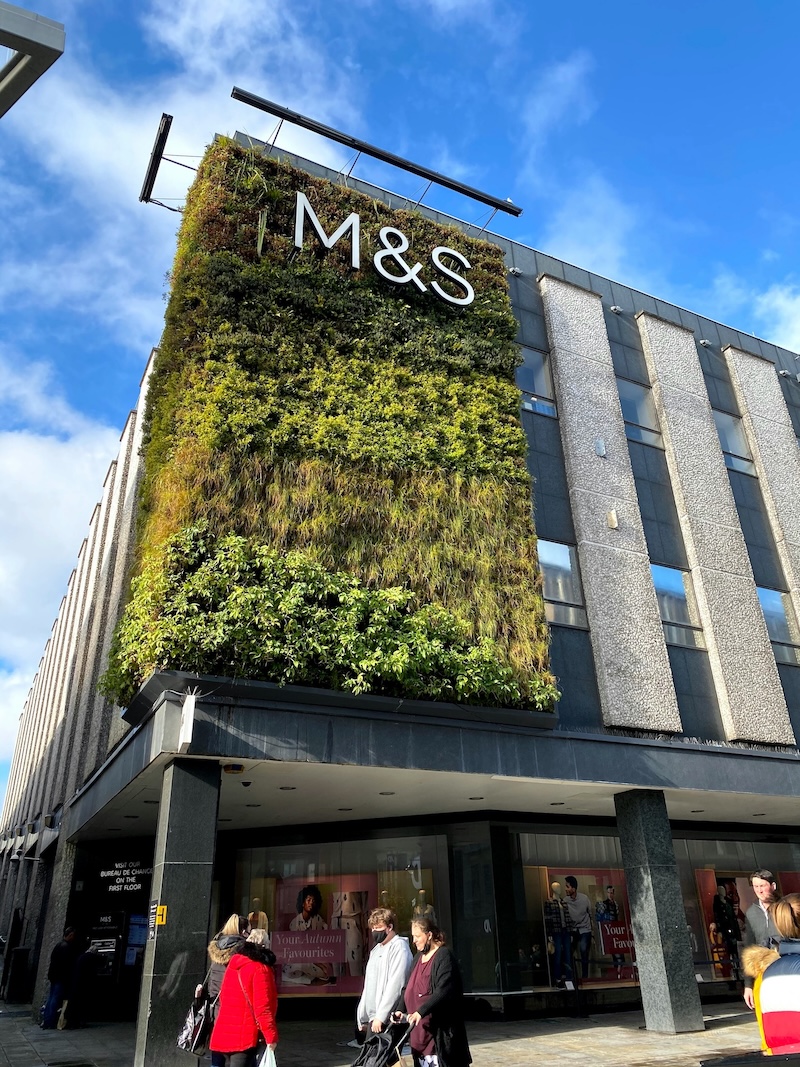



Marks and Spencer recently announced that they’re tooling up their store managers with AI assistants. It’s a move that doesn’t seem particularly groundbreaking at first. We see many a headline about brands using tech to transform this, that and the other. However, M&S’ rollout deserves our attention. It could be the catalyst that helps heal the high street.
M&S is going from strength to strength. In recent years, the brand has gone from frumpy to fashionable, curried favour with a whole new cohort of shoppers, and launched scores of viral food and clothing items. The retail behemoth has done this by shaking up its sales and marketing strategies and team and embracing innovation.
The strategy has helped them thrive financially, overcoming the cards currently stacked against retailers: falling footfall and customer budgets, mixed with rising energy costs and business rates. The retail stalwart announced that their “financial health” was the best it’s been in nearly 30 years last spring. And that position meant that their profit projections remained strong, even after the cyber attack they experienced last year.
Such success has made M&S the blueprint: their decisions set the tone for the rest of the British high street. What they do, many retailers will copy, including their adoption of AI.
Headlines may have you believing that every employee now has AI at their fingertips. However, nearly three-quarters of retail employees have never used AI-based tools at work, and nearly nine in ten retail staff have never received workplace AI training, according to research released at the end of last year by the British Chambers of Commerce. This is despite nearly a third of frontline store staff saying that use of AI would help their store’s daily operations, according to our research at Rotageek.
M&S’ move to hand out AI tools to store staff could change that picture.
Smart retailers will follow in M&S’ footsteps and give AI tools to store managers to support with administrative tasks that drain time. For example, taking meeting notes, creating handovers, and analysing and summarising store sales performance data. They’ll also adopt AI forecasting tools to help managers better predict their stock and staffing needs in line with customer traffic and demand.
As a result, managers will be able to spend more time on the shop floor with customers, build more efficient and cost-effective rotas and aligned stock inventory, and enhance their in-store experience. This in turn will help retailers build a reputation for exceptional customer service, entice new shoppers, and drive up revenues. All of which is crucial if shops are to become more resilient in the current retail climate.
Of course, the best retailers won’t just mimic what M&S did. They’ll build on top of it and tailor their approach to their needs. They’ll start by assessing what AI tools would add the most value to staff, who needs them, and what training they’ll need to utilise them effectively. For example, they might embed AI tools into EPOS systems to offer personalised product recommendations to customers at the till point. Or perhaps they’ll use tech to identify inefficiencies in their current rostering practices, or to guide their product markdown strategy, like Boden is doing. Those who take this considered approach will be able to maximise the gains they get from technology to help the business succeed.
AI adoption at the store level may not be the silver bullet to save the high street. However, embracing new tech tools is a pivotal part of helping high street retailers become more efficient, profitable and resilient. And M&S has lit the spark. I hope the move will light a fire under other retailers, resulting in widespread AI adoption on the shop floor. It could usher in a new era for the high street, one that promises stronger, hardier stores that can overcome the odds stacked against them and keep thriving. Creativity is born out of adversity. I believe that as retailers embrace tech to tackle existing challenges, we’ll enter the most exciting chapter of the high street yet.