




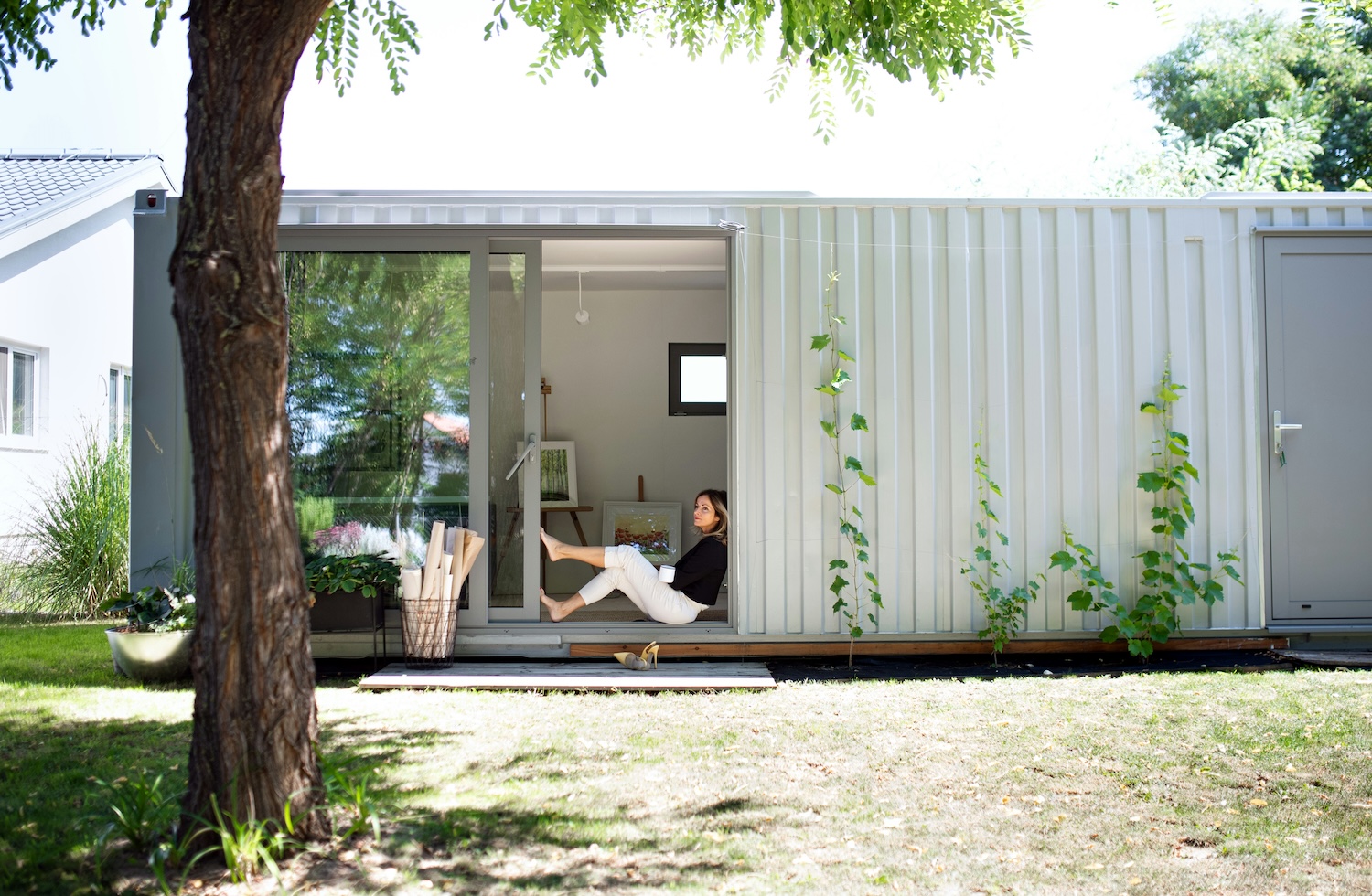

Most “best container conversion companies” lists you’ll find are thinly disguised lead-gen pages. The same six firms appear in roughly the same order on every site, the descriptions are clearly cribbed from each company’s homepage, and nothing in the article suggests the author has ever stood inside a converted container, let alone commissioned one.
We approached this differently. We spent six weeks contacting UK conversion firms, asking the same brief (a 20-foot site office with insulation, electrics, a single window and a personnel door), and comparing quotes, lead times, drawings, and how each team handled questions. We also dug into real projects each company has completed, spoke to a handful of past customers where we could reach them, and cross-referenced everything against published reviews and case studies.
The result is the list below. Seven companies, each one genuinely good at something specific. None of them are sponsored placements. A few didn’t make the cut because the quote process was painful, the drawings were sketchy, or the price felt opportunistic. We’ve named the ones worth your time.
One note before we get into it: “best” depends entirely on what you’re building. The firm that’s brilliant at a single bespoke garden room is probably not the right pick for a multi-unit pop-up retail village, and vice versa. That’s why this list is categorised by what each company is best at rather than ranked one to seven.
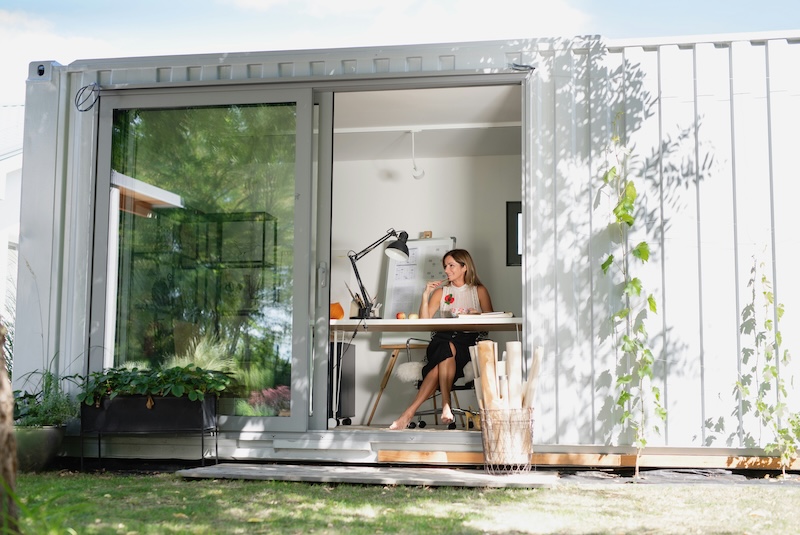

Quick-pick summary
The short version, in case you’re skim-reading. Detailed reviews follow.
| Company | Best for | Based | Pricing | One-line verdict |
| Universal Containers | Bespoke residential and creative projects | Manchester | ££ | The pick when you actually need design help, not just a fitter |
| Cleveland Containers | Large-scale and multi-unit commercial builds | Stockton-on-Tees | ££ | Hard to beat on scale, logistics, and depot coverage |
| Eldapoint Group | Turn-key in-house manufactured buildings | Knowsley, Merseyside | £££ | Everything under one roof, which shows in the build quality |
| S Jones Containers | Technical and regulated specialist units | Aldridge, West Midlands | £££ | Forty years of engineering experience and it shows in the detailing |
| TITAN Containers | Mobile, event and small-format conversions | Bristol | ££ | If you need it on a trailer, they have probably already done one |
| Willbox | Welfare units and site accommodation | Eastleigh, Hampshire | ££ | Reliable, no-nonsense, and they actually own their fleet |
| Halletts Spaces | Architect-led and multi-unit creative projects | Llanelli, Wales | £££ | Comfortable working from planning drawings and creative briefs |
Pricing key (20ft converted office benchmark): £ = under £6K (entry/used), ££ = £6K–£12K (mid-market), £££ = £12K+ (premium/bespoke). Figures based on published 2026 pricing where available.
1. Universal Containers: Best for bespoke residential and creative projects
Best for: Homeowners, small businesses, and creative clients who want a designed-from-scratch conversion rather than a catalogue pick
Based: Manchester, with delivery UK-wide
The pick when you actually want someone to design with you, not just take an order and start cutting steel.
Universal Containers sits at an interesting point in the market. They’re large enough to handle ambitious projects (their portfolio covers everything from container homes and garden rooms through to gyms, cafés, pop-up bars, and even container pools), but small enough that you get a meaningful conversation with their in-house CAD team rather than being routed straight to a salesperson with a price list.
This is the bit that makes them genuinely useful for first-time buyers. A lot of people approaching a container conversion know roughly what they want (a workshop, a studio, an office in the garden) but haven’t thought through the practical details: where the windows should go for light without overheating, how to handle insulation properly in a UK climate, what the floor build-up adds to the internal height, whether a stand or platform is needed. Universal’s CAD team walks through those decisions before quoting, which is why their quotes tend to land closer to the final invoice than the industry average.
Their range of base units is also worth noting. They stock everything from 8ft through to 45ft in both new and used condition, plus painted, cladded, insulated and high-cube specs. If you’re going for a clean architectural look you can start with a painted-from-the-factory unit rather than getting one repainted later, which holds up better long term.
What stood out
The design phase is genuinely collaborative. We submitted a deliberately vague brief (“home office, somewhere between functional and stylish, around 20ft”) and got back three CAD options with thoughtful trade-offs, not just one obvious answer. Most competitors gave us a single drawing that looked suspiciously like the example on their homepage.
Honest downside
They’re not the cheapest, and on simple builds (a stripped-back storage unit, for example) you’re effectively paying for design capability you don’t need. If you know exactly what you want and just need it built to spec, you can save a few hundred pounds elsewhere. Also worth noting: lead times tighten quickly in the summer months, so the 4-week end of their range is more realistic in winter than peak season.
Pricing note
Their published pricing starts at around £6,000 for a ready-built office and climbs through £8,000 to £15,000+ for full bespoke 20ft conversions, depending on spec. An R32 split-system air-con upgrade is £1,895 plus VAT, which is reasonable. Painted-from-factory units carry a small premium that’s usually worth paying for the finish.
2. Cleveland Containers: Best for large-scale and commercial projects
Best for: Property developers, self-storage operators, festival organisers, councils, and anyone ordering more than two units at once
Based: Stockton-on-Tees HQ, with over 20 depots nationwide
If your project lives or dies on logistics, this is the one we’d put on the shortlist first.
Cleveland is the largest container supplier in the UK. They deliver hundreds of units a week from a depot network that genuinely covers the country, which matters more than people realise. On big projects we’ve seen, the make-or-break factor is rarely the conversion quality, it’s whether eight units can land on site in the right order, on the right day, with the right cranes booked. Cleveland’s operational scale is what makes them the default for projects at that level.
Their conversions arm has built some genuinely impressive things. STACK Seaburn (the food and drink container hub on the Sunderland seafront) and the container hotels at Gulliver’s Valley theme park are both Cleveland projects, and they’re a useful demonstration of what’s possible when you commit to scale. Confined-space training units, fan-zone bars for football clubs, and bespoke modular office stacks for National Grid are all part of their recent portfolio.
They also offer a service called Cleveland Xtras (essentially modular add-ons like extra doors, windows, insulation, electrics, and Grafo-Therm anti-condensation coating) which lets you build up a spec without having to draft a full bespoke brief. Useful when you know you want “like the standard office but with two more windows and an extra personnel door” and don’t want to pay for a designed-from-scratch quote.
What stood out
The Trustpilot Net Promoter Score they cite (75%) actually holds up when you read the reviews. Customers consistently mention helpful delivery drivers placing units precisely on tricky sites, which is the part most competitors can’t control because they outsource transport. Cleveland’s drivers feel like part of the company, not contractors.
Honest downside
The scale that makes them brilliant for big projects works against them on small ones. A single garden office is sometimes routed through a sales process designed for a 20-unit order, and you can end up feeling like a small account. Their conversion lead times also stretch when their bigger contracts are running, so if you need something fast and your build is modest, a smaller specialist may move quicker.
Pricing note
The base containers are competitively priced (their published figures put a new 20ft at £2,000–£3,000 and a used 20ft at £1,500–£2,000, with new 40ft units at £4,000–£5,000) and the conversion premium on top depends entirely on spec. Their advantage compounds at scale. Multi-unit orders typically come in 10–15% below comparable quotes from smaller competitors because of their stock position and depot logistics.
3. Eldapoint Group: Best for turn-key in-house manufactured builds
Best for: Commercial clients who want everything (design, fabrication, fit-out, electrics, delivery) handled by a single integrated team
Based: Knowsley, Merseyside
The build quality is what you notice. Everything fits the way it’s meant to because the same people built every part of it.
Eldapoint runs an unusually integrated operation. CAD designers, welders, carpenters, floor layers, paint sprayers and electricians all work on the same site, which means a conversion never gets handed off to a third-party fitter halfway through. You can see this in the finishes. The seams between trades (where the carpentry meets the electrics, where the floor meets the insulation) are noticeably cleaner than on units we looked at where the fabrication and fit-out happened in different places.
Their typical projects skew commercial. Welfare units for construction sites, container offices for car parks and remote locations, retail pods for seasonal traders. They’re also one of the few firms genuinely set up for relocatable conversions, where the unit moves to a new site after a year or two on the original one, which matters more than people realise once you factor in the rigging points and structural reinforcement needed to crane a fitted-out unit without cracking the cladding.
The catch is that this level of integration costs money. Eldapoint quotes tend to be 15–25% higher than direct competitors for comparable specs. Whether that’s worth it depends on what the unit is for. For a five-year office that needs to look professional and survive UK winters with the heating left on, the premium pays for itself. For a temporary storage box, it doesn’t.
What stood out
Their turn-key delivery is genuinely turn-key. Site teams have told us they’ve had units arrive on a Wednesday and been operating from them by Thursday lunchtime, with the only on-site task being connecting power. Most competitors’ “turn-key” still requires a fit-out team to spend a day finishing things off.
Honest downside
Slower lead times. The flip side of having every trade in-house is that you queue for time across the whole sequence rather than running things in parallel via subcontractors. Twelve weeks is realistic for a properly specced commercial unit, and that’s before any site-specific delays. If you’re working to a hard deadline (a contract start date, a venue opening), you need to lock in your slot early.
Pricing note
Premium positioning. Expect roughly £10,000 to £18,000 for a fully fitted 20ft commercial office, depending on spec, with welfare units typically £8,000 upwards. Quotes are individual and they don’t publish a price list. For multi-unit configurations the per-unit price drops, but they’re rarely the cheapest quote on the table.
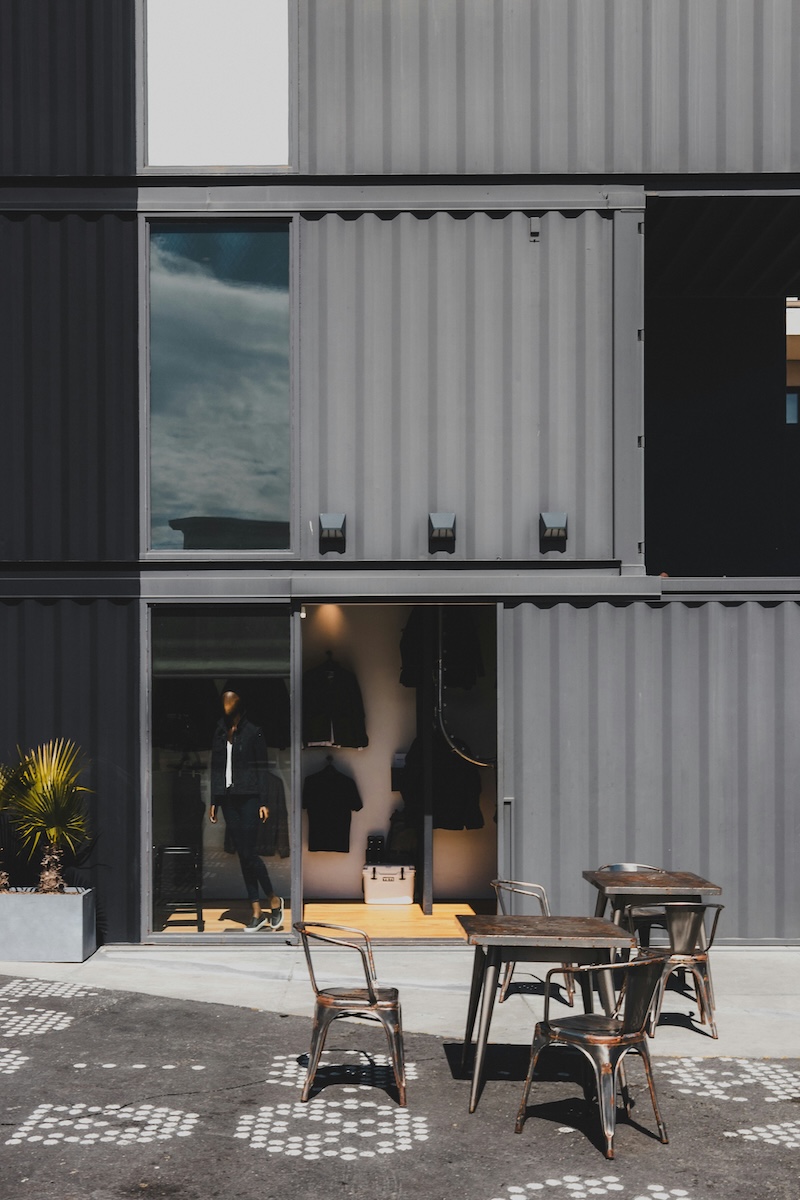

4. S Jones Containers: Best for technical and specialist conversions
Best for: Engineers, utilities firms, labs, water treatment specialists, and anyone whose unit needs to meet specific regulatory or technical standards
Based: Aldridge, West Midlands
Forty years of doing this means they’ve already solved most of the problems your project is going to throw at them.
S Jones occupies a slightly different niche to the rest of this list. While most container conversion companies built their business around offices, welfare units and creative spaces, S Jones has spent decades doing what the industry calls “technical” conversions: plant rooms, water treatment containers, lab spaces, switchgear housings, biomass boiler enclosures, and units built around specific industrial requirements. The expertise is hard to fake.
Their workshop tour (which they offer to prospective clients, and which is worth taking up if you’re spending serious money) gives you a sense of why. The fabrication floor handles welding, structural reinforcement, and integrated piping that most container firms don’t attempt. They’ll cut and reinforce a roof for rooftop plant; they’ll partition a 40ft unit into climate-controlled zones with separate access; they’ll integrate purpose-built ventilation systems rather than bolting on an off-the-shelf extractor.
They also cover the standard product range competently (offices, workshops, secure storage in 10ft, 20ft and 40ft sizes, including ready-to-deliver stock units), so they’re not exclusively for technical buyers. But the technical work is where they stand out. If you’re commissioning anything that needs to meet a specific compliance standard, this is who we’d talk to first.
What stood out
They share project timelines from day one rather than after the deposit clears. We asked for a quote on a partitioned workshop with electrics and ventilation and got back a delivery schedule with milestones, not just a price. For technical projects where the lead time matters as much as the spec, that visibility is genuinely valuable.
Honest downside
They’re not the obvious choice for purely aesthetic builds. If you want a beautiful cladded garden room with bi-fold doors, you’ll get something competent here but you might get something more imaginative elsewhere. Their design sensibility is engineering-led rather than architectural, and you can feel it in the proposals.
Pricing note
S Jones publishes pricing for their standard conversions, which is rare in this industry and worth crediting. A 20ft 50/50 office and store starts at £7,895, a 20ft canteen at £11,495, a 10ft chemical store at £7,195, and a full bunded 20ft chemical store at £10,395. Base used containers start at £995 and base new units from £1,995 for an 8ft. Bespoke technical builds quote individually.
5. TITAN Containers: Best for mobile, event and small-format conversions
Best for: Brands, event organisers, hospitality operators, and anyone who needs a converted unit that’s small enough to move or interesting enough to draw a crowd
Based: Bristol
If you’ve ever seen a converted container show up at a festival, food market or brand activation in the UK, there’s a fair chance TITAN built it.
TITAN’s bread and butter is the kind of project most conversion companies treat as a sideline. Small-format units (6ft, 8ft, 9ft, 10ft), brand activations, pop-up retail, mobile bars and roving promotional spaces. They’ve built a serious portfolio in this space, and you can tell from the proposals: they immediately ask the right questions about wheels, hitches, lighting rigs, brand wrapping, and the practical realities of moving a fitted-out unit between venues.
Their bespoke conversions team in Bristol works to the mantra “tell us what you want and we’ll work out how to do it,” which on paper sounds like every other conversion company’s marketing. In practice we found they actually mean it. We pitched a deliberately awkward concept (a 9ft mobile coffee unit with a counter that folds out from one side and a serving hatch on the other) and got back a workable drawing within a week, rather than the polite “we’d need to scope this out” we got from two competitors.
They also stock containers in a wider range of factory colours than most competitors (black, white, red, blue, green, and various shades by request) which makes a meaningful difference for brand work. Repainted units never quite look as good as factory-painted ones up close, and TITAN’s catalogue lets you skip the repaint entirely on many briefs.
What stood out
Genuine expertise in small-format and mobile work. The 6ft mini-bar units they build for brand activations are remarkably well thought through: power, refrigeration, water and lighting integrated tightly enough that you can run the unit off a single generator hookup. Most competitors building at this size produce something that feels like a regular container shrunk down, which doesn’t actually work.
Honest downside
They’re less obviously the choice for large static commercial projects. If you’re building a 40ft permanent office on a fixed site, TITAN can absolutely do it, but you’re using a team whose distinctive strengths are pointed elsewhere. For that brief, Cleveland or Eldapoint will probably be a better fit.
Pricing note
Mid-market on conversions, with the smaller format units obviously priced below the 20ft and 40ft norm. Their bespoke brand activation work prices individually and can climb quickly once you start adding hospitality fit-outs.
6. Willbox: Best for welfare units and site accommodation
Best for: Construction sites, civils contractors, infrastructure projects, and anyone needing reliable welfare and site cabin conversions
Based: Eastleigh, Hampshire
No-nonsense, well-built, and they actually own the fleet they’re selling you. That last bit matters more than it sounds.
Willbox is a slightly different animal to the rest of this list. They convert containers, but they also operate one of the largest hire fleets in the UK across welfare units, anti-vandal cabins, canteens, drying rooms and toilet blocks. This dual model has a useful side-effect for buyers: the firm has tested the same spec across thousands of units in active use, so they know which insulation actually holds up, which heating systems break, and which window seals start leaking in year three. The conversion arm benefits from that operational feedback in a way that pure-play conversion firms can’t replicate.
Their conversion catalogue leans heavily toward site work (toilets, offices, canteens, drying rooms, pump rooms), but they also handle creative briefs. Recent work in their portfolio includes a 40ft container converted into a sleeper cabin for a film crew, a biomass boiler enclosure for a rural estate, and a few converted home gyms for residential clients. Not the breadth that Universal or Cleveland offer, but capable across the brief.
Their head office in Eastleigh is worth visiting if you’re commissioning anything significant. The yard tour shows you the units in various stages of fit-out, which is more useful for setting realistic expectations than any brochure. Most container companies show you finished examples on a clean concrete pad; Willbox shows you the messy middle of the process, which is more honest and ultimately more reassuring.
What stood out
The welfare units are genuinely well-built. We’ve seen Willbox welfare cabins on site three winters in and they still seal properly, the heaters still work, and the doors still close cleanly. That sounds like a low bar but anyone who’s bought a cheap welfare unit knows it’s not.
Honest downside
Their design sensibility is utilitarian. If you want a beautiful, photogenic conversion for a high-end client, you’re not playing to Willbox’s strengths. They build things that work, last, and don’t draw attention to themselves. That’s perfect for site welfare and uninspiring for a flagship retail unit.
Pricing note
Mid-market and consistently fair. Their hire prices are some of the best in the country, and on outright purchases they tend to undercut the more design-led firms by 5–10% on equivalent welfare specs.
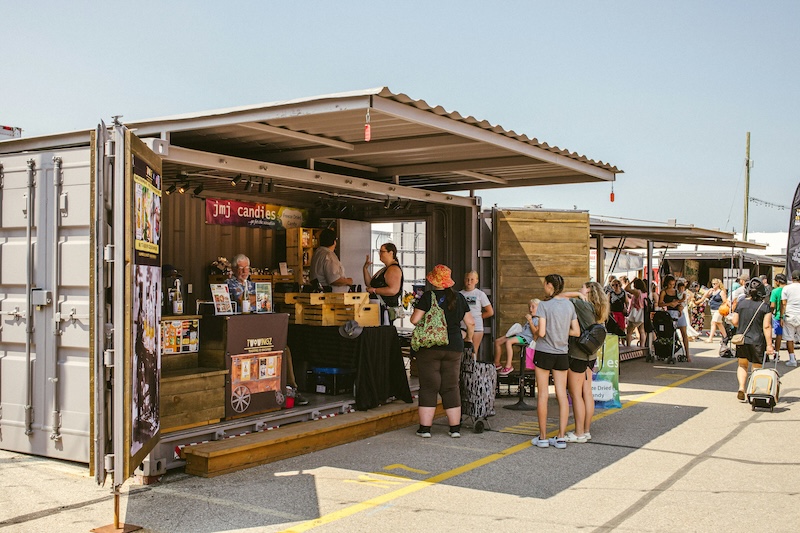

7. Halletts Spaces: Best for architect-led and multi-unit creative projects
Best for: Councils, architects, hospitality groups and creative clients commissioning multi-unit container builds with planning involvement
Based: Llanelli, South Wales
The team you call when planning consent and architectural drawings are already in the mix and you need a fabricator who can actually read them.
Halletts has carved out a specialism in slightly more complex, slightly more designed container projects. Larger schemes (food courts, multi-unit retail pods, community hubs) often involve councils, planners and architects from the outset, and the contracting structure is different from a one-off garden room. Halletts is comfortable working from architectural drawings rather than starting from a blank brief, which makes them the right pick when there’s already a design in motion.
Their portfolio shows what’s possible at the more imaginative end of the spectrum. Rooftop terraces with planted edges, bi-fold and sliding door installations on a scale most competitors avoid, larch timber cladding wrapped around steel shells, lift-up serving hatches integrated into café units, and the kind of multi-container food court layouts that turn into local destinations rather than just somewhere to grab coffee. Not every brief needs this level of ambition, but if yours does, very few firms can match it.
The trade-off is process. Halletts projects move at the pace of design-led builds, which is to say slower than a stock catalogue order. Lead times of 8 to 16 weeks are normal once architectural detailing is involved, and you should expect three or four rounds of drawings before fabrication starts. For the right brief that’s the price of getting something genuinely good. For a simple office, it’s overkill.
What stood out
Their willingness to push into architectural detail. Most container firms quietly try to talk you out of ambitious cladding or unusual aperture positions because they slow the build down. Halletts engages with the design problem rather than flattening it, which is why architects and councils keep coming back.
Honest downside
Not the right choice for budget-sensitive simple projects. The team is set up for design-led work and the pricing reflects it. If you want a 20ft storage container with a personnel door and a window, you can do better elsewhere on both price and lead time.
Pricing note
Premium, reflecting the design-led process. Multi-unit projects with architectural detailing typically start in the £25,000-plus range and climb from there. Quotes are highly project-specific.
Side-by-side comparison
How the seven companies compare on the dimensions most buyers care about.
| Company | In-house build | Design support | UK-wide delivery | Lead time | Standout strength |
| Universal Containers | Yes | CAD team | Yes | 4–8 weeks | Design consultation included |
| Cleveland Containers | Yes | Project-led | 20+ depots | 4–10 weeks | Scale and depot network |
| Eldapoint Group | Yes (multi-trade) | CAD team | Yes | 6–12 weeks | Fully integrated trades on one site |
| S Jones Containers | Yes | Engineering-led | Yes | 6–14 weeks | Regulated and technical builds |
| TITAN Containers | Yes | In-house | National depots | 3–8 weeks | Small-format and mobile builds |
| Willbox | Yes | Standard + bespoke | Yes | 4–10 weeks | Welfare and site cabins |
| Halletts Spaces | Yes | Architect-friendly | Yes | 8–16 weeks | Multi-unit creative builds |
Lead times are typical ranges for a standard 20ft converted unit and stretch in peak season (March to September) and tighten in winter.
How we put this list together
We started with a long list of around 35 UK container conversion firms drawn from Google search results, Companies House records, and recommendations from people in the construction and event industries. We then put each firm through the same process:
- A standardised brief: a 20ft insulated office with electrics, one window, one personnel door, and external delivery to a Midlands postcode. This gave us a baseline for comparing quote quality, lead times, and responsiveness.
- A second brief on something more ambitious: either a creative or technical build, depending on which the firm’s portfolio leaned towards. This tested how each company handled a non-standard request.
- Reference checks: we contacted recent customers where their projects were public, and cross-referenced what we found against Trustpilot, Google Reviews, Reviews.io and any industry awards or accreditations.
- Yard visits where practical: for the firms within reasonable travel distance, we walked their fabrication sites. The difference between a clean, organised yard and a chaotic one tells you more than any sales pitch.
The companies that didn’t make the cut typically failed on one of three things: vague or evasive quoting (no detailed breakdown), poor responsiveness during the enquiry stage (a fair predictor of how a project will be handled), or visible quality issues in published case studies. We’ve not named the firms that fell short (this isn’t a comparison shopping exercise), but we’ve kept the list to seven because seven is what we’d actually shortlist if we were commissioning a conversion ourselves.
One caveat worth flagging: lead times, pricing and capacity change. The published figures we’ve cited (£6,000 starting prices at Universal, £7,895 for an S Jones 20ft 50/50 office and store, £2,000–£3,000 for a new 20ft base container at Cleveland, and so on) were valid in the window we worked in (early 2026), and the industry moves with construction demand. Treat the pricing and lead-time figures here as directional, not definitive, and ask for fresh quotes when you’re ready to commission.
How to choose between them
The honest answer to “who’s best” is “best for what”. A few decision shortcuts based on the most common scenarios.
If you’re building one residential conversion
Talk to Universal Containers first. The design support is most valuable on one-off projects where you haven’t done this before, and their range of base units (painted, cladded, insulated) gives you more starting points than most. Halletts is worth a conversation if your project has architectural ambition or planning involvement.
If you’re commissioning multiple units
Start with Cleveland Containers. The depot network and operational scale matter more than design detail at this level. Eldapoint is the upmarket alternative if build quality is the priority and you can absorb a 15–25% premium.
If your build is technical or regulated
Go straight to S Jones. They’ve already done what you’re trying to do, or something close to it, and the engineering expertise is hard to replicate. Worth the conversation even if you end up choosing someone else, because their questions during scoping will sharpen your brief.
If you need site welfare or accommodation
Willbox or Cleveland, in roughly that order if you’re buying outright. If you’re hiring, Willbox is hard to beat on consistent fleet quality.
If it’s a mobile or brand-led project
TITAN Containers. The small-format expertise is genuinely rare, and the factory colour range solves a problem that bites you later if you choose someone less specialised.
Frequently asked questions
How much does a converted shipping container cost in the UK?
Published 2026 guide pricing puts a refurbished container office at roughly £3,000 to £5,000 before delivery, with polished bespoke offices, garden rooms and premium fit-outs landing in the £8,000 to £15,000 range. Industry benchmarks for a 20ft converted office (insulated, electrics, one window, one personnel door) currently start around £5,300 at the budget end (Cabin Depot publishes from £5,295), with most quality firms quoting £7,000 to £12,000. A 40ft commercial-grade office with full fit-out can climb to £20,000 or more. Bespoke architect-led projects price individually and can run substantially higher, particularly once timber cladding, bi-fold doors and structural modifications are involved.
Do I need planning permission for a converted shipping container?
Sometimes. A container used incidentally to a primary use (garden storage, for example) often falls within permitted development, but a converted unit used as habitable space, a commercial premises, or a permanent fixture will usually need planning consent. The rules vary by local authority and intended use. If your build involves any of “living in it,” “running a business from it,” “selling food from it,” or “putting it on agricultural land,” assume you need consent and check with your council early. The conversion firms on this list will often help with the planning conversation but they’re not a substitute for proper advice from a planning consultant or architect.
How long does a container conversion take?
From order to delivery, four to twelve weeks is typical for a standard build. Bespoke and design-led conversions can take three to four months once drawings, approvals and bespoke fabrication are accounted for. Lead times stretch noticeably in spring and summer when construction demand peaks, so commission in winter if you can.
Can a shipping container be made warm enough to live in?
Yes, but only with proper insulation. A bare steel container is essentially a thermal sieve: hot in summer, freezing in winter, and prone to internal condensation. Most reputable conversion firms insulate to current building standards using a combination of spray foam, rigid PIR boards, or wool-based products, with vapour barriers and adequate ventilation. Skimping on insulation is the single most common cause of regret on residential conversions. Spend the extra here.
New container or used container for a conversion?
Depends on the finish. For a clean architectural look, a new “one-trip” container (used once for a single shipment and then sold on) is usually worth the modest premium. For a workshop, storage unit or anything where the exterior won’t be on display, a refurbished used container is fine and saves money. Avoid heavily used units sold cheaply unless you’ve inspected them in person, because rust and floor damage are common.
Will a converted container last?
Properly maintained, twenty-five years or more is realistic. The shipping containers themselves are built to survive decades at sea, and the conversion adds insulation and finishes that protect the steel. The most common failure points are roof seams (where added cut-outs weren’t reinforced properly), window seals (cheap units use cheap seals), and floors (original timber floors can rot if water gets in). All of these are avoidable with a good builder and reasonable maintenance.
A final note. The container conversion industry has matured fast over the last five years, and the gap between the best and the worst firms is now enormous. The seven on this list are the ones we’d put on our own shortlist. The ones we left off were left off for a reason, and the cheap-looking units you’ll find on classifieds sites for half the price of anything here are almost always a false economy. Buy carefully, ask for references, and visit the yard before you commit.