





Signage and retail have always gone hand in hand. Going back thousands of years, even the earliest market stalls had signs to promote the various items on offer. Of course, in modern retail, signs have come on a little bit since the days of scrawling the prices of goods down on a wooden plank. However, their purpose is very much the same – to drive business.
Nowadays, retailers have a whole host of options at their disposal. From simple printed signs that can be hung from the ceiling of a store to showcase sale items or direct customers to a certain area, to bright digital screens that capture the attention of those passing by outside, there is seemingly no end to the possibilities of signage in retail.
Here, we celebrate some of the recent signage projects that caught the eyes of the Retail Focus team, pick out new advancements with sign-related technologies and offer guidance on how you can make the most of signages in your own retail environment by working with trade partners.

Best of both worlds
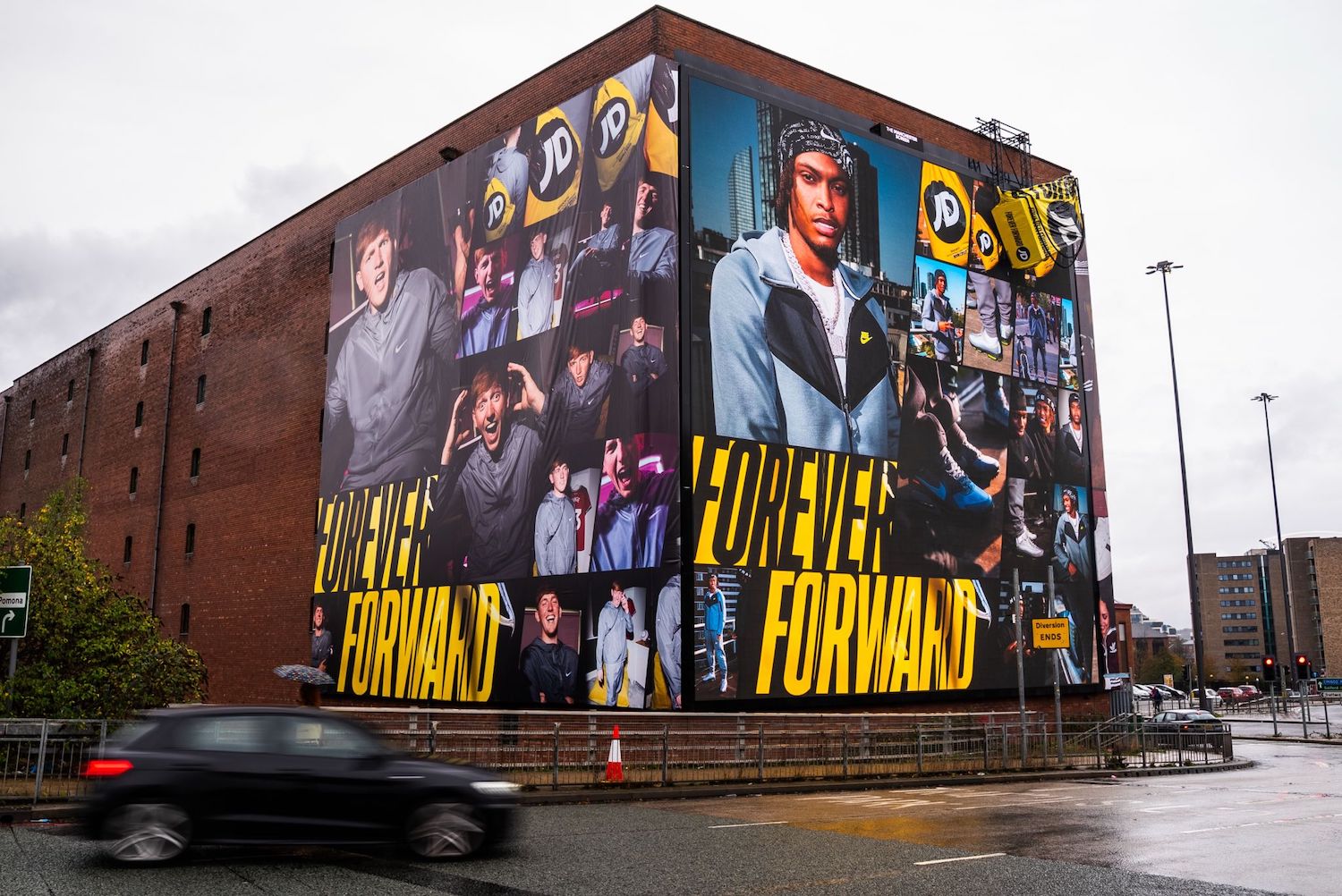
First, let’s pick up on how JD Sports recently became the first company to launch a campaign on The Manchester Screen’s new supersized out-of-home (OOH) site, the largest of its kind in the whole UK, offering both printed and digital signage options to retailers.
Located at Victoria Warehouse, the digital screen and full vinyl wrap dominate one of the busiest gateways in Manchester. The activation formed part of JD’s annual retail conference, which was held at Victoria Warehouse, and features a giant replica of JD’s signature yellow bag, cleverly suspended from the roof of the building.
The combined digital screen and new vinyl billboard site spans 1,140sq m, which developers said will deliver more than 21 million annual impressions from the prime roadside location.
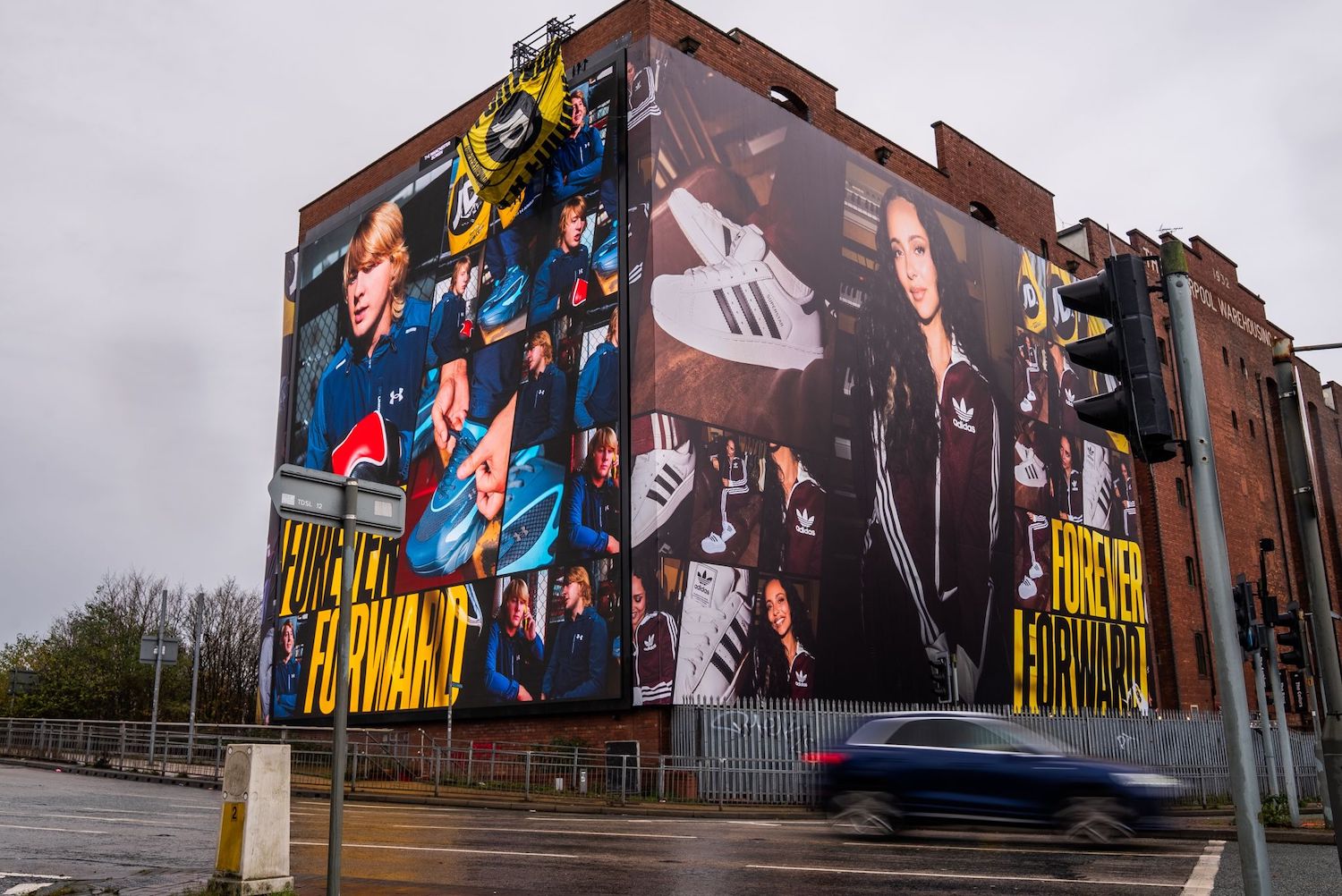
“It’s amazing to see the first screen and billboard promotion come to life with JD’s takeover,” said Katie Smith, owner of The Manchester Screen. “Not only does it create huge impact for the 250 conference attendees, but it also grabs the attention of everyone passing through this key gateway between Manchester City Centre and Media City, Salford.
“It’s been a fantastic team effort to bring all the event elements together — including the careful suspension of the iconic JD yellow bag from the roof. The high-impact visuals continue inside Victoria Warehouse throughout the two-day conference.”
Jodie Howe, director of Edison Media, which handled the media buying, added: “This new campaign shows how powerful large-format OOH can be when creative and context come together. It’s a perfect reflection of JD’s connection to Manchester – confident, visible and impossible to miss.”
Digital dreams
While The Manchester Screen draws on the power of both print and digital, it is the latter that has been the driving force of in-store signage in retail in recent years. The benefit of digital over print is that it can constantly change, new content can be added all the time, and customers can get “hands on” with interactive features such as virtually trying on clothes or exploring offers and deals.
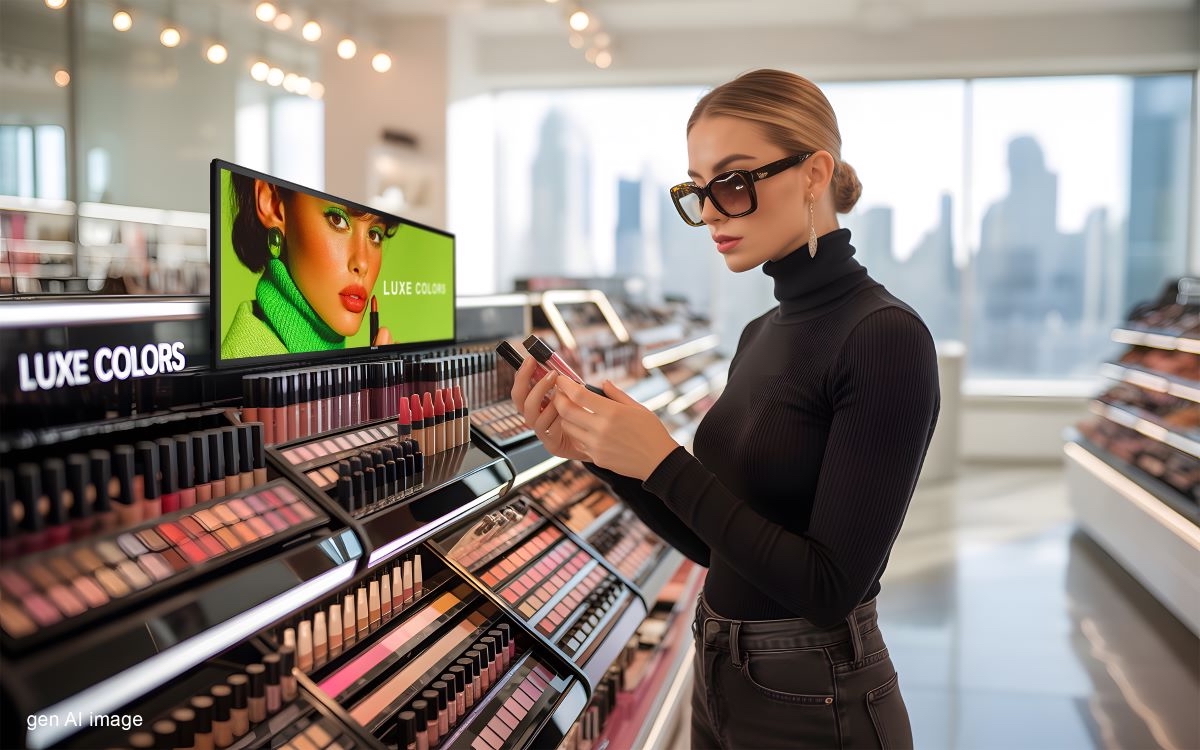
PPDS, the exclusive provider of Philips Professional Displays and complementary solutions, recently added another solution to its range in the form of the 32:9 Philips Stretch 3150, which it said delivers advanced creativity, flexibility, and around-the-clock reliability for a widening range of retail environments and applications.
Available immediately, Philips Stretch 3150 supersedes the popular Philips S-Line, modelled around the evolving needs of the retail market, with each display able to be tailored to meet the unique needs of the customer or environment. Core features include a 37”, 32:9, 1920 x 540 resolution display and 700 cd/sq m brightness, which the manufacturer said offers crystal clear visibility in natural and artificial lighting conditions, all with a weight of just 7.6kg, further escalating its in-store usability.
“Expanding possibilities further, Philips Stretch 3150 displays can be installed either as a standalone solution or, for larger and more creative visions, multiple displays can be seamlessly daisy chained by connecting the HDMI Out port to the HDMI In port of another display,” PPDS said.

“For tiled setups, retailers can simply connect two or more Philips Stretch 3150 displays with a single external player for single source content management that is effortless, no matter the number of displays selected.”
One of the biggest, yet invisible upgrades on the new solutions is an integrated slot for a CRD32 Wi-Fi module, allowing for optional wireless network connectivity and Bluetooth functionality on the display. It is also compatible with the Philips Wave cloud platform that helps users control their display network, allowing for easier monitoring and control, firmware upgrades, playlists management and power schedule settings.
In addition, the Philips Stretch 3150 delivers on a 60% reduction in power use compared to its predecessor, typically consuming 26W, earning an F rated EU Energy Label, according to PPDS.
“With the new and enhanced Philips Stretch 3150, we are bringing the best of the original Philips S-Line, together with a wave of new and upgraded features and designs, providing our partners and customers with the high-quality tools to reach and exceed their ambitions,” added Bart Wouters, global product manager for digital signage at PPDS.”
Build trust fast
Switching attention back to print and, like digital platforms, has plenty of potential when it comes to signage within retail settings. The beauty of print is that it is flexible in its form and can take many different shapes such as posters, POS, stickers, window and floor graphics, wall coverings and more.
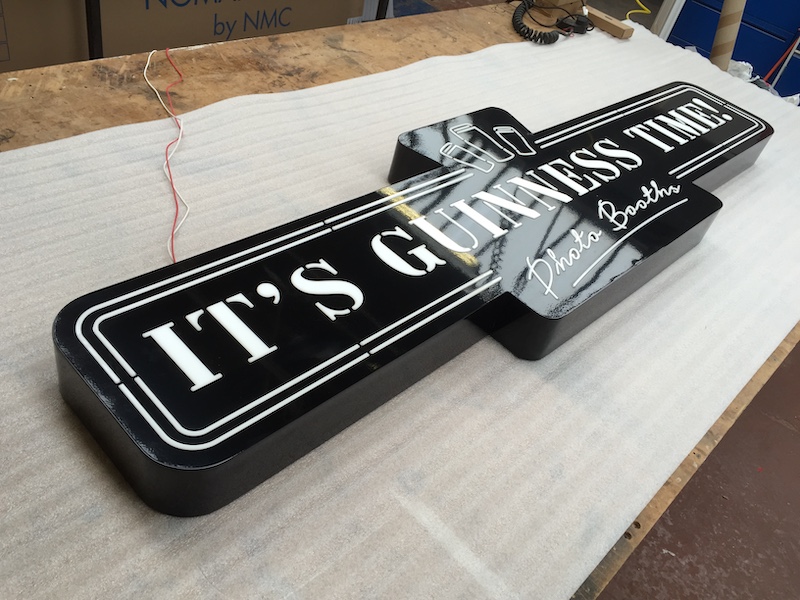
If you are new to some of these options or are seeking support with print-based signage, a trade partnership could be the way to go. The Sign Group is one specialist company in this area, working with partners, including some in retail, on all manner of creative and eye-catching projects – not only in print, but across a host of other applications such as LED, faux neon and built-up letters.
“Retail signage is getting scrutinised more than ever,” said Grey Hoole, co-founder of The Sign Group. “Carbon data, compliance, lead times, consistency; none of that is going away.
“The brands that do this well are the ones asking better questions earlier in the process and leaning on specialists who stay in their lane. Retailers, sign companies, and trade manufacturers all have different roles. When each part does its job properly, the end result speaks for itself.”
At retail level, Hoole said, signage does three jobs: it gets noticed, sets the tone, and also removes doubt. He added that good signage helps a brand land properly in the real world, as well as reinforces who they are before anyone speaks to staff or touches a product.

“When it is done well, it builds trust fast and makes the space feel intentional, not thrown together,” he said. “From our side of the fence, effective signage also makes life easier for everyone downstream. Clear specs, consistent colours, predictable results; that is what allows retailers to roll signage out at scale without surprises.
“The biggest mistake is treating signage as decoration. It’s part of the architecture of the space. Placement should be driven by sightlines, distance, lighting conditions, and how people actually move through the store. Window signs need impact. Internal signage needs clarity without glare. Feature pieces should earn their keep, not fight the products.
“In retail, slimline illuminated letters, halo effects, and clean face-lit signage work well because they’re legible, controllable, and repeatable. They also sit comfortably across different store sizes and formats, which matters when brands are scaling.”
So, why work with a company like The Sign Group? Hoole said most retailers do not work with the company directly; instead, it is their visual merchandisers, shopfitters or main contractors that get in contact with the company – and that, Hoole said, is the point.
“As a trade supplier, our job is to give sign makers tools they can rely on,” he said. “Products that behave the same way every time. Clear data, proper certification, UK manufacture, support when things get tight on site; all this is important.
“When a sign company uses something like Neonplus, the retailer benefits without needing to think about it. They benefit from faster installs, fewer issues, brand accuracy that holds up across multiple locations, while it also reduces risk in the chain, which is usually where retail projects fall over.”
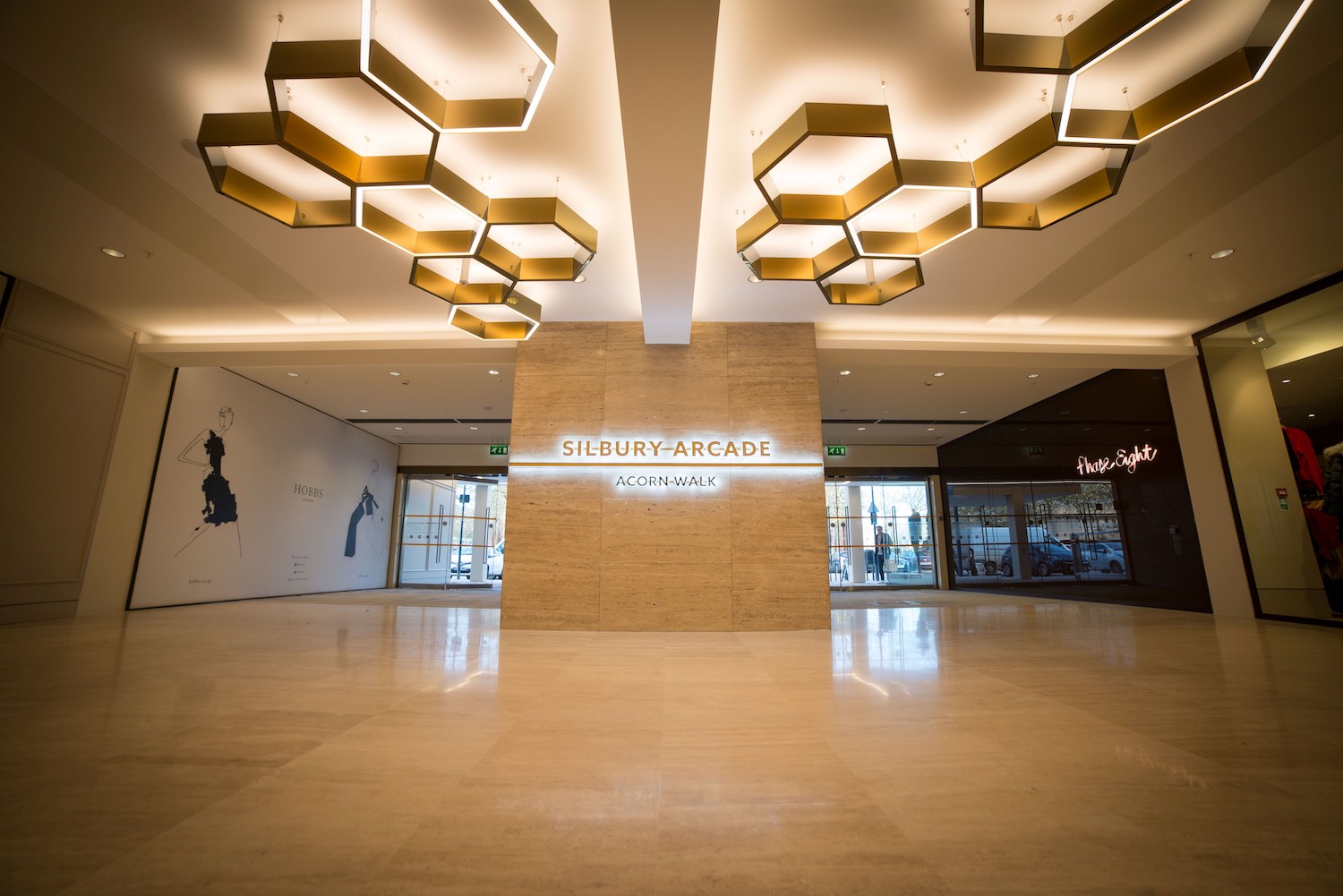
As set out by Hoole, there is much more to signage in retail to simply decorate a store. It is a hugely valuable tool in connecting with the consumer, communicating your most important messages and building a stronger brand value. With a plethora of options to consider across print and more traditional signage, this should offer plenty of food for thought when you plan your next campaign.