





Walk through almost any new store opening and metal does more of the visual work than it’s given credit for. Rails, frames, plinths, shelf brackets, window structures and signage all bring colour and texture to a space. The finish on those elements has a big say in whether an interior reads as premium, playful or purely functional.
That makes the finish a design decision rather than a procurement one. Most metal fixtures in retail are finished using powder coating, which opens up a wide palette of colours, gloss levels and textures. It also comes with practical limits that are worth understanding before a scheme is signed off and sent to fabricators.
Colour as brand language
Brand colours rarely stay on the fascia any more. They run through rails, display frames and back-of-house fittings, and consistency across every one of those touchpoints is part of what makes a concept feel coherent. Standard RAL colours are the easiest route, but bespoke matches to a brand reference are widely available.
Some colours need more care than others. Bright reds, oranges and yellows can have lower opacity, which may mean a primer or a second coat to get a solid, even result. Physical samples should always be approved under the store’s actual lighting, since a colour that looks right in a studio can shift noticeably under warm retail spotlights.
Colour also sets up the hierarchy of a space. A neutral tone on perimeter shelving lets the product lead, while a saturated shade on a feature table or window structure pulls the eye to a campaign. Used deliberately, the finish on the metalwork becomes a quiet form of wayfinding, guiding shoppers through the store without a single extra sign.
Gloss, texture and effect
Gloss level changes how metal behaves in a lit space. High gloss creates reflections and hotspots under directional lighting, which can be striking on a statement piece but distracting across a full wall of shelving. Matt and satin finishes feel calmer and more contemporary, and they tend to suit the tactile, residential look that many brands are chasing in their newer stores.
Textured finishes are the workhorse option. A fine texture hides scuffs, hanger marks and fingerprints far better than a smooth coat, so it’s often the sensible choice for high-traffic fixtures. Metallic, bronze and brass-effect powders can give the impression of plated or patinated metal without the cost or maintenance, although they need careful control to stay consistent.
Designing with the process in mind
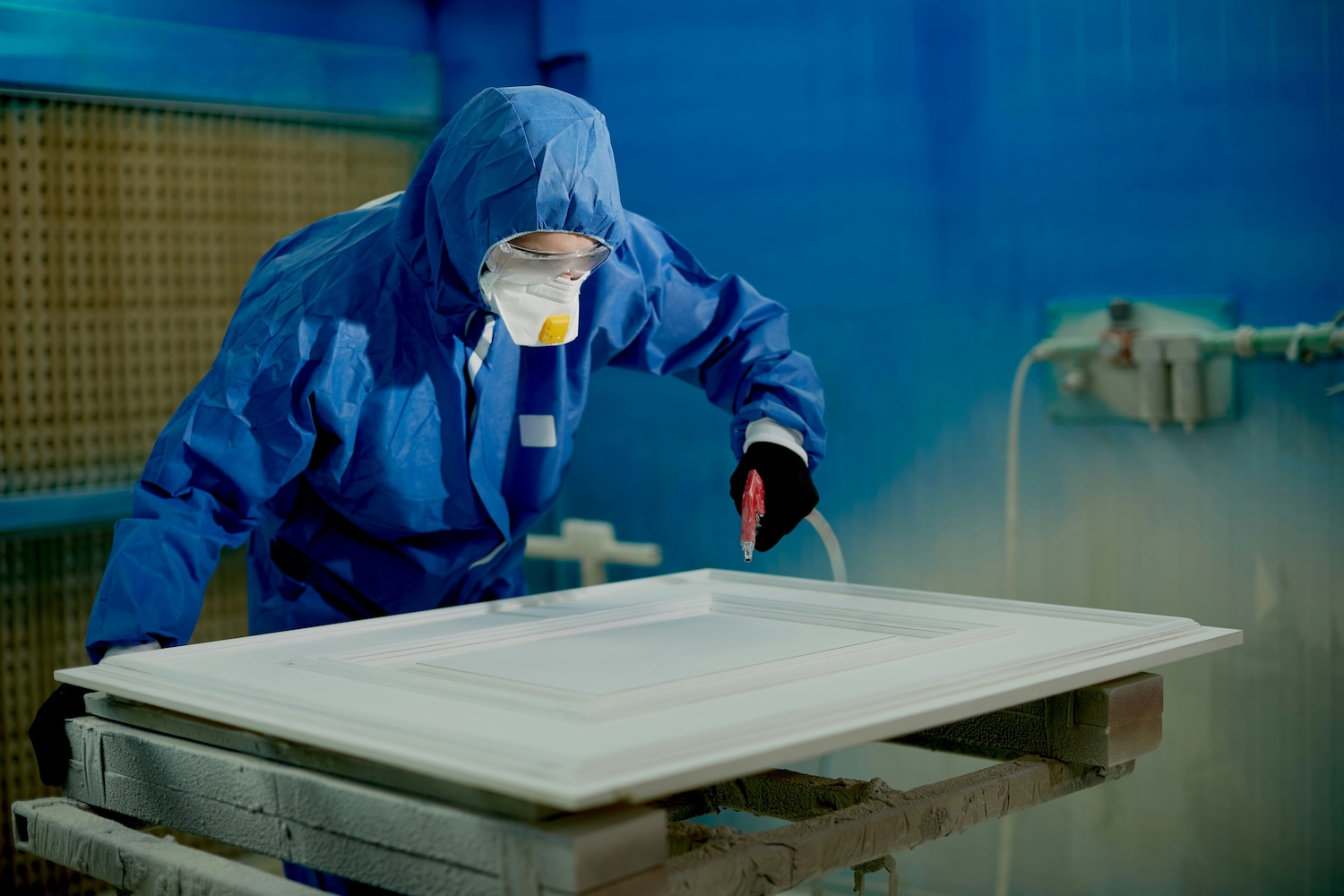
A few details at the drawing stage make a real difference to the finished result. Tight internal corners and deep recesses can be difficult for sprayed powder to reach evenly, so generous radii help. Threads and mating surfaces need masking, and the thickness of the cured film should be allowed for wherever parts slot together closely.
Every piece also has to be hung for coating and cured in an oven, so discreet hanging points and an awareness of oven size are useful for oversized fixtures. Involving the fabricator early usually costs nothing and can save a redesign later.
The same goes for mixed materials. Timber, acrylic and fabric elements can’t go through a curing oven, so fixtures that combine them with metal need to be designed to come apart. Mechanical fixings rather than adhesives keep the metal parts coatable now and recoatable later.
Keeping a rollout consistent
A single flagship is one thing. A rollout across dozens of stores, often using several fabricators in different regions, is where finishes tend to drift. The same RAL reference from two powder manufacturers can look different side by side, and even one manufacturer’s batches can vary, particularly with metallics.
Specifying a named powder product rather than just a colour reference, and holding approved master samples that every supplier must match, keeps the concept looking identical from store to store. It’s a small piece of admin that protects a significant design investment.
Living with the finish
Once a store opens, fixtures face daily cleaning, constant handling and the occasional knock from a stock cage. A cured powder film copes well with this, but it’s worth checking that the cleaning products used in store are compatible with the finish. Keeping a small stock of spare components in the same batch makes like-for-like replacements straightforward.
Refreshing rather than replacing
One of the most useful qualities of a powder-coated fixture is that its colour isn’t permanent. Sound metalwork can be stripped and recoated for a seasonal refresh or a new concept, which gives designers a way to change the mood of a store without specifying an entirely new fixture package. For brands with sustainability commitments, that’s a genuinely useful tool.
It’s easy to treat metalwork as the frame and the product as the picture. In practice, the frame shapes how the picture is seen. Giving finishes the same attention as lighting and materials is one of the more reliable ways to make a store look the way it was drawn.