




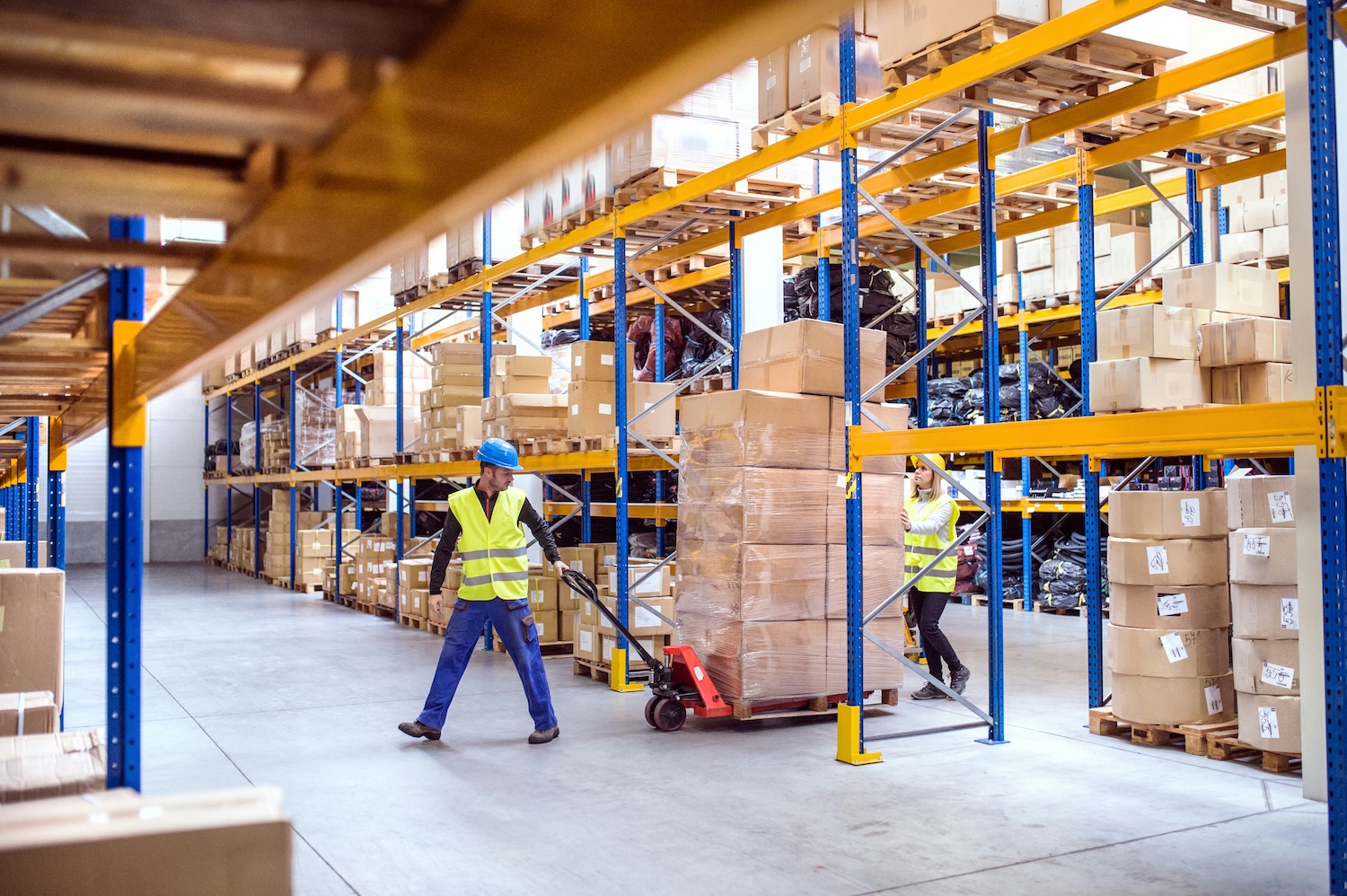

A store can have the right buy, the right pricing and the right window. If the stock is sitting on a supplier’s loading bay in Leicester in the morning the promotion goes live, none of that matters.
Replenishment is the least glamorous part of retail. It is also the part that quietly decides whether a trading week works. Empty pegs, half-filled bays, a delivery that lands during the Saturday lunchtime rush and blocks the stockroom door until closing. Every store manager can list the ones that hurt.

Monthly retail sales figures from the Office for National Statistics show how sharply volumes swing between months, and those swings land on the same delivery network week after week. The freight side has to flex with them. Often it does not.
What follows is the practical side of getting goods from a supplier or a warehouse into a trading store, and where the process usually breaks.
Not every retailer has a distribution centre
The big grocers and the national chains run their own networks. Stock flows into a regional DC, gets picked into store orders, and goes out on their own fleet on a fixed schedule. Volume makes that work.
Below a certain size, it does not work at all. A twelve-store fashion chain cannot fill a trailer to each site. Neither can an independent homeware group, or a franchise operator, or a growing brand that has just taken its first three concessions. Those businesses have suppliers in one place and stores in another, and nothing in between.
The usual answer is a pallet network, where partial loads from many senders travel together on trunk routes and get sorted at a central hub overnight. Booking pallet delivery services on a half or quarter pallet basis means a store can receive 200kg of stock without anybody paying for an empty trailer. A quarter pallet carries up to 250kg, a half pallet up to 500kg, and a full one up to 1200kg. Most single-store replenishment drops sit comfortably inside those bands.
The practical effect is that a small chain can run something close to the delivery rhythm a national chain runs, without owning a single vehicle.
Timed delivery is worth more than fast delivery
Retailers ask for speed. What they usually need is predictability.
A store that knows a pallet is arriving between 9am and 11am on Thursday can roster somebody to receive it, clear stockroom space, and plan the merchandising for Thursday afternoon. A store that knows only that something is coming this week cannot plan anything.
This matters more than it sounds. A delivery arriving unannounced at 3pm on a Saturday will sit in a gangway until the shift ends, because nobody can process it during peak trade. That is stock you have paid for, sitting somewhere it cannot sell, creating a hazard and a headache at the same time.
Ask carriers what they actually commit to. A two-hour delivery window with a text or email alert on the morning of delivery is now standard on UK pallet networks, and it changes how a store plans its day. Electronic proof of delivery matters for the same reason. When head office and a store disagree about whether four pallets arrived or three, a timestamped POD settles it in seconds rather than generating a week of emails.
Where the process actually breaks
Most stock delivery failures are not dramatic. They are small process gaps repeated across an estate.
- Nobody told the store the delivery was coming, so there is no space cleared and no free member of staff.
- The address on the consignment is the trading address, but goods-in is round the back on a different street.
- The site cannot take an 18 tonne vehicle, and nobody checked before dispatch.
- The supplier palletised the order badly, so half of it needs repacking before it can be moved off the tail lift.
- The delivery window falls inside the shopping centre’s restricted hours, so the driver is turned away.
Each one is preventable with information that already exists somewhere in the business. It is usually held by someone who was never asked.
Build a site profile for every store. Access restrictions, permitted delivery hours, booking system details, maximum vehicle size, whether there is a loading bay or only kerbside access, and the name and number of whoever receives goods. Give it to every supplier and every carrier. Update it when a landlord changes the rules, because landlords change the rules.
Get suppliers palletising properly
A surprising share of store delivery problems start at the supplier, not the carrier.
Stock loaded loose on a pallet with a token wrap around the middle will shift in transit. Cartons overhanging the pallet edge catch on racking and tear. Mixed products stacked without any logic mean the store team has to open everything to find out what arrived. All of that costs time on the shop floor, and shop floor time during trading hours is the most expensive time you have.
Set a packing standard and send it to suppliers in writing. Load inside the 1200mm by 1000mm footprint. Heavy cartons at the base. Wrap down onto the pallet so the load and the base move together. One product group per layer where possible, with a packing list taped to the outside of the wrap rather than buried inside it.
Then check compliance. Photograph what arrives badly packed and send it back to the supplier with the invoice query. Standards that carry no consequence get ignored within two months.
Guidance from Logistics UK on load safety and vehicle operations is a reasonable starting point if you are writing a supplier standard from scratch and want something to point at.
Peak is a planning problem, not a capacity problem
Every autumn, the same conversation happens. Volumes rise through October, freight capacity tightens through November, and by early December the network is running hot. Then somebody discovers that a store needs an emergency top-up of a line that has sold out, and the only option is a same-day courier at four times the rate.
Some of that is unavoidable. Most of it is not.
Forecast store-level demand earlier and push stock forward before the network fills. Holding two weeks of cover in a store with no stockroom is not sensible, but holding it in a third party warehouse thirty miles away, ready to move on a next-day service, usually is. Warehousing and pallet delivery from the same provider removes a handover, and handovers are where things go missing.
Agree peak volumes with your carrier in September rather than discovering the constraint in November. Networks allocate capacity to customers who plan ahead, which is a polite way of saying the ones who do not plan get whatever is left.
Treat the delivery as part of the trading week
The most useful shift is a mental one. Stock delivery is not a background administrative function that happens to a store. It is a scheduled event in the trading week, with a cost attached and a staffing implication.
Retailers who get this right do a few unremarkable things consistently. They tell stores what is coming and when. They give carriers accurate site information. They hold suppliers to a packing standard. They book timed windows rather than hoping.
None of it is complicated. All of it is the difference between a Monday morning where the stock goes straight onto the shop floor, and one where three people spend two hours sorting out a pallet that should never have arrived in that condition.
Get the freight right and nobody notices. That is exactly the point.