






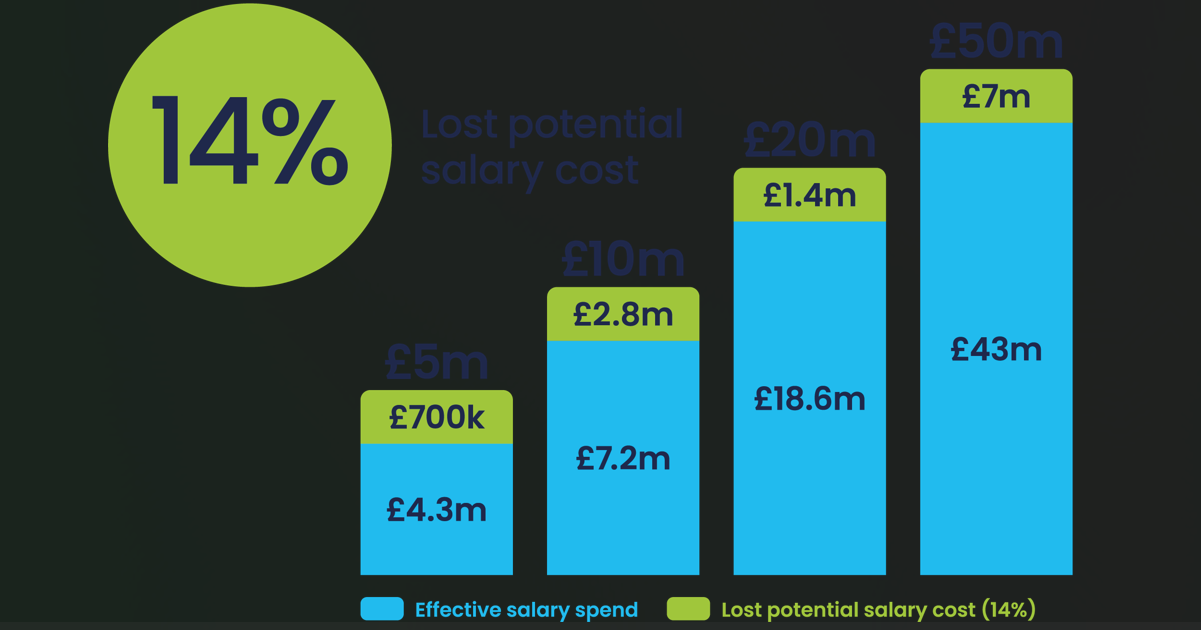
UK retailers are wasting the equivalent of one full working day every week, according to new analysis from Rethink Productivity – the UK’s leading retail productivity specialists. The new report, ‘Future Ready Retail’, warns that the sector is “leaving 14% of optimisation costs on the table” worth at least £6.25 billion a year at a time when labour costs and margin pressures are at their most acute in a decade.
The findings come as the British Retail Consortium reports a sharp rise in anxiety among retail finance leaders: 69% of CFOs describe themselves as pessimistic, 84% rank labour costs in their top three concerns, and 52% plan to cut staff hours or overtime in response to the Employment Rights Act — described as the “biggest shake‑up of employment rules in a generation”.


ReThink Productivity works with some of the biggest retailers and grocers in the UK to
provide valuable data led consultancy on how retail businesses can operate more efficiently. In their latest report which will be launched at the Retail Technology Show in London on 22nd April 2026, the data shows that despite years of tightening labour models many retailers have hit a “capacity ceiling”: stores appear highly efficient on paper, with two‑thirds now operating at or above an 80% Efficiency Index [EI], yet remain fundamentally under‑resourced at the moments that matter most to customers.
The result is a growing productivity paradox: colleagues are stretched, queues lengthen
at peak times, and customer experience suffers — even as operational metrics suggest
stores are running leaner than ever.
Simon Hedaux, co‑founder of Rethink Productivity says: “Many of the obvious cost savings have already been made. The next phase isn’t about cutting harder — it’s about understanding whether colleague time is being spent on the right things. Retailers must rebalance efficiency with capacity, or they risk eroding both margin and customer loyalty.”
The report highlights the hidden drains on store productivity and staff, that add cognitive load without being fully designed or measured these include:
• Security tagging processes that cost more in labour than they save in product value
• Loyalty programmes designed to drive repeat visits can extend transaction times at peak periods, increasing queues and reducing throughput
• Click and collect fulfilment at peak times
• Third‑party delivery picking [such as Uber Eats, Just Eat and Deliveroo] that generates revenue while quietly eroding margin
• Parcel collection by customers
• self‑checkout supervision due to tech challenges and scanning problems
Rethink Productivity argues that retailers must now shift from “lean” to “future‑ready”
operations, adopting six golden rules that prioritise evidence‑led decision‑making,
simplification of in‑store complexity, and targeted deployment of technology.
Sue Hedaux, co-founder and head of insights at ReThink Productivity says: “The retailers who win the next decade won’t be the ones who simply squeeze harder — they’ll be the ones who finally understand the true cost of every task happening in their stores. The era of chasing blunt efficiency is over. The future belongs to retailers who design their operations around the moments that matter most to customers, not the averages on a spreadsheet. It belongs to those who deploy technology only where it genuinely removes labour, not where it quietly adds complexity. And it belongs to leaders who rebuild colleague capacity instead of burning it out.”
She concludes: “The next generation of high‑ performing retailers will strike a new balance — cost, customer experience and colleague wellbeing working together.”

So how can retailers and grocers become more efficient in their models? ReThink
Productivity present their Six Golden Rules for Future‑Ready Retail:
1. Efficiency: Why More Is Not Always More
Running stores flat‑out isn’t productivity — it’s fragility.
The winners design for 80% efficiency, building in headroom for real‑world peaks, people and unpredictability. Efficiency should free up capacity for better service and selling, not squeeze it out.
2. Capacity: Managing the Ups, Downs and Flat Out Periods
Retail loses sales when capacity collapses at peak periods.
Winning retailers in 2026 will be those that actively model demand patterns, understand
peak service requirements and make deliberate decisions to invest in capacity where it delivers the greatest return. This may mean accepting lower efficiency at times in exchange for higher sales conversion, improved loyalty and stronger brand perception.
3. Security: Making Sure That Protecting Stock Is Actually Worth It
Blanket tagging wastes hours.
Future‑ready retailers measure the true cost and time of security and target interventions where theft related loses [or shrink] genuinely outweighs labour. This may involve selective tagging, improved product design, or alternative loss-prevention strategies that protect margin without consuming excessive labour. Security should safeguard profitability, not quietly erode it.
4. Self-Checkouts: Switching on to a Missed Opportunity
Up to one in three self-check out transactions still need assistance due to limitations in the technology and operational challenges.
Retailers that succeed best with self-checkout are those that view the technology as an
operational system, not just a piece of hardware. They optimise layouts to maximise uptake, configure systems to reduce false interventions, and enable remote support where possible.
5. Services: How To Prevent Click & Collect, Loyalty and Third-Party Undermining
the Store
Click & collect, loyalty and third‑party fulfilment add hidden minutes everywhere.
Future-ready retailers rigorously evaluate which services truly add value and design them accordingly. This may involve investment in lockers, clearer store layouts, simplified loyalty mechanics, or renegotiation of third-party service models. Services should attract customers and incremental revenue, not overwhelm or distract store teams.
6. AI and Technology: From Basics to Breakthroughs
AI and automation only work when aligned with operations. Foundational tools such as
electronic shelf labels can eliminate hours of manual work and are highly productive, while AI-driven demand forecasting can improve labour scheduling and availability.
Retail’s next phase is about focus, not force. The winners will stop chasing ever‑higher
efficiency scores and start understanding where time truly creates value. Productivity will shift from “doing more with less” to doing the right work at the right moment, powered by technology that simplifies rather than complicates.
The East of England Coop have successfully been implementing new technologies to improve customer and staff job satisfaction, Andy Rigby, CEO says: “For us, productivity is not just about cost control or customer-facing outcomes. It is fundamentally linked to colleague experience and sustainability. Well-designed, well supported operations allow our teams to focus on the parts of the job that add the most value. A great example is our recent rollout of electronic shelf label technology. One of the most disliked tasks for store colleagues was manually changing paper price labels. It was time consuming, repetitive, and took colleagues away our customers. With ESLs, price updates now happen seamlessly without the need for manual intervention. This has delivered clear efficiency gains, but just as importantly it has improved job satisfaction by removing a low-value, unpopular task from colleagues’ workloads.”
Holland & Barrett are using trading data ad local customer patterns to align rotas to peak shopping periods [weekends, promotions and key trading hours] while ensuring flexibility for staff to be available to then react to customer needs in the moment, Group Supply Chain & Distribution Director Lisa Widdison says: “During busy periods, our priority is visible, knowledgeable wellness advisors on the shop floor and strong checkout support to ensure a positive customer experience. During quieter periods, we focus on replenishment, merchandising standards, compliance, training, and proactive customer engagement. These quieter windows are also ideal for deeper wellness conversations and driving sign-ups to our loyalty programme, H&B&Me. It’s about ensuring our colleagues are always adding value — either directly serving customers or strengthening the store’s readiness and performance.”
Boots Central Operations Director Mary Owen added that going digital has ensured a smooth service at till: “At Boots, we want every customer to feel the benefit of being part of the Advantage Card community, without adding any friction at the till. That’s why our colleagues ask about the Advantage Card right at the start of the transaction — a simple prompt that helps customers make the most of their points and personalised offers, while keeping things moving smoothly. Our continued shift towards digital cards makes the experience even easier. Customers can sign up quickly in the Boots App whenever it suits them, helping us deliver a faster, more seamless checkout experience in store.”
Morrisons Group Productivity Director Gordon Macpherson says, “It’s important to get the right balance between customer experience, efficiency and loss outcomes across self-checkouts and we make sure we have a really strong handle on all the root causes of our interventions on a regular basis.
We are also focused on implementing technologies, such as advanced product recognition and AI-driven systems, that actively reduce the need for colleague intervention in routine tasks. This allows our teams to transition from reactive interventions to proactive customer engagement, protecting loss while improving overall front-end efficiency. By investing in integrated service and loss training, we are ensuring our colleagues are fully equipped to provide fast, human support precisely when and where the customer needs it.”