





A quieter material shift in retail interiors
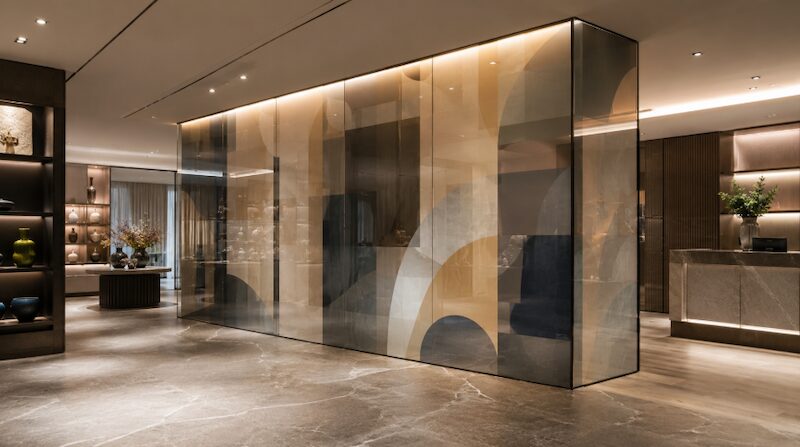
Walk into the most considered new hospitality and retail interiors of the past two years, and one design material keeps appearing in places it did not use to. Bespoke printed glass, full-colour, high-resolution visual storytelling on a transparent or translucent surface, has returned to the centre of commercial design.
From hotel reception walls to restaurant private dining rooms, retail flagship feature walls to office reception areas, designers are specifying it where they may once have defaulted to applied vinyl, wallpaper or static back-painted glass. The shift is not accidental. It reflects a bigger change in how brand-led interiors now treat visual identity.
From surface graphics to architectural brand language
Architectural glass has remained a steady specification in luxury hospitality, retail and commercial interiors, particularly where designers want light, depth and a refined finish. What has changed is the move towards printed glass as a brand medium, not just a protective or decorative material.
Digital printing technology now allows imagery, pattern, illustration and brand graphics to be applied directly to glass at architectural scale. Finishes can be clear, frosted, satin, translucent or opaque, depending on how the space needs to manage light and privacy.
For UK bespoke glass specialists, this has translated into sustained commercial demand. Abbey Glass, a Welsh-based bespoke glass manufacturer with national distribution and an established track record across UK hospitality, retail and commercial fit-outs, has supplied glass projects for clients including Hilton Hotels, Marriott, Premier Inn, Park Plaza, Ty Hotel, The Ivy Asia, Sexy Fish, Bocconcino, Ave Mario, Miller & Carter and JD Wetherspoons across the UK. According to the team, image-printed glass commissions have grown materially as a share of overall demand from hospitality and retail designers.
Why stores are specifying glass with a stronger visual role
The rise of experiential retail has changed the brief. As more purchasing moves online, the store has become a place for atmosphere, recognition and memory. Printed glass supports that shift because it gives brand storytelling a physical, architectural presence.
For luxury, beauty, jewellery, fashion and hospitality brands, visual differentiation is no longer limited to signage or fixtures. A printed glass wall, partition or ceiling panel can carry identity through a space without feeling temporary.
It also offers advantages that printed wall coverings struggle to match. Properly specified glass can be easier to clean, more durable in high-traffic environments and compatible with technical requirements such as acoustic performance, laminated construction or fire-rated applications.
Where the material is being used now
In hotels, printed glass is appearing across reception and lobby walls, guest-room bathroom panels, wardrobe doors, bedhead features and decorative partitions. These applications often combine photography, abstract graphics or commissioned artwork with lighting to create a more layered interior.
Restaurants are using it in private dining rooms, backbar areas, main dining screens and atmospheric ceiling panels. In retail, the strongest applications tend to be flagship feature walls, fitting-room partitions, concept-store backdrops and showroom settings where the product needs a distinctive architectural frame.
It is also becoming more visible in members’ clubs, office reception areas, breakout spaces and integrated wayfinding, where signage needs to feel part of the wider design language.
The specification choices behind the finish
The visual effect may lead the conversation, but the specification starts with performance. Toughened glass, commonly specified to BS EN 12150, is often selected where safety and impact resistance are required. Laminated glass, covered by the BS EN ISO 12543 series, may be used where post-breakage behaviour, acoustic performance or layered visual effects matter. Fire-rated applications need products classified for the relevant building use, commonly considered under BS EN 13501.
Thicknesses typically range from 4mm to 19mm, with more substantial build-ups used for specialist structural or acoustic applications. Edge polishing, drilled fixings, concealed fixing systems, structural silicone bonding and curved printed glass can all influence how successfully the final installation reads on site. Large-format capability is also improving, with some projects now able to support longer panel runs where site access, handling and substrate choice allow.
Manufacturer view: coordination matters as much as creativity
“Brand-led commercial design has moved significantly towards bespoke architectural glass over the past five years, particularly in hospitality and retail, where visual storytelling at architectural scale is now part of how operators differentiate spaces,” says a spokesperson for Abbey Glass.
“What designers are asking for has shifted from decorative panels to fully integrated brand identity: large-format feature walls, full-room atmospheres and continuous architectural runs that support the wider visual story of a property or brand.
“The technology has also matured. Modern digital printing on toughened and laminated glass can deliver much better durability, colour fidelity and finish options than earlier printed glass systems. The important point is coordination. Commercial work needs technical drawings, sample approval, shop-drawing sign-off and close liaison with designers and fit-out contractors.”
Questions to settle before the drawings are signed off
Printed glass should be specified by application, not appearance alone. Substrate choice needs to reflect safety, location, cleaning requirements, acoustic demands and any fire-performance obligations. The print process should also be verified early, as UV-cured digital systems and ceramic ink systems differ in production method and suitability.
Artwork is another common pressure point. Large-format printing exposes low-resolution source files, poor retouching and loose colour management. Pantone references, physical samples and signed-off proofs are essential where brand colour accuracy matters.
Lead times need the same early attention. Bespoke printed glass can require several weeks for sampling, approval, production and delivery, so it rarely benefits from being left until the decorative package is nearly closed. Aftercare should also be agreed before handover, particularly in hospitality environments where cleaning frequency and product choice can affect the finished surface.
Why printed glass is becoming part of the retail design supply chain
Bespoke printed glass’s rise in luxury hospitality and retail design is not a passing trend. It reflects a sustained shift in how brand-led commercial interiors approach visual identity, architectural scale and long-term fit-out value.
For retail designers, the material has moved from decorative accent to central architectural element. Working with UK and European bespoke glass specialists who understand both manufacturing technology and commercial fit-out programmes is increasingly part of the standard supply chain.
The most considered hospitality and retail fit-outs of 2026 are not the ones with the cleverest decorative finishes. They are built around brand-specific architectural elements that photograph beautifully, last the lifetime of the brand and tell a coherent visual story at every scale.