





Design isn’t just about how things look anymore. In a market where operational costs are going up, customer behavior is changing, and competition from digital channels is getting stronger, physical stores need to prove that they are useful. Each square meter should do more work. Every design choice needs to take into account both how it looks and how it works.
But a lot of businesses fail at the same early stage: the idea stage. Ideas look good in presentations, layouts make sense on paper, and mood boards show a clear path. Later, when the space is finished, problems come up when the client doesn’t act as planned.
Execution is not usually the problem. It is more common to test decisions before they are put into action.
Why Ideas Don’t Always Work in Real Life
Business settings are complicated systems. The flow of customers, sightlines, product hierarchy, lighting, furniture placement, and brand cues all work together at the same time. When these parts are made separately, the end result may look good but not work well.
Some common signs are:
- people tend to stay away from underused areas
- bottlenecks in important product areas
- displays that look strong but don’t help with movement
- furniture and fittings that get in the way of circulation instead of helping it
It’s hard to predict these problems with just static planning. Spatial design necessitates a methodology for assessing environments as individuals will genuinely perceive them.
From Theoretical Concepts to Empirical Settings
Assumptions are not what make today’s most useful programs work; simulations do. Before deciding to build, teams are looking more and more into how a place works as a whole.
In this case, spatial planning tools are very helpful. During the concept phase, designers and strategists can use 3d visualization services to check the layout logic, sightlines, and spatial balance before they start working. Teams can look at design choices in a real-world spatial context instead of just guessing how people will walk.
The most important thing here is clarity, not how good it looks. Problems that could happen show up early on, when fixes are still cheap.
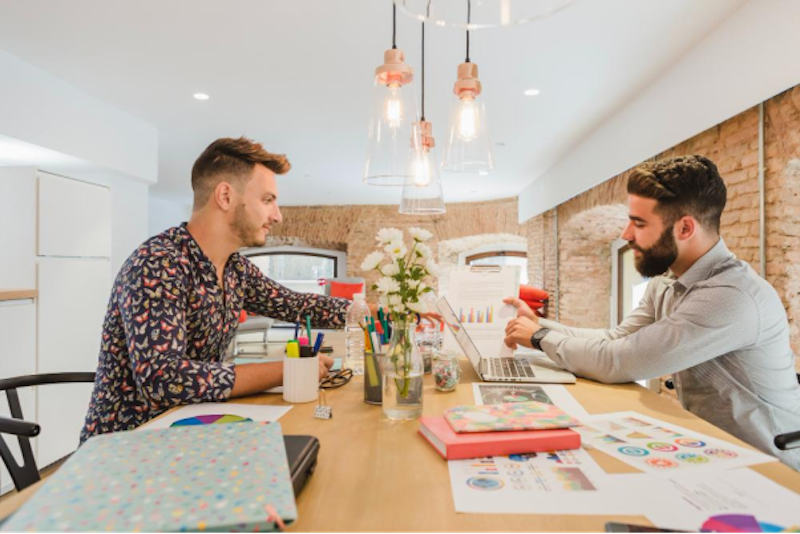
Don’t just think about how things look; think about how they work
Movement is an important part of the user experience in real life. The way people get to, stop in, and move between zones has a direct effect on how long they stay and how many people convert.
Good spatial design makes it easier to find your way around. People should be able to get around without having to think about it. This means that architecture, fixtures, and visual cues must all be perfectly in line.
Testing the flow early on lets you make better design decisions. Entrances, focus points, and transition zones are made to encourage certain behaviors, not to make assumptions.
Performance of furniture, fixtures, and space
The furniture in a room has a big impact on how well it works. Shelves, tables, chairs, and display units all change how things are seen and compared. Furniture that is poorly sized or placed can block your view, break up the flow, and cause problems while you are browsing.
Furniture rendering helps teams look at how fixtures fit into the bigger picture. Before anything is made or put in place, the proportions, spacing, and sightlines can be checked.
This method saves money on changes and also helps link what you want to see with what is actually there.
Lowering Risk Before Putting It Into Action
Physical areas have a lot of fixed costs. Design mistakes can be expensive once construction starts. Because of this, risk management is now an important part of spatial strategy.
Teams can use digital testing environments to:
- Check layouts before building
- Make sure that brand expression and spatial behavior are in syn
- Make sure the display logic works on a large scale
- Make sure that teams work together on design choices
- The end result is not only a better design, but also results that are easier to predict
Making spaces that work
A successful environment is not one that is new. They are defined by how well the design meets business goals while still being comfortable for people who use the space.
When ideas are chosen based on real-world examples instead of abstract images, spaces become easier to move around in, more fun to explore, and better at turning attention into action.
In a world where competition is getting tougher, projects that are built with performance in mind from the start are more likely to work than those that look the best on paper.