





Retailers should no longer look at artificial intelligence, or AI, as something for the future. What began with relatively simple applications such as chatbots, recommendations and automated customer service has developed rapidly, with AI now finding its way into almost every part of the retail operation.
For retailers, the attraction is clear. AI can process huge volumes of data, identify patterns and make decisions at a speed that would be near-impossible manually. That is creating opportunities to understand customers more closely, predict demand, optimise stock and supply chains, streamline processes and deliver personalised shopping experiences.
But the biggest changes may still be ahead. As AI becomes more sophisticated and more widely embedded into retail technology, it has the potential to alter not only how retailers operate, but how consumers discover products, make purchasing decisions and interact with brands. The question is no longer simply where AI can be used, but how fundamentally it could reshape the retail market.
Connecting AI to real-world retail data
This summer, retail intelligence platform EDITED launched EDITED MCP, a new tool that allows retailers and developers to connect its retail data directly to AI platforms including Claude, as well as development environments such as VS Code and Cursor.
The new system uses Anthropic’s Model Context Protocol (MCP) to give AI tools access to EDITED’s database of more than 90,000 brands and 5bn SKUs across apparel, beauty and home.


According to EDITED, the move addresses one of the key limitations of general-purpose AI in retail: the models themselves do not necessarily have access to current, detailed market data. By connecting AI tools to EDITED’s dataset, the company said this will allow retailers to use them to analyse core areas including competitor pricing, product ranges and market performance using more specific and up-to-date information, rather than relying on generic responses or manually searching for data.
“Our customers did not wait for us to build this,” said Doug Kofoid, CEO of EDITED. “They were already wiring their own planning agents and copilots. Most AI projects fail for the same reason: the data underneath isn’t good enough to trust. We’ve spent 12 years solving that problem; now retail AI teams finally have something worth building on.”
EDITED MCP forms part of the company’s broader AI+ roadmap, alongside AskEDITED, which it said gives retail teams faster, more trusted answers wherever they work.
From analysing data to taking action
Also bringing a new solution to market is Crisp, a vertical AI platform for retail, which earlier this year launched Crisp AI Agents. The platform is designed to analyse retail data and identify actions across areas including inventory, promotions, merchandising and product availability.
In practice, Crisp AI Agents can monitor a promotion, identify low inventory at a distribution centre, recommend increasing order quantities and alert the relevant retail buyer. The idea is to move AI beyond analysing data and towards taking action based on what it finds.
The system uses Google’s Gemini models on Google Cloud and draws on data from across the supply chain. Crisp said this allows its AI tools to work with retailers’ existing information and provide analysis across sales, inventory, promotions and product availability.


“At the core of a successful retail strategy is collaboration,” said Are Traasdahl, founder and CEO of Crisp. “Crisp’s AI Agents will change the way retailers and suppliers communicate and collaborate, by surfacing alerts and by leveraging AI Missions that make autonomous decisions that give retail the optimisation boost it needs.”
Schwan’s Company is among the businesses using the technology. Ben Martel, category manager at Schwan’s, said the system has helped streamline reporting and identify products that could represent opportunities or risks.
“It has enabled me to quickly identify high-performing items with low distribution as potential growth levers, as well as low-performing items that are at risk,” Martel said. “With these insights, I have been able to provide my retailer with more precise data-driven assortment recommendations.”
Making sense of the physical store
Moving from retail data and supply chains into the physical store, Everseen, a specialist in ‘Vision AI’ solutions for the retail industry, is combining computer vision with generative and agentic AI through Everact.
Everact is a platform that combines computer vision with generative and agentic AI. The company’s existing technology is already used across over 140,000 checkouts, capturing millions of customer interactions and processing large volumes of video data each day.
The next step is to make that data easier for retailers to use. Rather than manually searching through video or reports to identify problems, Everact allows users to ask specific questions about what is happening in stores and retrieve the relevant video and point-of-sale data. Queries could include identifying recent non-scan incidents, finding when losses increased or highlighting where checkout staff may need additional support.


Everseen said the significance is less about generating more data and more about making existing data actionable. It added that by combining video analysis with generative AI, retailers can potentially move from identifying what happened to understanding why it happened and deciding what to do next.
“Retail operations require immediate clarity, not just more data,” said Joe White, CEO of Everseen. “Everact delivers this by adding a conversational layer to our platform. Now, store managers and executives can speak directly to their data to uncover the root cause of an issue and instantly identify the best operational response.”
AI moves into the customer journey
AI is also being used to change how customers interact with retailers. AiPRL, a retail-first AI company, has developed a new AI platform aimed at furniture, mattress and design retailers. The system brings together customer interactions across channels including voice, SMS, chat, email and social media, allowing retailers to respond to enquiries and provide product information without relying entirely on staff.
The technology is designed to handle conversations with customers throughout the buying journey, from answering questions about products and availability to helping shoppers find suitable options. For retailers, this could provide another way to use AI beyond internal analysis and operations, putting it directly into the customer experience.
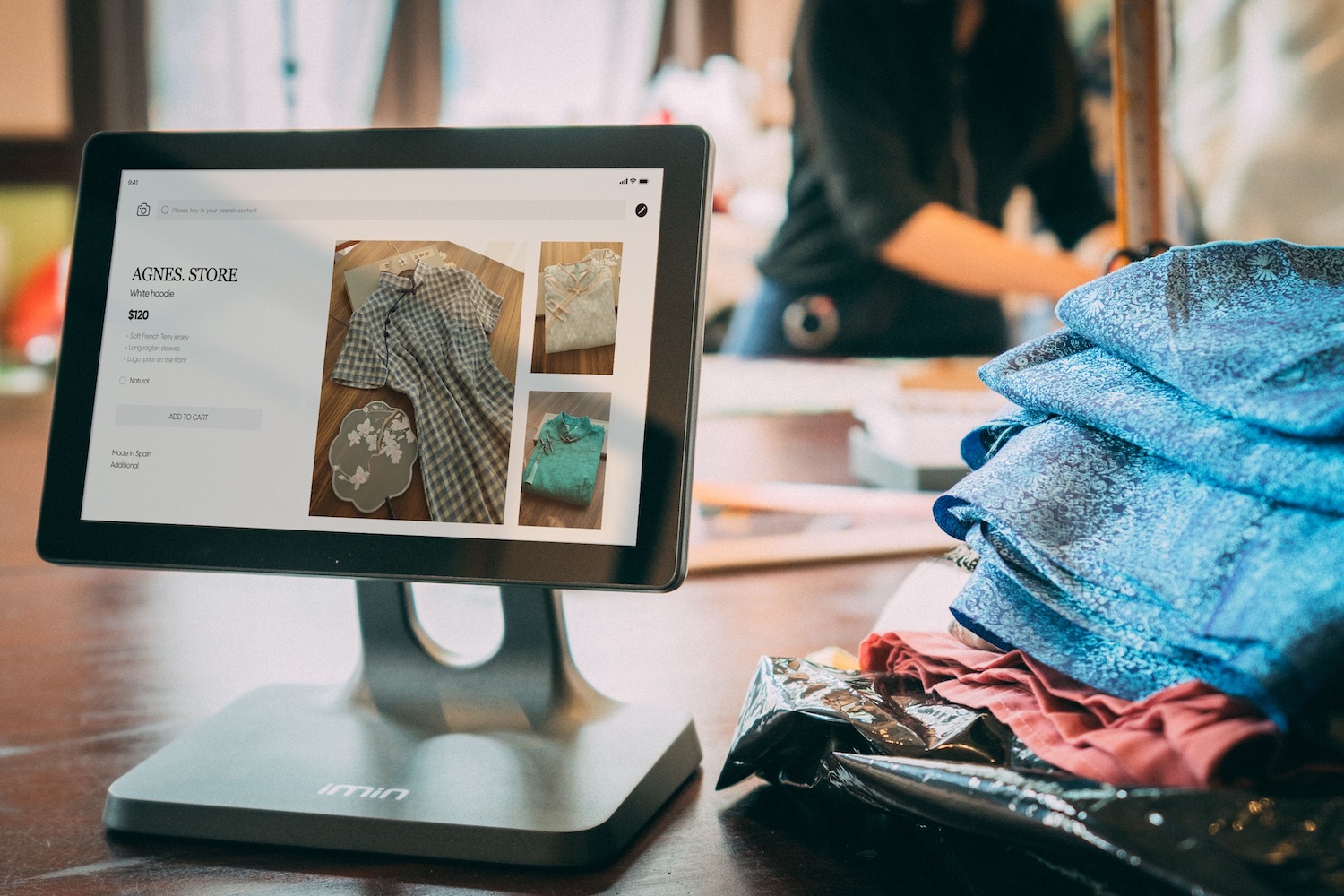
That shift is likely to become increasingly significant as AI becomes more capable of handling complex conversations and understanding individual customer needs. Rather than simply providing automated answers, the next generation of retail AI could increasingly influence how shoppers discover products, compare options and ultimately decide what to buy.
“Furniture, mattress and design retail is not simple ecommerce,” said JD Camden, the co-founder and CEO of AiPRL. “Customers are asking questions across more channels than ever — phone, text, chat, social, email, search, reviews and showroom conversations. For local retailers, that omnichannel reality has become unmanageable. AiPRL OS gives them one intelligent system to understand the customer, access the right information and respond with speed, accuracy and consistency.”
What AI is relevant?
While the growing number of AI tools available to retailers is largely positive, offering those in the industry more options and solutions to work with, it also creates a challenge: how to distinguish which technologies are relevant and where they can deliver value. Earlier this year, the Retail AI Council introduced Ask.RetailAICouncil, an AI assistant designed to help retail professionals research the technology landscape.
The tool is built around retail-specific knowledge rather than relying solely on the broad information available through general-purpose AI models. It can be used for tasks including researching vendors and market trends, comparing retail software for specific use cases and preparing RFPs, while also helping teams assess how different AI approaches could apply to their own businesses.
That points to another potential role for AI in retail: not simply carrying out tasks, but helping businesses decide which tasks should be automated in the first place. As the technology develops and the number of competing AI solutions grows, having reliable, industry-specific information may become almost as important as the AI itself.
“Early feedback has reinforced our hypothesis: retailers want specificity,” said Lauren Porten Lavey, ecommerce advisory board member for the Retail AI Council, and senior digital director of Eataly North America. “Retailers are not looking for generic AI overviews; they want to know what’s working for retailers like them, at their scale and in their functional area. This approach is shaping how we are prioritising content and capabilities going forward.”
AI is already changing how retailers operate, from the way they analyse data and manage stores to how they interact with customers. The technology will continue to develop, but its real impact may come from how deeply it becomes embedded across the retail business.
For retailers, the challenge is no longer simply whether to use AI, but where it can deliver genuine value – and whether the data and systems behind it are ready to support it.