





A black towel rail can help customers bring a bathroom scheme together, but the finish is only one part of the decision. Width, height, heat output and connection positions all affect whether a model will work in the finished room. For bathroom showrooms, a useful display should help customers understand these differences before they commit to a purchase.
Combining a styled setting with clear specification information turns a visual choice into a more informed conversation. It also helps identify questions that need an installer’s input while there is still time to adjust the layout.
1. Start with the available wall space
The first measurement is the space available for the complete installation. A towel rail’s stated width usually describes its body; customers should also check the product drawing for valves, connections and any additional clearance required. A model that fits between two fittings on paper may still interfere with a door, drawer or shower screen.
Height matters too. A taller rail changes the position of the upper bars and the usable wall area around it. Showroom teams can help by marking out the proposed dimensions or using a scaled plan, then considering access to the towels alongside nearby sanitaryware.
2. Explain width and pipe centres separately
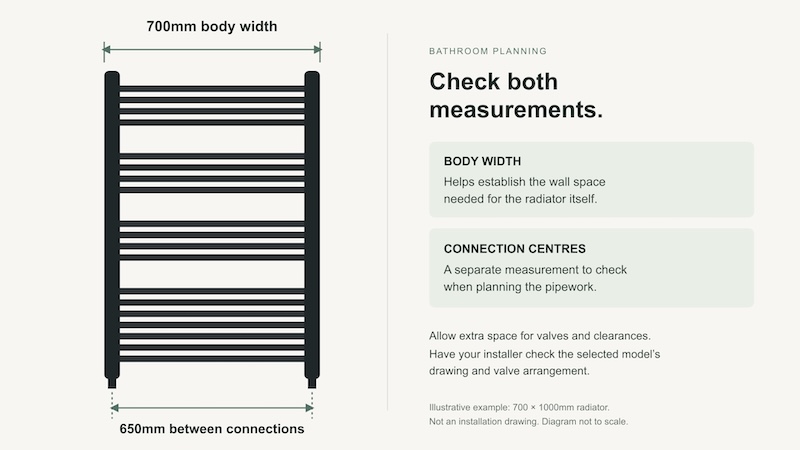
Body width and pipe centres are different measurements. Pipe centres describe the distance between the relevant connection points, so customers replacing an existing radiator should check both the new product’s specification and their current pipework.
For example, Coventry Towel Radiator’s collection of 700mm-wide black towel rails lists a 700mm body width and 650mm between the radiator connections, with heights from 400mm to 1200mm. That distinction gives showroom teams a useful way to explain why a size label alone cannot confirm a straightforward replacement. The selected model’s drawing and valve arrangement still need checking by the installer.
3. Compare heat output rather than appearance alone
A wider or taller towel rail is not automatically the right heating choice for a bathroom. The decision starts with the room’s heat requirement, which depends on factors including its dimensions, insulation, windows and external walls.
Showroom specification cards should identify the model’s rated output in watts or BTU/h and the conditions under which that output was measured. This is particularly relevant where a heating system operates at lower water temperatures. Customers need an output figure appropriate to their system, rather than assuming that a headline rating applies to every installation.
It is also worth discussing how the rail will be used. Towel warming and room heating are related needs, but covering the bars with towels changes how heat reaches the room. An installer should confirm whether the chosen rail is sufficient or whether additional heating is needed.
4. Clarify the heating setup and what is included
Central-heating, electric and dual-fuel arrangements have different requirements. A similar appearance does not mean that every model supports every configuration. Staff should confirm compatibility from the individual product specification and explain whether valves, an element, controls or a conversion kit are included or purchased separately.
Installation planning should cover the wall’s suitability, fixings, access to controls and the location of the connections. Electric bathroom installations also need an appropriately qualified professional to assess suitability and positioning.
5. Show black finishes in context
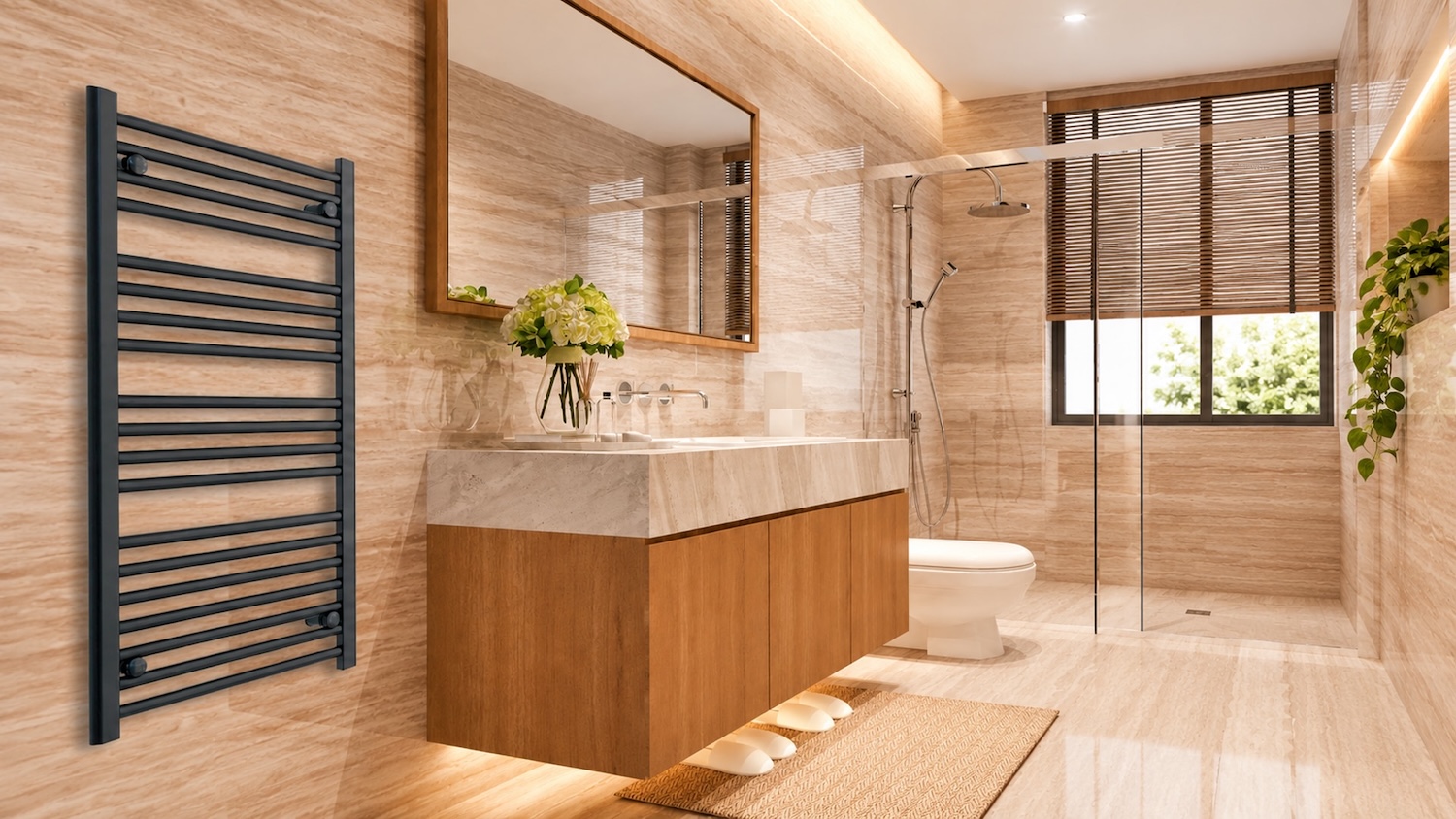
A black rail can be presented alongside contrasting tile, timber-effect surfaces or matching brassware. Customers should view the actual finish sample where possible: colour names alone do not establish an exact match between different manufacturers.
Lighting and surrounding materials influence how the finish looks. A display that allows customers to compare samples is therefore more useful than promising that every black fitting will coordinate perfectly. Care advice should follow the manufacturer’s instructions, including guidance on suitable cleaning products.

6. Make the final specification easy to take away
A concise product sheet can record body dimensions, pipe centres, projection, rated output, heating compatibility and included components. Add the product drawing and any installation questions that remain outstanding.
This gives the customer and installer a shared reference after the showroom visit. It also keeps the buying decision focused on a towel rail that suits the room, the heating system and the intended design, with fewer assumptions left unresolved.