





Retail design does not begin at the shop entrance. For many customers, the first real contact with a retail site is the car park.
A customer may have already chosen where to shop, checked opening hours and planned the visit before arriving. But a confusing or poorly organised car park can still create frustration before they reach the door.
Good car park design does not need to be complicated. Clear driving routes, well-positioned parking spaces and safe pedestrian access can make arrival easier for customers while helping the site operate more smoothly.
Why Parking Matters to the Customer Experience
Customers notice when parking is difficult.
They may struggle to find a suitable space, work out where to drive or safely reach the store entrance after leaving their vehicle. These problems may seem separate from the shopping experience, but to the customer they are all part of the same visit.
This matters particularly at retail parks, supermarkets, shopping centres and other locations where a large proportion of visitors arrive by car.
A well-organised car park makes the journey from the site entrance to the store feel straightforward. Drivers can see where they need to go, park without unnecessary manoeuvring and find a clear walking route to the entrance.
The opposite is also true. Poor markings, awkward parking spaces or unclear pedestrian routes can make a site feel harder to use than it should be.
Car park design is therefore not just about fitting vehicles into available space. It is also about making arrival and departure simple for the people using the site.
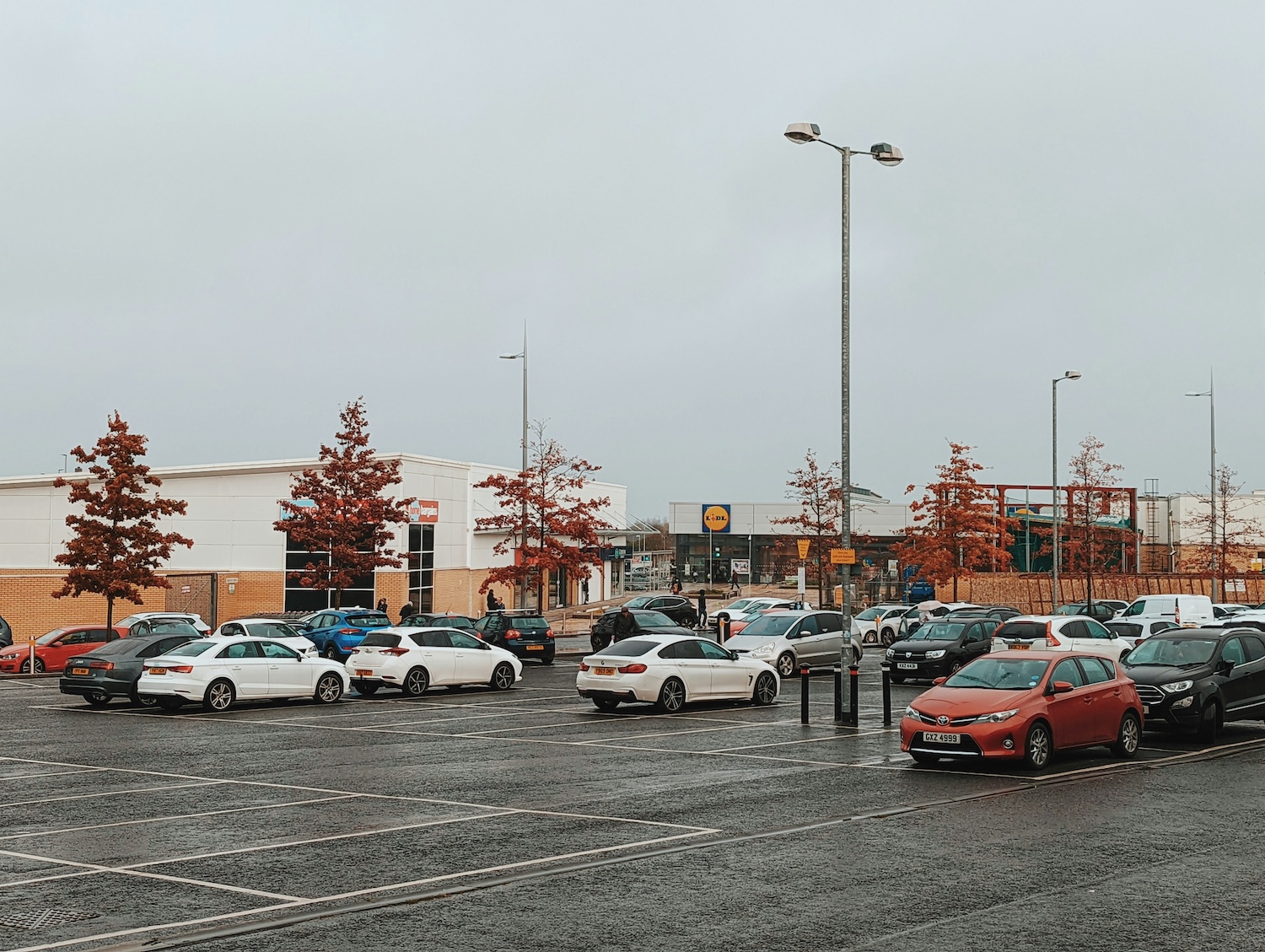
Common Parking Problems Around Retail Entrances and Walkways
Some of the most important areas in a retail car park are also the busiest.
Spaces close to store entrances usually have more vehicle movements and more pedestrians. Customers may be walking with children, carrying shopping bags or pushing trolleys. Delivery vehicles and staff traffic may also use nearby routes.
Problems can develop when parked vehicles move too far forward in a space. A vehicle may overhang a pedestrian route, reduce the usable width of a walkway or come unnecessarily close to kerbs, signs and other features.
The layout can become even less predictable when parking markings are faded or spaces are difficult to judge from the driver’s seat.
Entrances need particular attention because several movements often meet in the same area. Drivers are looking for spaces, pedestrians are heading towards the store and other vehicles may be entering or leaving the car park.
Keeping these areas clear makes it easier for everyone to understand where they should be.
How Wheel Stops Help Keep Vehicles in the Right Position
One simple way to create more consistent parking is to control how far vehicles move into each space. Parking stops provide a physical reference point for drivers as they enter a parking bay. When they are correctly positioned, they can help keep parked vehicles within the intended area and reduce unnecessary overhang towards nearby spaces.
This can be useful where parking bays are close to pedestrian walkways, walls, landscaping or other parts of the site that need some separation from parked vehicles.
They can also help create more consistent parking across a row of spaces. Rather than relying entirely on each driver to judge the stopping point, the layout provides a clear physical limit.
However, wheel stops need to suit the parking area. Their size and position should reflect the types of vehicles using the site and the space available around the parking bay. They should not create a new obstruction for pedestrians or interfere with normal vehicle movement.
Used in the right place, they are a small part of the overall car park design, but one that can make vehicle positioning more predictable.
Practical Ways to Make Retail Car Parks Safer and Easier to Use
Improving a retail car park does not always mean redesigning the whole site.
Start by looking at how customers actually move through it. Check the routes drivers take from the entrance to parking areas and then look at the paths people use once they leave their vehicles.
Parking bay markings should be easy to see. Pedestrian routes should remain clear, particularly near store entrances, trolley areas and busy crossing points. Signs should give useful information without creating unnecessary visual clutter.
It is also worth checking whether parked vehicles regularly extend beyond the space provided. If the same problem appears in particular areas, changes to parking layout or vehicle positioning may help.
Regular inspections matter as well. Paint fades, signs become damaged and traffic patterns can change when stores, entrances or surrounding spaces are altered.
The aim is not to fill the car park with more equipment. It is to remove uncertainty.
Customers should be able to enter the site, understand where to drive, park comfortably and reach the store without having to think too much about any of it. When that happens, the car park quietly does its job and the customer can focus on the reason they came in the first place.