





Retail facility safety depends on more than cameras and emergency exits. Stores combine customer traffic, employees, stock movement, electrical equipment, storage areas, restrooms, loading zones, and mechanical systems in one environment. Weakness in any of these areas can create operational disruption or increase injury and security risk.
For retail leaders, facilities managers, and operations teams, the most useful safety upgrades are those that reduce recurring hazards while improving visibility into building conditions. Retail Focus has similarly highlighted lighting, access control, organised storage, and physical security as important components of safer retail environments.
Improve Indoor Air Quality and Particle Control
Air quality deserves attention in stores with stockrooms, workshops, bakeries, large receiving areas, or operations that generate airborne dust and particles. HVAC filtration alone may not address every localised contamination source.
Facilities with persistent airborne particulate issues can evaluate industrial air cleaning as an additional engineering control. Zehnder provides industrial air-cleaning systems for multiple business environments and describes applications involving dust, fibers, smoke, fumes, and other airborne contaminants.
Start with an assessment rather than installing equipment based only on floor area. Identify particle sources, employee exposure zones, ceiling heights, air movement, existing extraction equipment, loading activity, and cleaning frequency. Retail Focus has also identified ventilation and air-quality management as relevant considerations for retail environments.
Build an Air Quality Audit
Review:
- HVAC filter condition and replacement schedules
- Dust accumulation on fixtures and high shelving
- Loading and stockroom particle sources
- Local exhaust or extraction systems
- Air-cleaning equipment placement
- Maintenance and filter-service records
Do not treat portable or industrial filtration as a substitute for source control. Where a process generates significant contamination, facilities teams should first determine whether enclosure, extraction, ventilation, housekeeping, or process changes can reduce the source.
Reduce Slip, Trip, and Falling-Object Risks
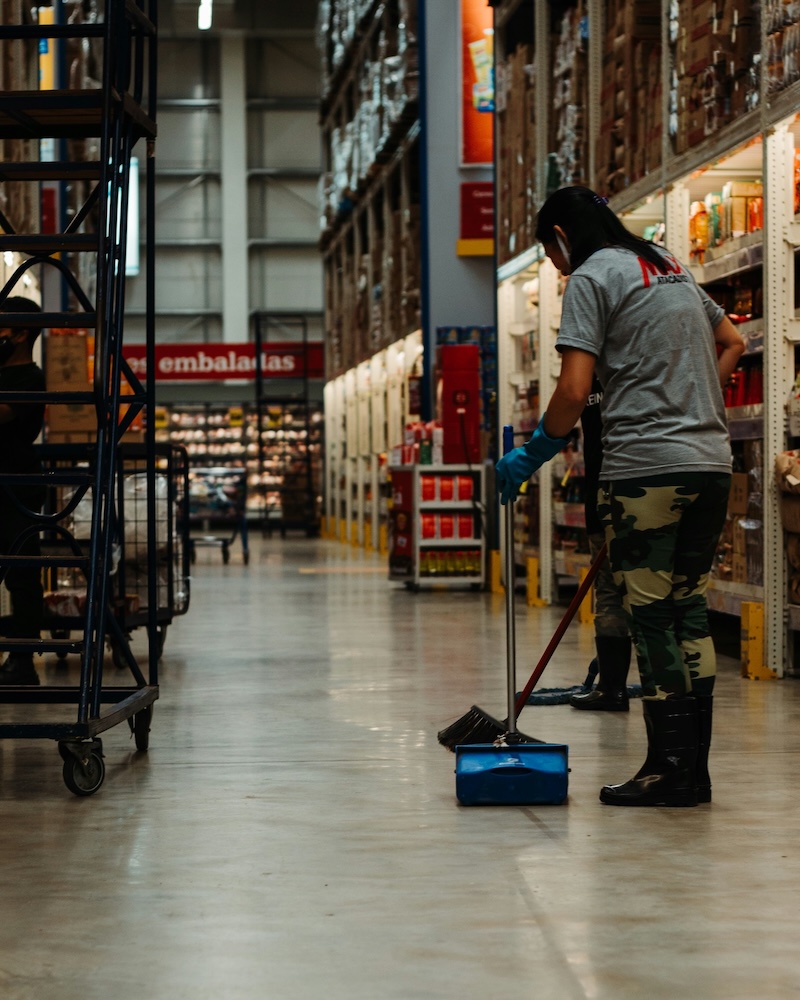
Retail floors change throughout the day. Deliveries introduce packaging and pallets, customers move merchandise, weather brings moisture through entrances, and promotional displays alter walking paths.
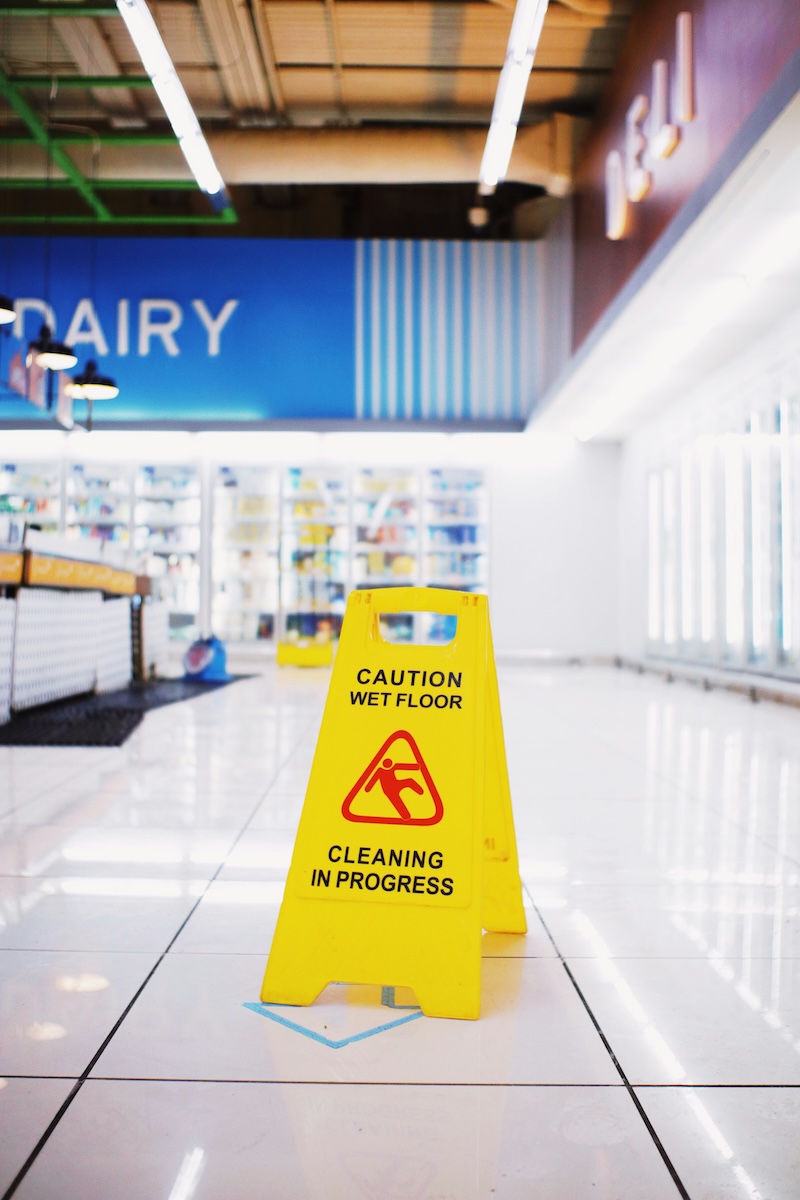
Create documented inspection zones and assign responsibility by shift. Entrances, refrigerated areas, restrooms, stairs, stockroom thresholds, and frequently replenished aisles should receive additional attention because conditions can change quickly.
Floor safety also depends on layout. Electrical cords, temporary displays, floor-standing signs, and product stacks should never reduce an aisle to an unpredictable path. Storage areas should keep heavy merchandise stable and prevent stock from projecting into employee movement routes.
Upgrade Fire and Electrical Controls
Retail environments can contain substantial electrical loads from lighting, POS hardware, digital displays, refrigeration, charging systems, kitchen equipment, and temporary promotional installations.
Facilities teams should maintain a current inventory of electrical equipment and avoid informal extensions that become permanent installations. Damaged outlets, warm plugs, repeatedly tripped circuits, damaged power cords, and overloaded adapters require investigation rather than repeated resets.
Fire protection equipment must also remain accessible. Promotional displays, seasonal merchandise, and stock deliveries should not obstruct extinguishers, alarm points, emergency lighting, or exit routes.
Strengthen Access Control in Staff-Only Areas
Public-facing stores need a clear security boundary between customer zones and operational areas.
Stockrooms, offices, cash-handling spaces, server or network closets, loading areas, and employee-only corridors should have access appropriate to the value and risk of the space. Retail Focus has reported on retailers combining video security, access control, and environmental sensors to improve operational visibility across multiple locations.
Review permissions when staff roles change. A former manager, temporary contractor, or transferred employee should not retain unnecessary access simply because credentials were never removed.
Door hardware matters as much as electronic access systems. Misaligned doors, damaged closers, poor locks, or doors regularly propped open can undermine otherwise sophisticated controls.

Modernise Restroom and Low-Visibility Area Monitoring
Restrooms create a particular challenge because conventional video surveillance is inappropriate inside private spaces, while staff may still need to identify prohibited activity, prolonged occupancy, or other incidents.
Retailers evaluating non-camera monitoring can consider environmental technologies such as vape detectors for locations where vaping is a recurring operational concern. Triton describes its sensor as capable of detecting vape-related events and sending alerts without relying on conventional restroom video surveillance.
Deployment should be based on actual risk and applicable privacy, employment, and building requirements. Sensor placement also affects performance. Triton’s installation guidance specifies coverage considerations based on room size and mounting conditions, reinforcing the need to engineer placement rather than install devices wherever convenient.
Improve Lighting as a Safety System
Lighting should be assessed according to task and risk rather than aesthetics alone.
Loading zones, stairways, parking approaches, fitting-room corridors, stockrooms, emergency exits, and cash-handling locations need sufficient visibility for employees to identify obstacles and unusual activity. Retail Focus has noted that lighting contributes to both store presentation and physical safety.
Check for failed fixtures as part of routine inspections. Also look for shelves, promotional structures, or seasonal displays that block light and create unexpected shadow zones after the original lighting plan was completed.
Create a Preventive Safety Inspection Program
The effectiveness of facility upgrades depends on continued maintenance.
A new access system is ineffective if doors stop closing properly. Air-cleaning equipment provides limited value if filters are not serviced. Floor controls fail when inspections are performed only after an incident.
Track Operational Safety Indicators
Facilities teams should monitor:
- Repeat hazards by location
- Maintenance response times
- Lighting failures
- Door and access-control faults
- Air-filter replacement intervals
- Slip or trip incidents
- Sensor alerts requiring intervention
- Fire-safety inspection exceptions
Use these records to identify repeated failure points rather than treating each incident as unrelated.
Build Safety Into Retail Operations
Facility safety is strongest when it becomes part of store operations rather than a collection of one-time upgrades.
Start by identifying recurring hazards and high-risk zones. Improve air quality where particles are an operational problem. Protect walking routes, control staff-only access, maintain electrical and fire systems, strengthen low-visibility area monitoring, and verify that lighting supports safe movement.
Technology should support this process, not replace it. Sensors, filtration equipment, access systems, and security tools need defined owners, inspection schedules, maintenance procedures, and escalation rules.
For retail decision-makers, the objective is a facility that can identify changing conditions before they become larger operational problems. That approach protects employees and customers while reducing avoidable disruption across the store.