





An alarm tells you a break-in is happening. It does nothing to stop one. Government crime data shows that where a burglar successfully entered a home, they came through a door around 70% of the time and a window around 30% of the time, and between a third and two-fifths of all attempted burglaries fail outright, because the property was hard enough to get into that the burglar gave up. That’s the argument for fixing the physical weak points first: a door, lock or window that actually holds is what turns a break-in attempt into a failed one, before any alarm ever gets the chance to ring.
None of this is against alarms. It’s about sequencing. An alarm is a good second layer once the physical structure of the house can’t be defeated in under a minute. Here are eight upgrades worth making first.
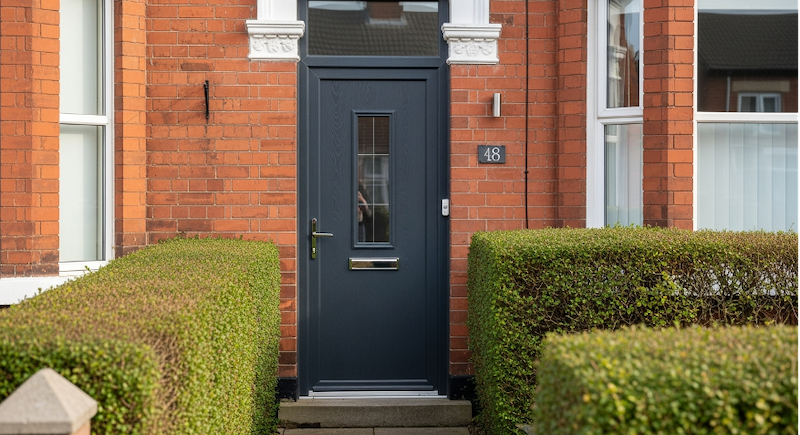
1. Replace an Uncertified Front Door
Around 70% of successful break-ins happen through a door, more than double the rate for windows.
If your current front door doesn’t carry a PAS24 or Secured by Design mark, this is the highest-leverage upgrade on the list, because it’s fixing the single most-used entry point. A College of Policing review of nine independent studies found burglary was 53% lower in properties meeting Secured by Design standards, and attempted burglary 77% lower, largely because the door and frame simply don’t give under the same attacks that would beat a standard one.
Lathams Steel Doors is one option worth a look here. Its High Security Front Doors range is PAS 24:2022 certified and was attack tested by World’s Strongest Man Eddie “The Beast” Hall, built with a steel leaf in a steel-reinforced uPVC frame specifically for residential use rather than the industrial look older steel doors were known for.
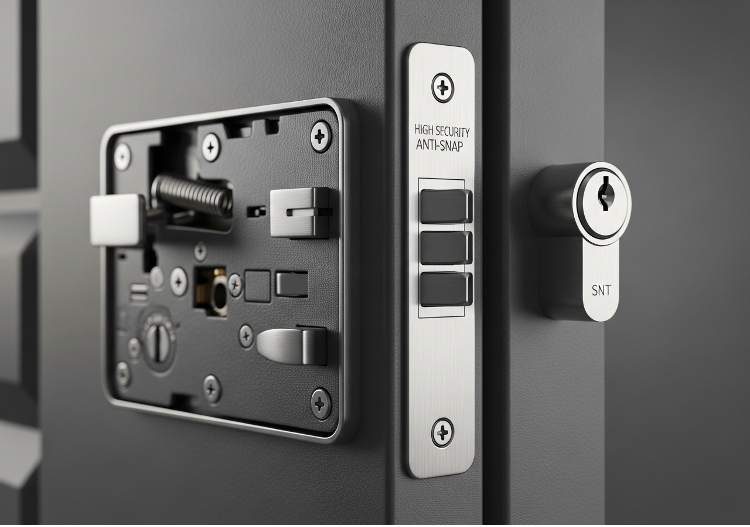
2. Fit a 3-Star Anti-Snap Cylinder
Standard euro-profile cylinders can be snapped in under 10 seconds with a pair of pliers.
Lock snapping is one of the most common ways a certified door still gets defeated, because a weak cylinder undoes everything the door and frame were built to resist. Look for a cylinder tested to TS007 3-star (or 1-star cylinder plus 2-star handle) and Sold Secure Diamond. Ultion, made by Leicestershire-based Brisant Secure, is one of only two locks to hold both the TS007 3-star Kitemark and Sold Secure Diamond accreditation, tested past 100,000 open-close cycles, and it’s Secured by Design approved.

3. Reinforce the Door Frame, Not Just the Door
A door can be PAS24 certified and still fail if the frame around it splits under a kick.
Certification tests the whole doorset, but retrofit frame reinforcement is worth checking separately on older installations. Hinge bolts stop the hinge side being levered off, and a door frame reinforcement kit (sometimes sold as a “London bar” for the lock side) spreads the load from a kick attack across a wider section of frame instead of concentrating it at the strike plate. It’s a low-cost add-on that closes a gap even a good door can have if it was fitted into a weak or ageing frame.
4. Upgrade Ground-Floor Window Locks
Around 30% of successful break-ins happen through a window, and ground-floor windows account for most of that figure.
Key-locking window handles and PAS24-rated window locks stop a window being opened from outside even if the glass is reached, and laminated glass (rather than standard toughened glass) resists the “smash and reach through” method that defeats a lot of ordinary window locks. Prioritise ground-floor windows and anything reachable from a flat roof, bin store or extension.
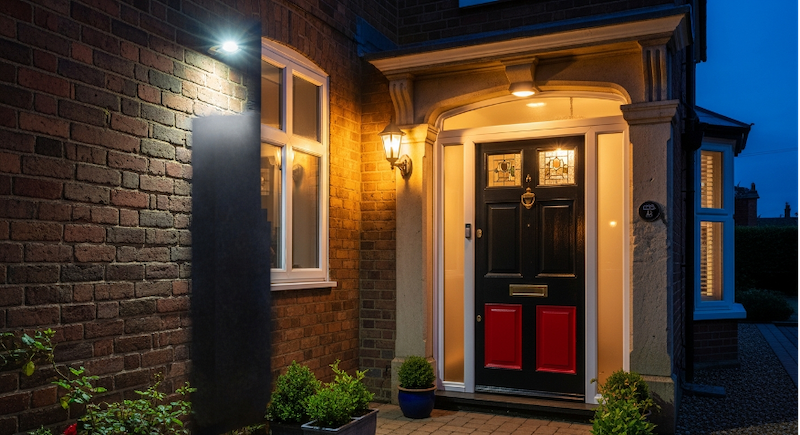
5. Add Motion-Activated Security Lighting
Visibility is one of the first things burglars weigh up before approaching a property, according to police-cited research on target selection.
A PIR (motion-sensor) light over the front and back door removes the cover of darkness at the exact moment someone is trying a door or window, which matters given that ONS data shows around three-fifths of burglaries happen in the evening or at night. It’s one of the cheapest items on this list and needs no ongoing subscription, unlike most alarm monitoring packages.
6. Secure Side Gates and Garden Boundaries
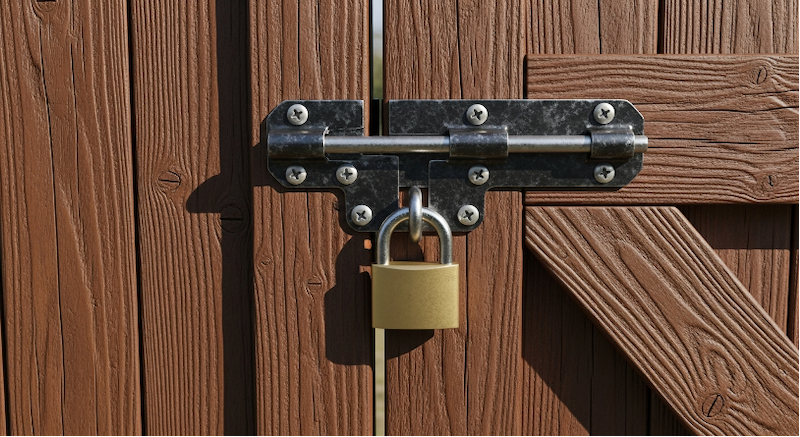
Roughly 1 in 10 burglars enter via the side of a property, often because a side gate gives access to a back door, shed or garage out of view from the street.
A locked, solid side gate denies that route entirely, and it also protects sheds and garages, which police repeatedly flag as a target because they store the tools (crowbars, screwdrivers) a burglar can then use on your own doors and windows. A five-lever mortice padlock and hasp on the gate is a small cost against that risk.

7. Cut Back Anything Hiding Your Front Door
Homes with a clear line of sight from the street are consistently identified in police research as less likely targets than homes offering concealment near the entrance.
Tall hedges, overgrown shrubs or a fully enclosed porch can work in a burglar’s favour by giving them cover to work on a lock or window unseen. This is a free or near-free upgrade: trimming hedges below window height near the entrance and adding low, thorny planting under vulnerable ground-floor windows (a well-established crime prevention through environmental design principle) removes the concealment without changing how the house looks from a distance.
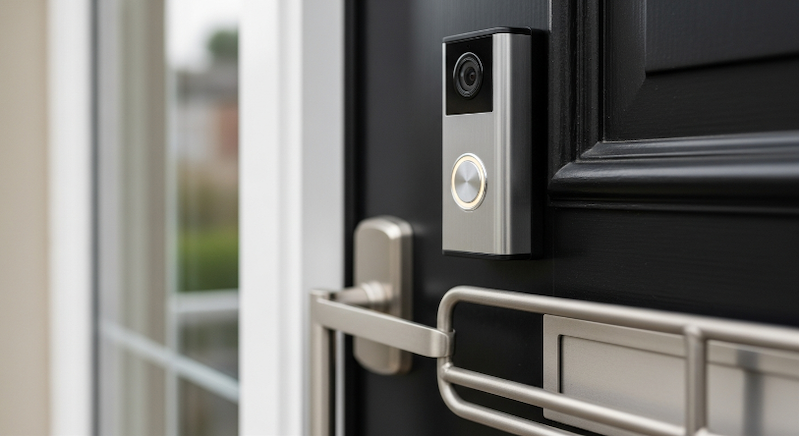
8. Fit a Video Doorbell and a Letterbox Guard
In over half of break-ins where someone gained entry, someone was home at the time, and letterboxes remain a known route for fishing keys left near the front door.
A video doorbell lets you see and speak to whoever’s at the door before opening it, which matters given that some burglars have been recorded pushing past an occupant who answers. A letterbox restrictor plate or cowl on the inside stops the “key fishing” technique where a tool is posted through the letterbox to hook keys left on a table or hook nearby. Both are inexpensive compared with a monitored alarm and address entry methods an alarm can’t.
Where an Alarm Still Fits In
None of this makes an alarm pointless. Once the door, locks, windows, lighting and boundary are solid, an alarm adds a second layer: it responds to whatever does get past the physical defences, and a visible alarm box is itself a mild deterrent on top. The point of this list is sequencing, not substitution. Fix the structure first, because that’s what turns most attempts into failures before an alarm would ever need to sound.